As a journalist, I’ve covered dozens of protests. I’ve stood on sidewalks, run down streets and entered occupied buildings. I’ve witnessed many surveillance tactics — school police, administrators, even SWAT. But last Tuesday night was different — not because of the protest itself, which was largely peaceful, but because of what happened afterward.
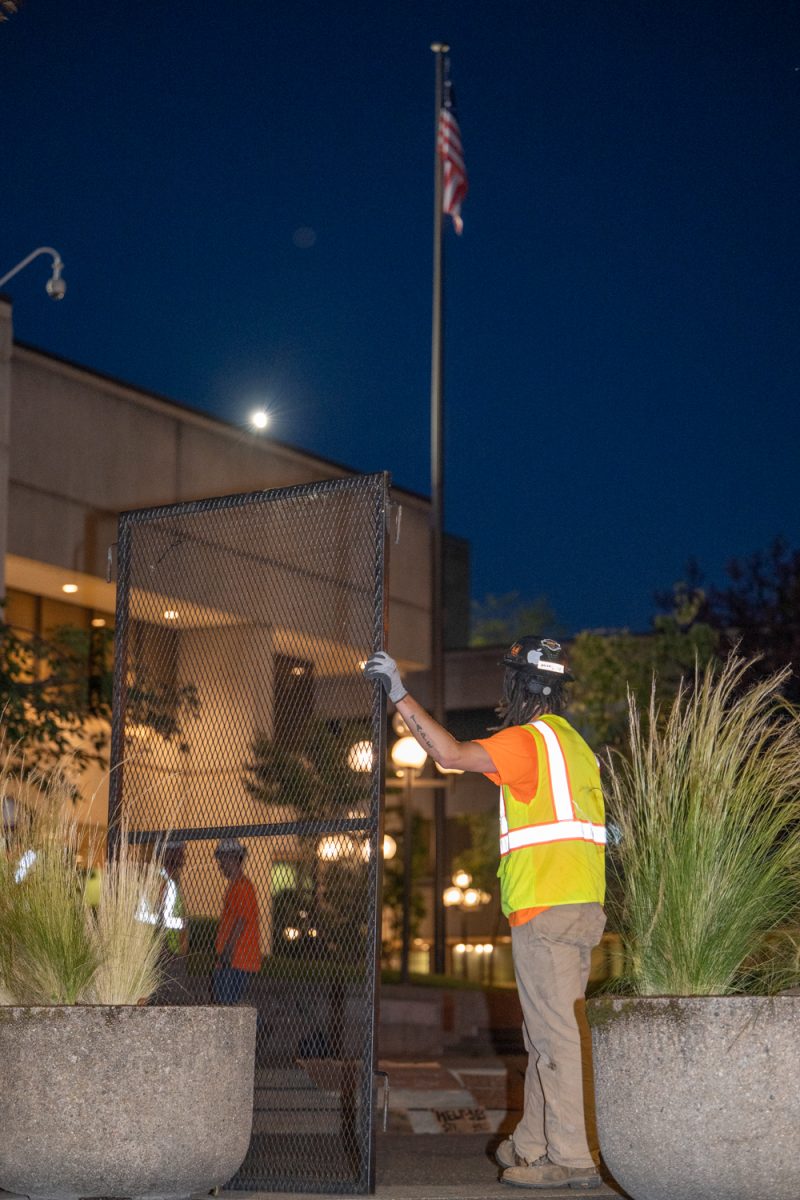
Earlier in the day, I’d heard about an anti-ICE protest scheduled outside the federal building in downtown Eugene, at the corner of East 7th Avenue and High Street. Protesters planned to remain there from 2 p.m. until 2 a.m.
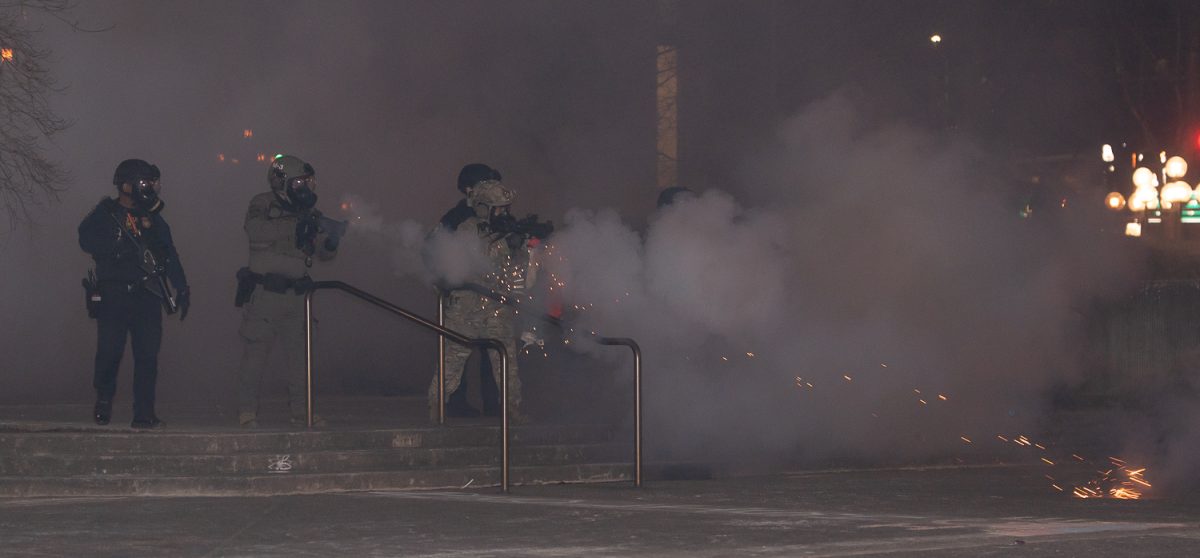
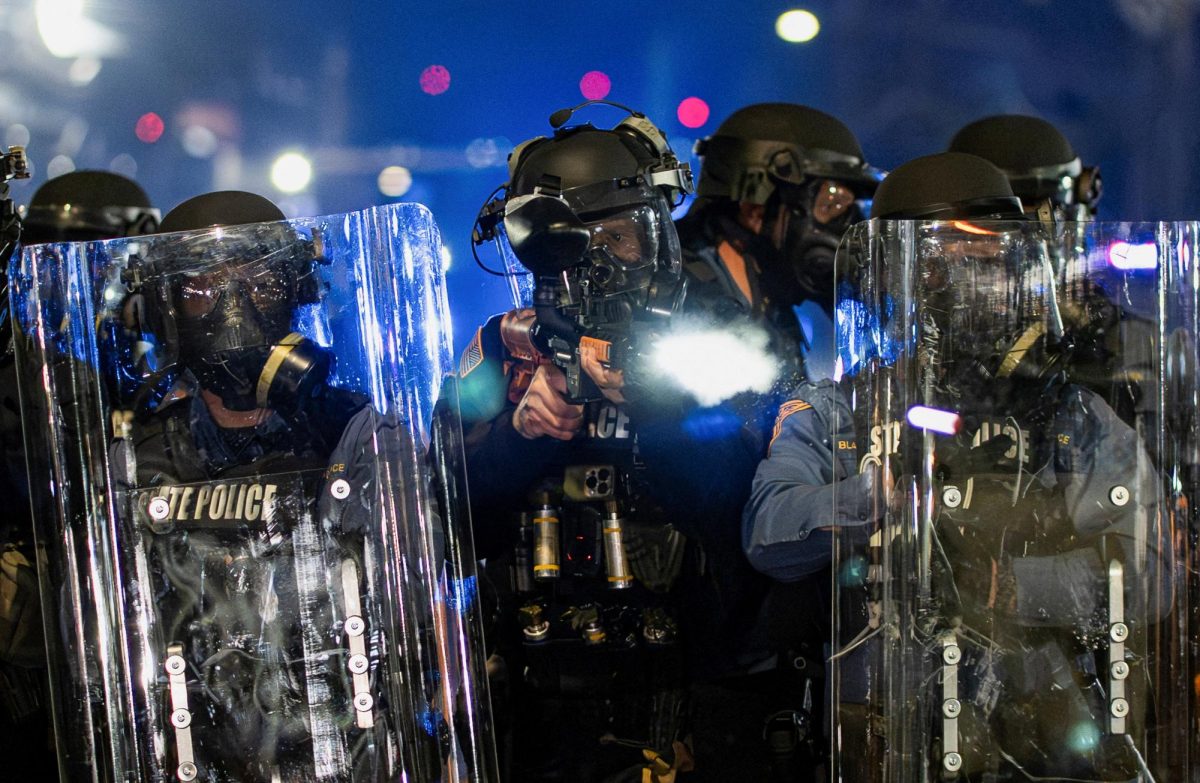
The scene stayed largely peaceful throughout the day, aside from a brief skirmish in the evening that resulted in three detentions. Around 8 p.m., our photo editor texted me: officers were gearing up with riot gear. He added, “They’ve got police drones up, and they’re following people to their cars.”
Anticipating a possible escalation, I grabbed my bright green press jacket — clearly labeled — and drove downtown.
When I arrived, I saw three or four drones hovering above a several-block radius around the protest. At first, I didn’t think much of it. I’ve seen drones used at protests before for crowd surveillance and safety. I walked around the building and stood on a public sidewalk for about two hours with other reporters and roughly 30 protesters.
Aside from the occasional honking of supportive cars and a few antagonists yelling from the street, it was calm. Certainly, nothing seemed to justify riot gear or gas masks.
Eventually, things began to wind down. Our photo editor headed home. I crossed the street back to my car, and that’s when I noticed a police drone hovering directly above it. I moved to another side of the building, and a second drone immediately tracked me.
As I sat in my car, I received a message from our photo editor: a drone had followed him as he walked all the way to his apartment — nearly half a mile away. Moments later, I looked up toward his building and saw a drone zooming back toward the protest area.
I left and drove down East Broadway Street. Through my sunroof, I watched as two drones followed my car down the street. About half a mile away, the glowing red and green lights disappeared — presumably they’d turned back.
I’ve never been particularly alarmed by government surveillance. I understand its role in maintaining public safety — to an extent. But being followed home by two drones — just for standing on a public sidewalk during a mostly peaceful protest — crossed a line I’d never imagined.
What’s even more disturbing is that they followed journalists home — despite my clearly marked credentials. But it wasn’t just us. It seemed indiscriminate. Anyone in the area was a target. The crime? Being present in a public space where free speech was being exercised.
Whether they truly knew I was a journalist or not is unanswerable. But to be honest, it doesn’t matter because the message was clear. It was an obvious intimidation tactic for journalists and protestors alike.
As I drove home, my thoughts were scattered. I wasn’t afraid of arrest — I knew I was fully within my rights as a reporter and private citizen. But the recurring questions were:
What file did my license plate number go into?
What report said “white male entered vehicle, exited via Broadway”?
Where did my name end up?
What list am I on now — at the Federal Protective Service, or elsewhere?
In the grand scheme of things? Maybe nowhere. Probably nothing. But the fact that I even have to ask or that I’m spending my evening writing this column instead of editing articles is, in itself, a frightening sign of where we are.
I’m lucky. I’m a U.S citizen. But what if I had been an undocumented or international student studying journalism? What if simply covering a protest could put someone’s visa, freedom or education at risk?
And it gets worse.
Recently, Eugene installed a network of license plate readers across the city that can map your every move. Advocates say it’s for catching criminals, which is true. But between those and the drones, I didn’t feel observed — I felt stalked.
The Eugene Police Department confirmed to KLCC that the drones were theirs. This experience calls for greater transparency from our local agencies about their cooperation with federal authorities — especially at a time when freedom of speech feels increasingly at risk.
I’m not writing this to make a political statement. I’m writing this as a wake-up call. Because ultimately this particular subject isn’t about right or left, or ICE or no ICE. It’s about the fact that a journalist wearing a press jacket was followed home by law enforcement tracking technology, from where he was exercising two of the rights that American democracy was built upon.
And if that doesn’t shake you — ask yourself: What happens next time you show up?