The holiday season is right around the corner; this often means trying new recipes, baking for your loved ones and sharing a meal with your family or friends. But what often gets overlooked are the numerous farmworkers who make your recipes a reality.
Farming is labor-intensive, and the U.S. currently has 2.9 million agricultural workers to meet market demand; nonprofit Farmworker Justice estimates that 70% of current farmworkers are immigrants, of whom 40% are undocumented. Immigrants are crucial to ensuring our communities have the food we need.
In recent months, the Trump administration has rolled back key measures in protecting migrant workers. One of the key changes has altered the way H-2A wages are calculated, with an estimated $5 to $7 of wage reductions per hour. This would lead to an overall $2.46 billion less paid to temporary workers annually.
“This rule marks a major shift in wage-setting authority from the U.S. Department of Agriculture to the Bureau of Labor Statistics,” Alexis Lisandro Guizar-Dias, electoral field director for Pineros y Campesinos Unidos del Noroeste, wrote in a statement. “While the department claims this will make adverse effect wage range determinations more consistent and data-driven, there is concern that using occupational employment and wage statistics data may lower wage floors in some regions, particularly where agricultural work has historically been undercounted or undervalued.”
Historically, farmworkers have represented one of the least protected labor sectors, with agricultural workers specifically being left out of the National Labor Relations Act. Their initial calls for collective action and unionization started with the grape strikes in 1965, which gained popularity and led to the national movement by Cesar Chavez. They organized with local worker unions, community organizations, faith-based organizations and colleges to build support for the United Farm Workers boycott — the first and largest agricultural worker union in the U.S.
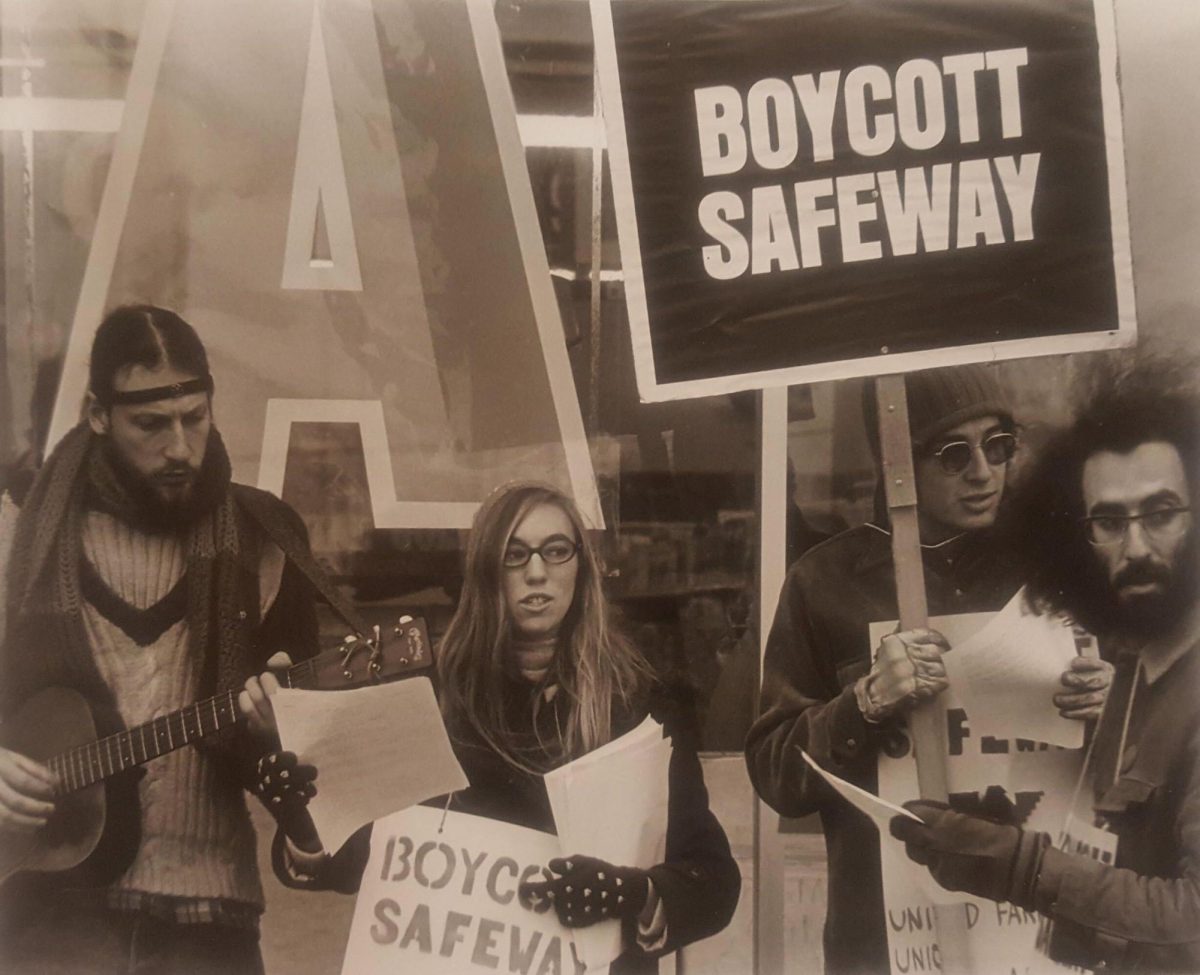
Eugene, in particular, has a long history of supporting farmworker movements, with the Eugene Friends of Farm Workers emerging in 1972 to advocate for migrant labor rights. They had a large presence in our community, handing out leaflets and protesting in front of Safeway, organizing an on-campus boycott of the Erb Memorial Union food services and participating in national efforts to support the UFW.
Nancy Bray, a labor activist and member of EFFW, mentioned her past as a farmworker herself. She noted the poor living conditions, the grueling labor and the lack of labor protections for workers in general. She continues to speak out about the conditions of farmworkers currently, mentioning the impact that ICE raids are having and the recent rollbacks by the Trump administration.
“Arrests of farmworkers have increased dramatically in late October and November,” Bray said. “Thirty farmworkers were arrested in Woodburn on Oct. 30 on their way to work. Sixteen immigrants, of whom nine were farmworkers, were arrested in Salem on Nov. 11, and then here in Lane County on Nov. 5, some of those who were arrested were forest workers.”
Bray is currently organizing to raise awareness for the Windmill mushroom boycott. For the last three years, farmworkers at Windmill Farms have been fighting for union recognition in Washington due to poor working conditions, health violations and continued mistreatment. Workers have been known to face very long hours, with no set exit times, and large quotas to fulfill to retain their jobs. The farmworkers who have supported the union have faced undue adverse actions, including job termination.
In December 2024, UFW announced an official boycott against Windmill Farms until the company recognized the union. Oregon farmworker unions PCUN and the AFL-CIO are also supporting the boycott.
“You can’t just be aware; you have to actually move to action,” Bray said. “I do think a consumer boycott can be very effective, but it takes time — the more people who are aware, the better.”
Collin Heatley, a rank-and-file member of the Graduate Teaching Fellows Federation, has been working with UFW to spread the word of the Windmill Farms boycott. Heatley tried to centralize autonomous picketers in Oregon to have an organized force and reached out to many labor unions, activist organizations and faith organizations in the community. He has also worked on collecting signatures for a petition supporting the boycott.
“We all go to grocery stores, we all buy produce — how do we get those folks to not buy these mushrooms or (communicate) that there’s a boycott going on and how do we make sure they’re moved to not want to buy them?” Heatley said. “That comes from the people they trust, which are their labor unions, activist organizations or their faith-based groups.”
Especially with the holiday season coming up, a peak consumption time for mushrooms, people have a chance to make an impact and fight for dignified working conditions at Windmill Farms.
“Every worker deserves to be treated in a dignified way while they’re on the job — they deserve to be paid fairly and work in safe conditions,” Heatly said. “And we as consumers have the power to change that.”
To support farmworkers, advocates like Heatley and Bray strongly urge shoppers not to buy mushrooms from the following stores, since they are primary carriers of Windmill mushrooms: Winco, Safeway, Albertsons and Fred Meyer. They urge people to shop locally and to double-check the brands they are buying from.
Bri Garcia, UO MEChA’s financial director, attended a talk by Bray in late November. Garcia mentioned how she was drawn to the talk because of Eugene and UO’s strong history of labor organizing for farmworkers.
“My family has been in the farmworking industry for the longest time and has supported farmworking causes,” Garcia said. “Years ago, they were boycotting grapes and boycotting lettuce. It’s upsetting to know this is still a problem — farmworkers should be taken care of and they provide food for everyone.”
It’s important to pay homage to the rich history of labor organizing and collective action that allowed farmworkers to fight for a more dignified workplace. This fight continues, and allows for our community to participate and show solidarity to the struggles farmworkers are facing when fighting for better work conditions – and the first action to take is not to support Windmill Farms.