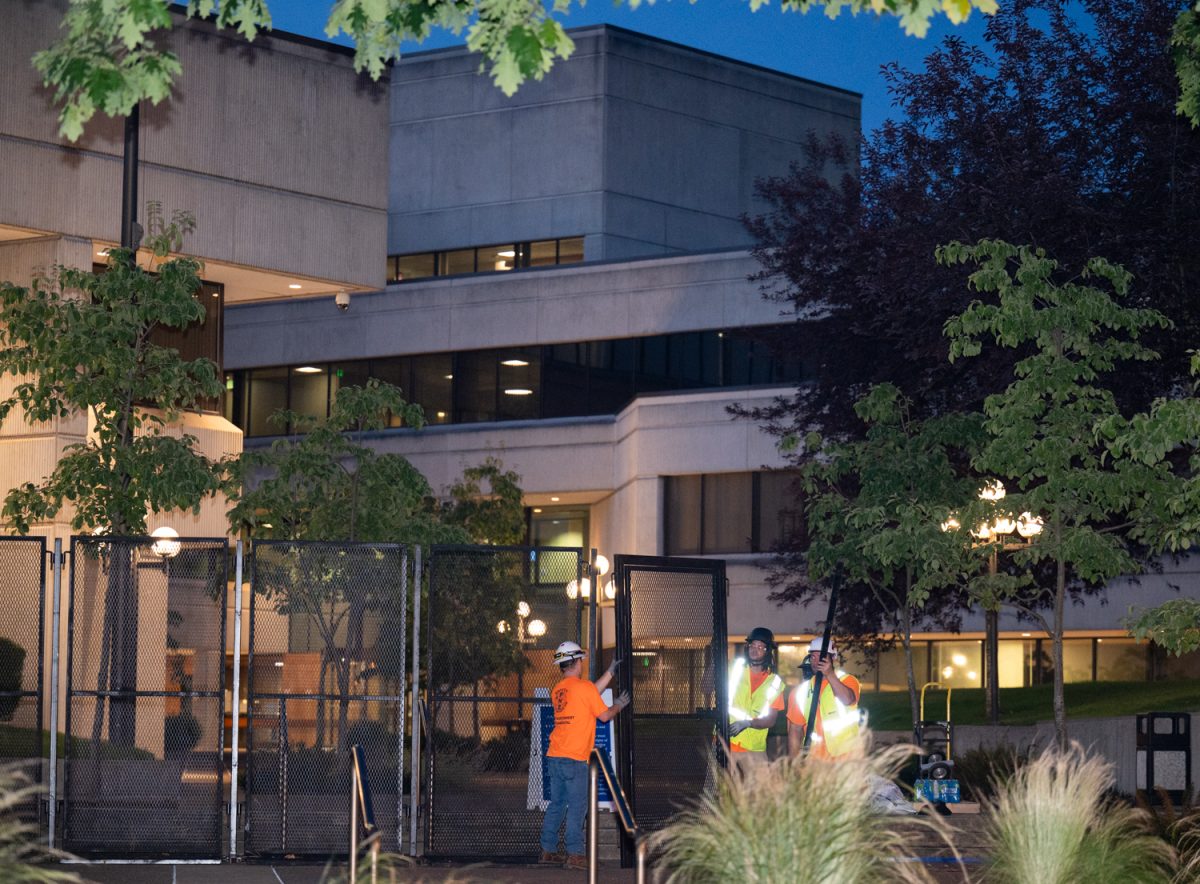
University of Oregon students who walk past the Erb Memorial Union may glance up at the trees lining the pathways. For the last three months, there have been numerous sparkly gold and green streamers entwined in these trees, left behind by a university event.
According to Sarah Stoeckl, associate director of UO’s Office of Sustainability, the university has no formal policies for sustainability when it comes to events on campus.
While UO has official, recognized policies for general operational sustainability and climate action, events held by clubs and organizations are not held to any specific standards.
Stoeckl describes the existing guidelines as “small p” policies scattered throughout UO sustainability measures, which affect things like purchasing power, transportation guidelines and many opt-in resources for event organizers.
These measures include UO’s Zero Waste Program, which offers specialized recycling and compost collection at large events, such as the ASUO Street Faire and home sports games. Extra waste collection sites are placed near the Frohnmayer Bridge to collect cans on the way to and from Autzen Stadium.
At other events, catering teams offer an option to provide hard plates and silverware as opposed to plastic disposables, but that requires an additional charge for the organizers.
Declan Zupo, a representative of UO Climate Justice League representative said food waste is a big problem on campus and that he would like to see it and campus food insecurity addressed.
The Leftover Textover program is one option to help avoid food waste after events like administrative luncheons, clubs, mixers and sporting events. This program gets leftover food to students who need it by alerting them with a text message. But according to Zupo not many programs utilize this option.
“If there were to be one policy I would advocate for, it would be mandating Leftover Textover and doing a better job of reallocating leftover food,” Zupo said.
Throughout his years here, Zupo has been involved in environmental efforts on campus in many facets and currently works on the CLJ’s steering committee, which works to ensure the university maintains its existing climate commitments in line with state and nationwide standards.
According to Zupo, UO has many emissions reduction requirements that are not being met. UO is the highest polluter of fossil fuels in the city of Eugene, and those numbers are only predicted to rise.
Concerned about the lack of event sustainability policies, Zupo pointed out that “opt-in” measures are frequently ignored unless there’s some real enforcement or incentive to choose them. And, in the case of UO’s sustainable event options, there are none — and the more sustainable choices actually cost more and require more effort from event organizers.
Because UO places an emphasis on environmental responsibility to incoming students, Zupo says that “bringing an update to our policy to bring in line our events with our institution’s ethos of environmental sustainability” would be a “huge step for the institution.”
According to Stoeckl, UO runs as “a bubble up from the bottom institution as opposed to a top-down institution, especially when it comes to sustainability topics.”
Because of this, work toward environmental change is done by “coalitions of the willing, students who care, staff and faculty who care.”
Despite the lack of any overarching rules or efforts to implement any, students and staff put in a lot of effort to make sustainable choices for events all the time, Stoeckl said.
“I do think the community would appreciate if there was official support for more sustainable options for events. But even with that said, a lot of folks are kind of doing the things that would be in a policy anyway,” Stoeckl said. “Can we do better? Always. And yet, it’s really always inspiring to me to see how much our community cares, even without a top-down mandate, and are opting into these options because they want to.”