Eugene’s housed residents are constantly witnessing the city’s homelessness crisis: tents, people sifting through bins for cans, sleeping bags on the sidewalk and individuals carrying their belongings in trash bags.
With the visibility of those forced to conduct their lives out in the open, it can be difficult to reconcile with what is invisible. That is the goal of the Homelessness Policy and Health research group at the University of Oregon’s Global Health Lab: to understand the often-unseen conditions, health impacts and narratives of living unhoused.
The research group, headed by several UO professors and supported by research from both UO undergraduate and graduate students, attempts to move past public perceptions. Instead, they collect qualitative and quantitative data from people experiencing homelessness to create a more representative, nuanced picture of what it means to be unhoused in Eugene.
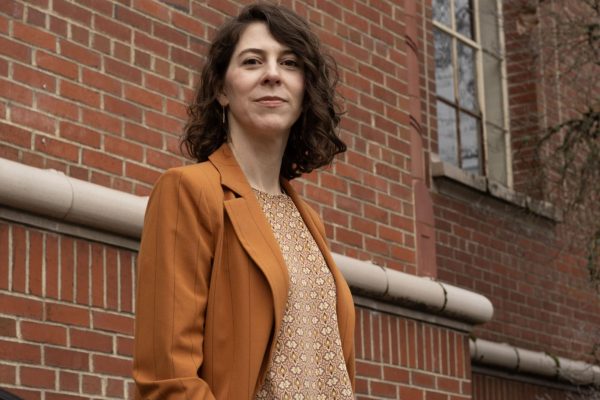
When Dr. Lesley “Jo” Weaver moved to Eugene eight years ago, it was her first time living on the West Coast. According to the National Alliance to End Homelessness, the West Coast, including Oregon, Washington and California, has high homelessness rates compared to other areas of the country.
(Alyssa Garcia)
As a medical anthropologist who studies how social and cultural forces determine the health of certain groups, Eugene’s high level of public homelessness was particularly jarring, Weaver said.
“I was really struck by visible homelessness here and the health challenges that people were having in public space,” Weaver said.
Her previous experience working with public health inequality in South Asia prompted her to consider how her research expertise could be utilized to fully comprehend and support homeless communities in Eugene.
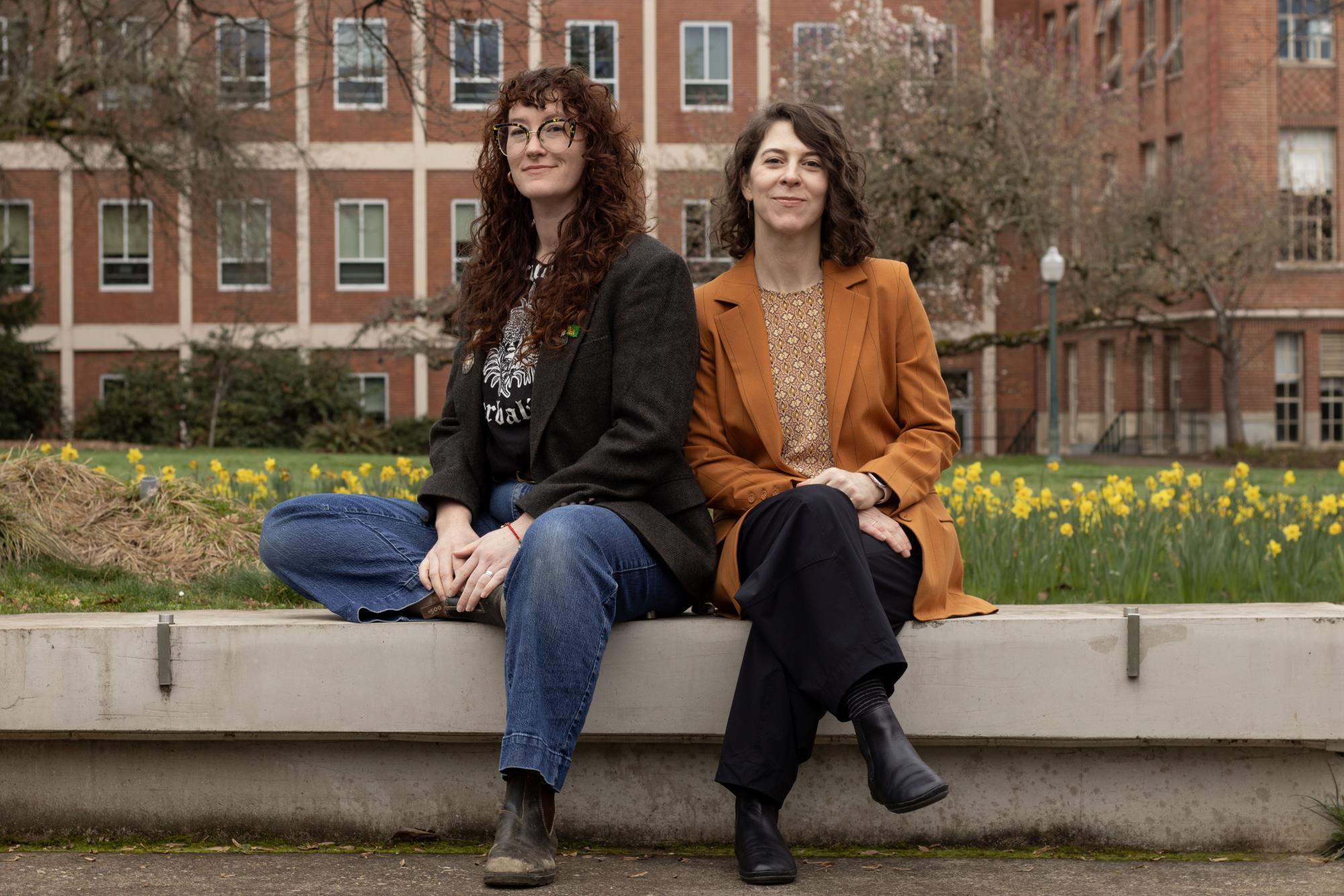
The research group was ultimately born from a merging of individual minds and backgrounds. For Weaver, a “key part” of the equation was Mackenzie Ní Flainn, a current graduate student in the biological anthropology department at UO.
As a self-described “activist-scholar,” Ní Flainn uses her medical background to deliver medical assistance to people living on the streets. After discovering her passion for global health and working as a medical assistant, Ní Flainn transitioned to a position at Occupy Medical, a Eugene non-profit that administers free healthcare to those without the resources to access medical services.
In 2020, Ní Flainn co-founded Black Thistle Street Aid to better meet the needs of Eugene’s homeless population and to provide direct medical outreach. The group provides a set of nurses, EMTs and doulas who travel the streets of Eugene bringing free medical care to those experiencing homelessness.
“Once Weaver and Ní Flainn teamed up, they said they continued to connect with “activist-scholars” including Dr. Claire Herbert, Dr. Josh Snodgrass and a team of graduate and undergraduate students, officially forming the Homelessness Policy and Health research group.”
Combining the quantitative with qualitative
According to Weaver and Ní Flainn, one uniquely innovative aspect of this research is its blend of quantitative and qualitative methods to explore homelessness, its causes, impacts on personal health and the experiences of those who are affected by it.
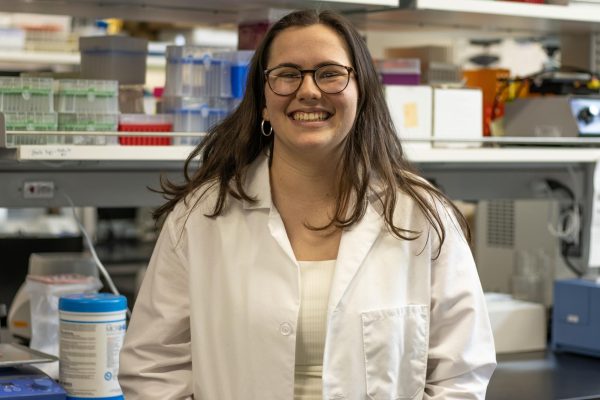
Bella Albiani, a senior multi-disciplinary science undergraduate, operates on the quantitative side of the project. Albiani wears many hats. She obtains informed consent from participants, administers questionnaires, conducts on-site health tests, collects samples and works in the lab.
Albiani works with two types of numerical data: statistical data and biomarker data. Statistical data encapsulates broad trends about housing history, health issues and Adverse Childhood Experience scores. Biomarker data are numbers that indicate levels of physical health, like the amount of cortisol — a stress hormone — in a participants’ hair sample.
(Alyssa Garcia)
On the other side, Albiani’s coworker Dylan Podrabsky focuses primarily on qualitative data. As a senior studying cultural anthropology, Podrabsky has become well versed in conducting life history interviews. These are open-ended interviews that explore the lived experiences of individuals.
From Podrabsky’s perspective, qualitative data from these interviews provide context for trends seen in Albiani’s work.
“A big part of anthropology is wanting to capture and valorize people’s experience, their humanness,” Podrabsky said.
“And you can’t do that with only numbers.”
As outlined by Weaver and Ní Flainn, the combination of these two modes of research can reveal and strengthen holistic patterns about unhoused lives, point to common root causes and provide evidence for what support is needed.
In one instance, Albiani, who concentrates on food insecurity, discovered that her statistical data showed 87% of homeless individuals on Oregon’s Supplemental Nutrition Assistance Program — better known as SNAP — were still food insecure. This data was corroborated and explained by qualitative anecdotes from study participants explaining barriers to consuming enough healthy food and their lack of access to appliances like a stove or refrigerator.
By placing these sets of data side by side, Albiani concluded that the SNAP program is insufficient for people experiencing homelessness. Furthermore, she was able to understand some of the potential reasons behind this insufficiency.
The ‘mythbusters’
Pairing the quantitative and qualitative data, the group has been able to clarify several misconceptions about homelessness in Eugene. Podrabsky described popular misconceptions as fitting within four categories: mental illness, trash, criminality and drugs.

While each topic is nuanced, according to Podrabsky, drug use in Eugene’s homeless population is a major research theme and, namely, the stereotype that many people experiencing homelessness are drug users.
Albiani said the research group noticed a quantitative data trend showing that many people experiencing homelessness started to use drugs to cope with or control symptoms from chronic health issues. This stems from recorded, qualitative obstacles to receiving appropriate medical care for those who lack resources like a roof over their head.
Similarly, this research group demonstrated that many people experiencing homelessness, especially women, began using stimulants like methamphetamine to stay awake for long periods of time and protect themselves from violence, particularly gendered violence.
To illustrate this, Albiani shared one woman’s story — a mother living in a tent on the street with her children. This individual felt she needed to stay awake and alert for days at a time to protect her children and herself at night and, as Albiani said, “How do you do that other than with substances?”
“There are a few people that I’ve met that say they ended up on the streets because they used meth,” Albiani said. “That is not most people’s story.” However, Albiani has noticed “that’s most people’s assumption of most people’s stories.”
As research progressed, Weaver and her colleagues have come to appreciate the so-called “myth busting” power of their data. Many of their conclusions have the ability to disprove misconceptions that, according to Weaver, “redirect our attention away from the big causes and the big solutions that we need to address homelessness and put the blame on individuals who are suffering incredibly.”
Shifting mindsets and growing connections
Though contributors to this research group have a deep understanding of the lives and struggles of people experiencing homelessness, according to Weaver, in the beginning, they had to untangle their own unconscious biases.
For the past two summers, Podrabsky spent four to five days a week in Eugene’s public parks, administering questionnaires and, later, conducting life history interviews.
He remembers when he began frequently sharing spaces with people experiencing homelessness; “At first, and I think this is telling, I was a little uncomfortable,” he said.
But Podrabsky said that once they started connecting with people, that uncomfortable feeling quickly went away and was replaced by understanding and compassion.
“I think it’s really hard not to extend your empathy and understand that people are simply experiencing a very different life from what you’re used to,” Podrabsky said.
Before Podrabsky became the research group’s resident life history expert, they administered many of the surveys. While going through survey questions, Podrabsky described an interaction with one man who had become homeless after he was imprisoned. When Podrabsky met him, the man had recently fallen in love, and the relationship was inspiring him to have hope for the future.
Podrabsky said he didn’t interact with this man again until months later. The man was leaving the grocery store as Podrabsky came in. He was carrying a large tub of laundry detergent. Podrabsky knew what laundry detergent could represent. He hoped it meant this man who had once been unhoused now had a place to call home, access to a washing machine and clean clothes to wear.
“We didn’t say a word,” said Podrabsky. “We just looked at each other, and we just nodded and smiled.”
Next time the two met, the man was in a permanent supportive housing location, a rental that offered housing assistance and other resources for those experiencing housing insecurity.
Ní Flainn expressed similar moments of inspiration at the resilience of people experiencing homelessness in Eugene, as well as moments of poignant sadness she said.
One homeless community that Ní Flainn and Black Thistle Street Aid interacted with often was settled together near a railroad area. The community had constructed several wooden crosses to honor the lost lives of other people experiencing homelessness.
After three years building the memorial, railroad crews reportedly demolished the memorials to make way for more train tracks.
“It was beautiful to watch people carve these places out,” Ní Flainn said. “And then it was heartbreaking to watch sanitation workers come in and literally bulldoze their work.”
Vision vs. Voice
On paper, the goal of the Homelessness Policy and Health research group is to understand the experience of homelessness and its impacts on health. But, for Weaver, this research is also a way to give a voice to the experiences that housed Eugene residents can only see from a distance. It’s a way to listen.
“I think, especially in groups of people who aren’t often listened to, the act of listening, like, compassionately listening, is a powerful act,” Weaver said.
Podrabsky, whose research focuses on the stigmatization of homelessness, said he has learned to think about unfamiliarity through the lens of visibility. In their opinion, much of the stigma of homelessness is due to how visible the condition is.
“People are out there experiencing some of the worst things in their life,” said Podrabsky. “And they have to do it in public.”
This is why Podrabsky believes the voices and experiences of the participants are so crucial to this research: the story behind the image contextualizes what is seen in public.
After almost three years of research, the Homelessness Policy and Health research group is moving on to work that is more community-based and has what Ní Flainn described as a “political ethos.” There are two longform projects upcoming that will support the voices of people experiencing homelessness and encourage compassionate listening.
The first is an advisory committee that will serve as a place of collaboration support between the researchers and individuals experiencing homelessness in Eugene. The active connection will allow the team to continue to help these communities, make change, and provide resources for those experiencing homelessness to create their own projects.
The second project is a podcast to translate the concept of community voices into a tangible product featuring recorded interviews from those experiencing homelessness.
The next generation of activists
The Homelessness Policy and Health research group is composed mostly of Generation Z and millennial staff. Albiani said she sees her place within a group of young people who still have the opportunity and motivation to explore and experiment.
“I think as young people we’re at a really cool stage in our life where we don’t have to just think about ourselves,” Albiani said.
Podrabsky echoed Albiani.
“I think us, as a generation, have seen enough of the impacts of systems and structures that have failed us in many ways,” Podrabsky said. “So, I think that maybe sets us up to see other sorts of systemic failures where things are falling apart, where things are hurting people and be willing to start making those changes.”
Weaver and Ní Flainn said they also have hope in the younger generation.
“The generation of activists that are coming up are tenacious and aimed in the right direction,” Ní Flainn said.
As the Homelessness Policy and Health research group demonstrates, the first step to changing societal perspectives is changing personal ones.
Podrabsky, reflecting on his own changed perspective, believes it all comes down to recognizing a shared humanness amongst everyone living in Eugene. And the best way, he says, to start is by learning and listening.
“It’s only once you move past the image, once you hear the voice,” Podrabsky said.
“That’s what does it.”