


In fall 2024, Oregon universities lost their biggest tether to advocacy at the state level when the Oregon Student Association shuttered. Fast forward nearly two years, and OSA is set to make its return with the support of students and legislators alike.
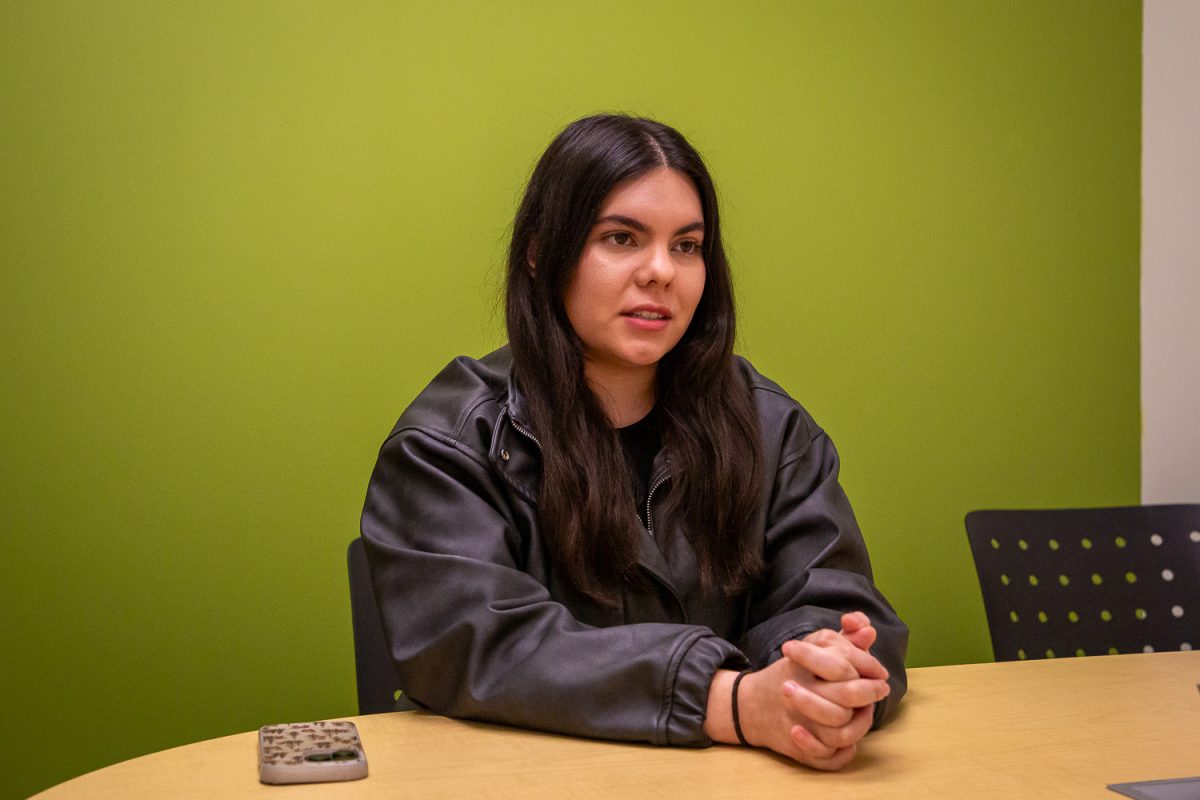
Several members of ASUO, the University of Oregon’s student government body, including Vice President Max Jensen and Executive Director of Advocacy Amaya Peralta, are working to restart OSA, a student advocacy nonprofit.
OSA, initially founded in 1975, worked with institutions across Oregon to provide a collective student voice to the state legislature.
The organization had faced structural and funding challenges since 2019, which were later heightened by the COVID-19 pandemic. The organization also lost a member of its core staff in a fatal car accident in July 2024.
During its nearly 50 years in operation, some of OSA’s advocacy wins included helping to register tens of thousands of students to vote each election cycle, including more than 50,000 in 2012. It helped pass the tuition equity bill in 2013, which gave undocumented students in Oregon access to in-state tuition and helped establish ethnic studies programs in kindergarten through 12th grade curriculums.
OSA was also responsible for helping expand financial aid coverage such as the Oregon Opportunity Grant, Oregon’s largest state-funded, needs-based grant for college students, and securing tens of thousands of dollars in education and scholarship funding.
“The Oregon educational system is shifting in the direction of privatization and the interest of the rich, and the only way to fight back against that money power is with people power. So having something like OSA will help us to build up that people power,” Jensen said.
OSA served as a starting point for many prominent Oregon figures, including Philip Bentley, CEO of the Oregon Health Care Association, Melissa Unger, executive director of Service Employees International Union Local 503 union, and Oregon First Lady Aimee Kotek Wilson.
Before OSA’s closure, UO had the largest delegation on the nonprofit’s Board of Governors, allowing it to hold the majority vote on OSA’s bylaws, day to day activities and priorities.
While the loss of OSA was a blow to student advocacy across the state of Oregon, ASUO at UO stepped up to fill the void left by the nonprofit’s closure, holding lobby days at the capitol and creating an organizing department.
“Instead of just having one kind of broader advocacy department, we’ve kind of separated into subgroups,” Peralta said. “So my department focuses on basic needs advocacy, focused events, know your rights, but (the) organizing (department) focuses a lot on labor issues and actual grassroots student activism.”
One role OSA had while still in operation, Jensen said, was to teach students and student governments basic organizing skills. But as the organization struggled in the wake of the pandemic, student groups on campus “existed basically without them.”
“I worked on trying to start up the UO Student Workers (Union). So I was in the early campaign for that and that work was a lot more difficult because we had to relearn all of these basic skills and teach them when in the past that would have been something that we could have outsourced to OSA,” Jensen said.
In addition to more effective education and lobbying efforts, a major motivator for bringing OSA back included strengthening institutions’ ability to collaborate.
“A really big gap that we’ve seen without OSA is the coalition building between the student governments and that’s something that’s been really difficult in my role to try and reestablish,” Peralta said.
The process of bringing OSA back is still in the early stages, Peralta said, but progress, including getting other Oregon institutions involved, is being made.
The biggest barrier in getting OSA restarted, Peralta said, is a financial one. While ASUO has been working to boost interest and financial contributions from other institutions, the “financial buy-in” has been a “concern,” especially as schools across the state face financial hardship.
When it was in operation, OSA had a dues system for its members, with each student government paying less than $2 per student per school. Peralta said conversations around what potential monetary contributions and membership dues will look like for the new OSA will begin next school year.
Despite a potential financial hesitation from other institutions and a gap in the “coalition building” between schools, Peralta and Jensen expect interest in the project to grow.
Peralta and Jensen said they have been working closely with student governments at Oregon State University and Oregon Institute of Technology and have been in contact with and regularly update almost every public university in Oregon.
In a statement to The Emerald, Masha Mogylevsky, president of the Associated Students of OSU, said that she is “very excited” about the idea of bringing OSA back.
“(The) value and the impact we have felt from (OSA’s) absence cannot be overstated, especially in current times where student voice, solidarity, and political engagement are more important than ever,” Mogylevsky said. “We have heard this sentiment from many community leaders and legislators as well, and so we are currently working to try to secure funding to support the project.”
The Associated Students of OIT did not respond to a request for comment.
One of the next steps in getting OSA restarted includes the hiring of a part-time, non-student staff member who can help to figure out the structure and organization of the new association.
According to Jensen, ASUO allocated $50,000 in winter term for the hiring of that staff member and had turned to the “remaining arm” of OSA, the Oregon Student Foundation, to do the recruiting of that employee.
The Oregon Student Foundation is a student-run organization “dedicated to financially supporting student-run initiatives,” according to its website.
“They would have connections in a lot of areas around organizing and activism and advocacy,” Jensen said.
ASUO will also work with other Oregon institutions to figure out what OSA would look like and how it can best benefit every school.
The restarting of OSA has gotten support from Oregon legislators who are eager to see a collective student voice return to state government.
“Anything that’s done in politics is often done because large groups of people come together to advocate for it. Students in college deserve to be at the table asking for things that they need, just like everybody else,” Rep. Rob Nosse (D-Portland) said.
Nosse, who was hired as executive director of OSA in 1992, said he “teared up” when he learned of OSA closing in 2024 but was hopeful about the organization’s return.
“Think of who (OSA) is for fundamentally. It’s for the students who are learning how to be engineers or better writers or better thinkers or getting practical experience,” Nosse said.
Nosse said that OSA was the “authentic voice of the main consumers of higher education,” but without it, student advocacy lost the “important institutional memory and momentum” needed to push for student-focused legislation.
“We’re signing programs and trying to keep tuition low or financially available and we need to know if we’re succeeding at it or not, or how it’s going. We also need to know when students aren’t treated fairly by faculty or by people that work there or aren’t being allowed to express themselves or have their voice heard,” Nosse said. “We need to understand that and we’re only gonna hear about that if the students have an organized voice.”
The state of Oregon is ranked among the lowest in the country in terms of state funding for higher education, making the need for student advocacy and a direct link between schools and state government even more important.
“Our investments in financial aid don’t keep pace with our neighbors in Washington and California, so students are really struggling with tuition and with the escalating student debt crisis. The need for collective student advocacy around these issues has never been greater,” former OSA Legislative Director Nick Keough said in an interview with The Daily Emerald in October 2024.
Both Jensen and Peralta said they are excited about this project and the opportunities that will come with it.
“If we want to have an education system that is accessible and high quality and for everyone, we need to have this kind of power,” Jensen said. “Otherwise, the decisions will be made by people who don’t have our best interests at heart.”








Former Student Organizer • Apr 1, 2026 at 12:38 pm
Excited to hear this is happening, particularly in the wake of USSA’s return at the national level. Hope ASUO is able to make the return of OSA happen and the new OSA is able to link up with USSA to also advocate on the national level!
Steve Scarich • Apr 1, 2026 at 4:56 am
The article left out any mention of a State contribution of funds in their ‘support’ for the OSA, so one must assume that there was none. I’m also willing to bet that if the student body were polled they would overwhelmingly reject the $50,000 ASUO allocation. This is a pipe dream.