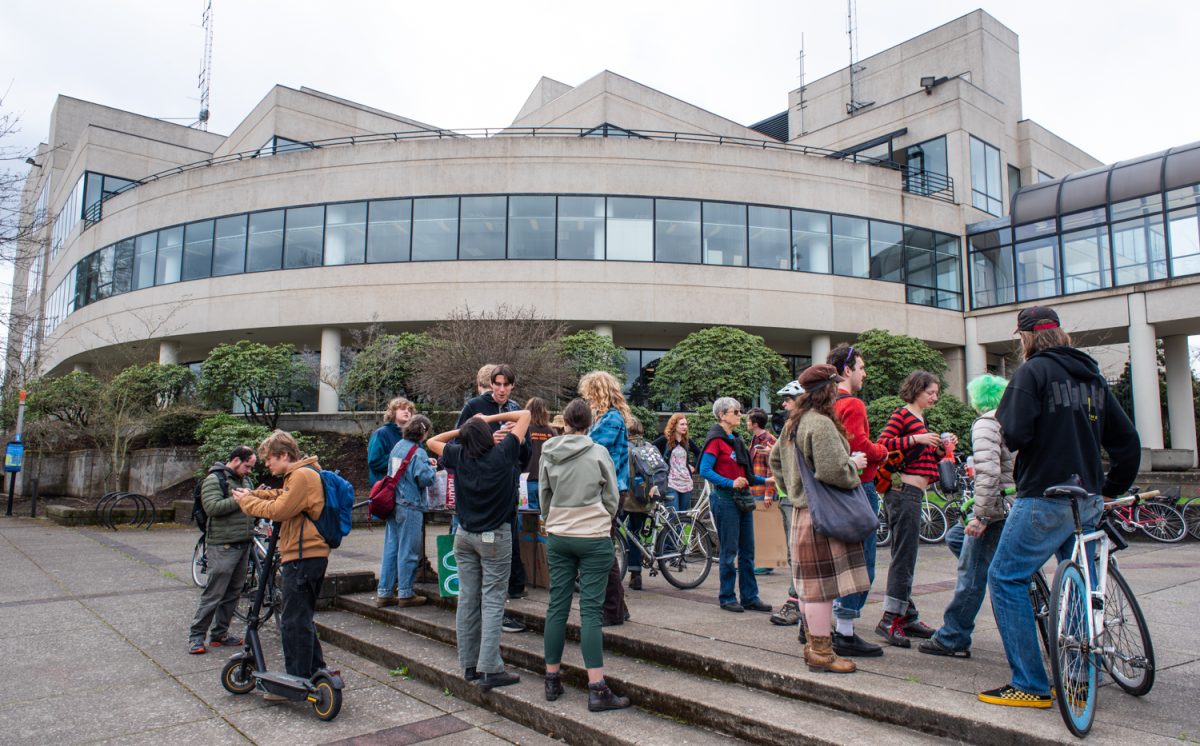
On March 13, while University of Oregon students prepared for the pressures of finals week, climate advocates prepared for a rally to pressure UO to stop fossil fuel use. A group of a couple dozen students, alumni, faculty and community members met outside Hayward Field in the early afternoon and biked together down Agate Street, across the footbridge on Riverfront Parkway and around to the front of UO’s Central Power Station.
The Central Power Station houses two boilers running on natural gas, which heat the UO campus. According to Emily Hoover, a speaker at the rally, this heating system remains the number one emitter of greenhouse gases in the city of Eugene.
Hoover also said that UO recently made a decision “behind closed doors” to “reduce carbon emissions by 65%” instead of halting its reliance on fossil fuels entirely.
Environmentalists in Eugene opposed this decision through protest and asked the university to transition off of fossil fuels altogether.
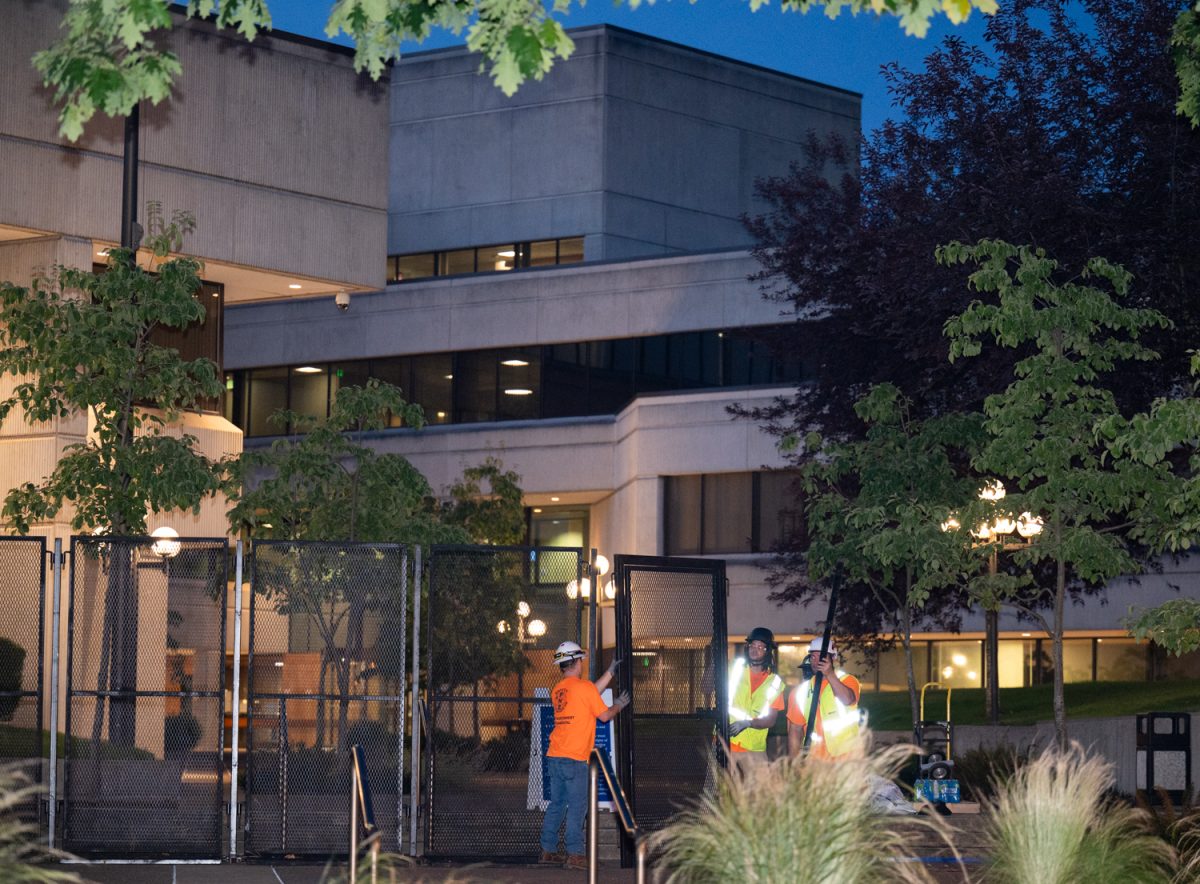
The rally was organized by UO Climate Justice League. Representatives from other organizations participated in the rally as well, including the Service Employees International Union and United Academics. The group gathered behind the fence guarding the power station, where plumes of steam rose up from pipes facing the sky.
Dylan Plummer, another speaker at the rally, is a former UO Climate Justice League organizer who now works at the Sierra Club, a national environmental organization. He started the “CAP the Carbon” campaign as an undergraduate, a group from the Climate Justice League that worked to update UO’s Climate Action Plan (CAP).
“The University of Oregon has done little to nothing to reduce its carbon emissions,” Plummer said in his speech in front of the power station. Plummer added that UO advertises itself as the leader for environmental policy as a university, but doubled down on fossil fuel infrastructure “instead of listening to students a decade ago.”
Plummer advocated for a renewable, electric water-based system.
“It’s a big investment up front, but what’s the alternative? To see our city burn?,” he said.
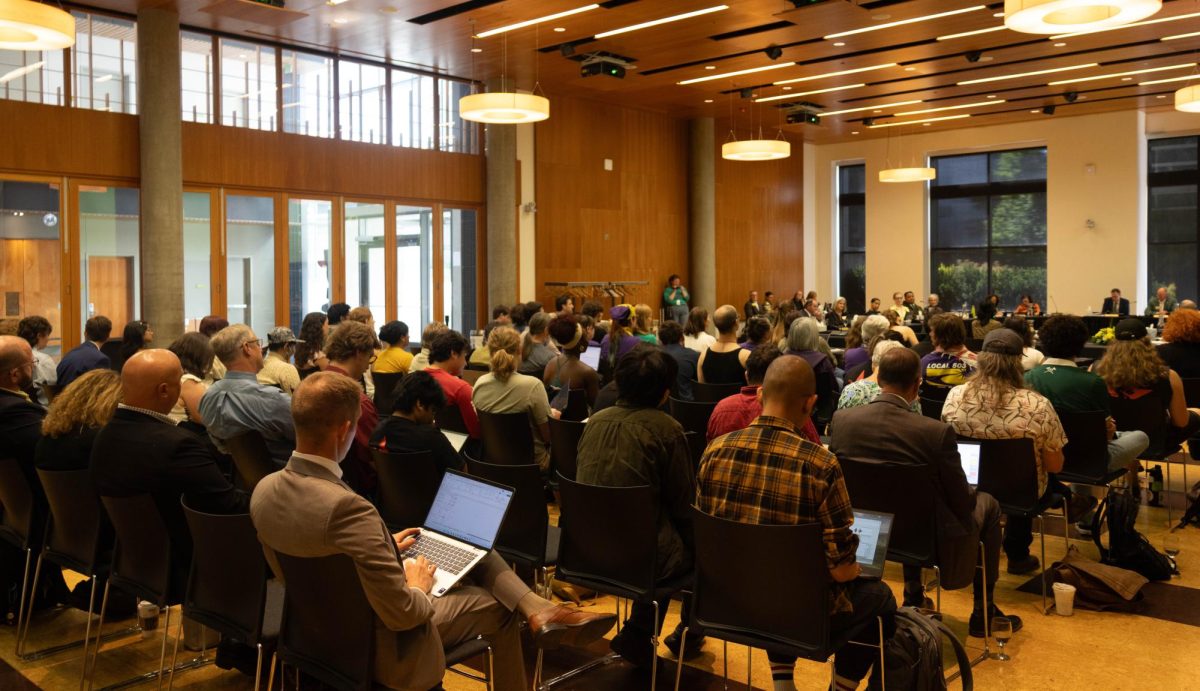
In an interview after his speech, Plummer gave a detailed description of multiple alternatives that were presented to UO Board of Trustees in 2024 by the thermal task force, which is a group of faculty, undergraduate and graduate students, and administrative staff.
The recommended plan was “partial electrification with one electrode boiler, which is a partial emissions reduction with an eye towards longer term planning for comprehensive decarbonization,” Plummer said. That recommendation was ignored by the board of trustees.
“We know there are clear alternatives to the current status quo that could dramatically reduce greenhouse gas emissions … and they’re making a choice not to pursue those alternatives,” Plummer said.
In 2014, the city of Eugene passed a climate recovery ordinance that set a goal to reduce fossil fuel use by 50% citywide by 2030.
“We’re totally off track to reach those goals,” Plummer said. In fact, according to Plummer, the university is pushing to expand gas use on campus.
In January, Eugene environmentalists discovered that UO is working with the Eugene Water and Electric Board, a local water and electricity utility, to expand gas use at the Central Power Station, breaking the 10-year-long process to pursue the electrification of the boiler system, Plummer said.
“The University of Oregon’s refusal to transition off of natural gas is in direct conflict with the city of Eugene’s climate recovery ordinance and the citywide climate action plan that aims to transition our city of Eugene off of fossil fuels,” Plummer said.
Once the rally concluded, the group biked from the Central Power Station to the Eugene City Hall to bring their concerns to the city council.