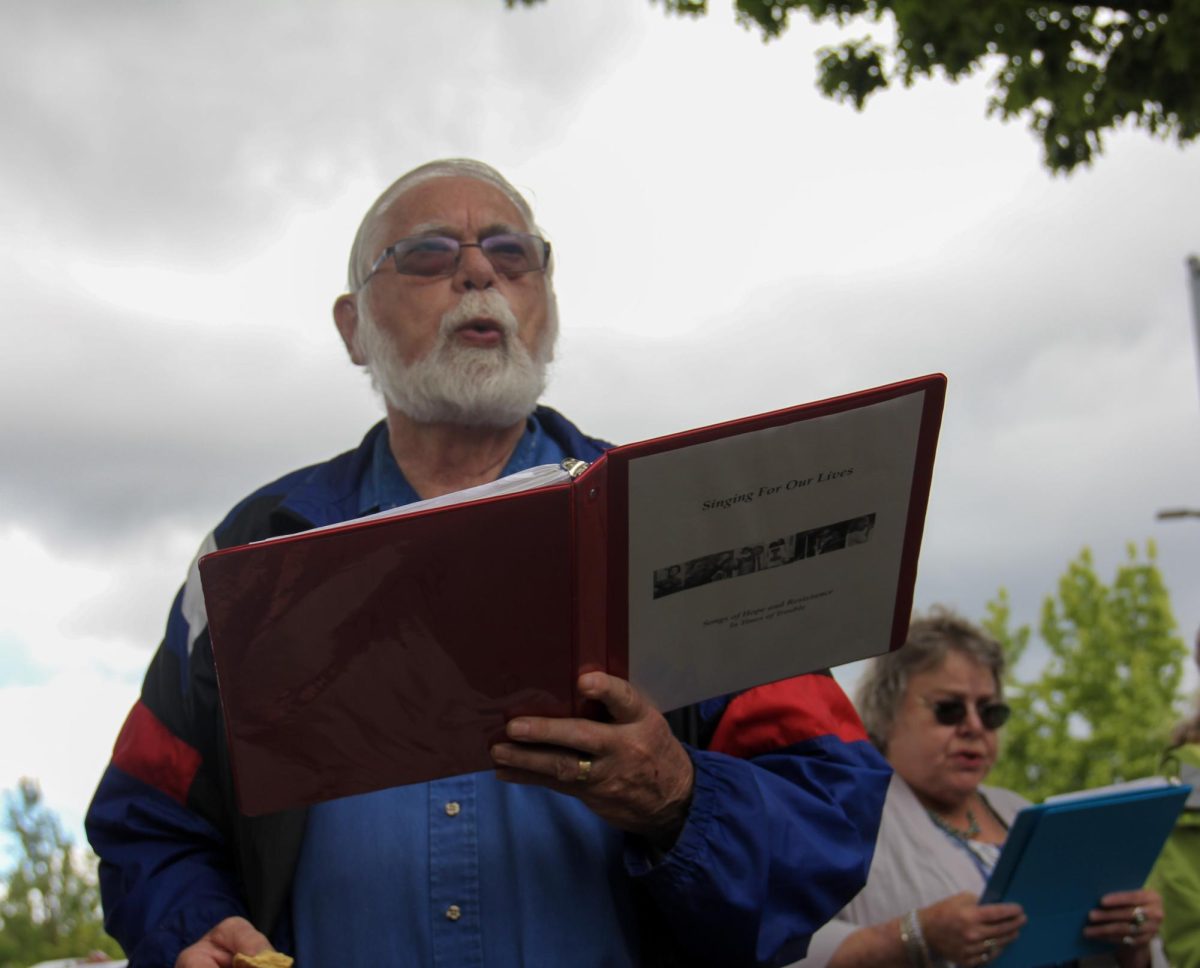
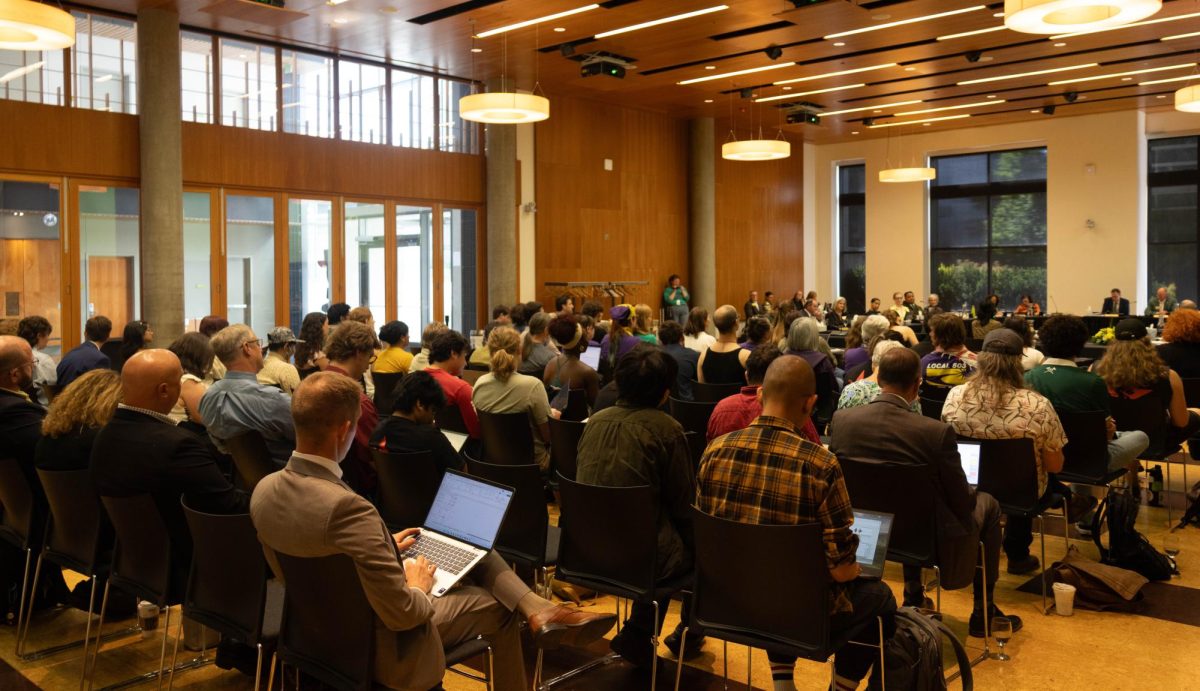
The first mass meeting of the newly founded University of Oregon Anti-ICE Coalition was held on April 3 and over 110 people packed out a room in Fenton Hall. The second, held on April 24, hosted around 60 people in Lawrence Hall.
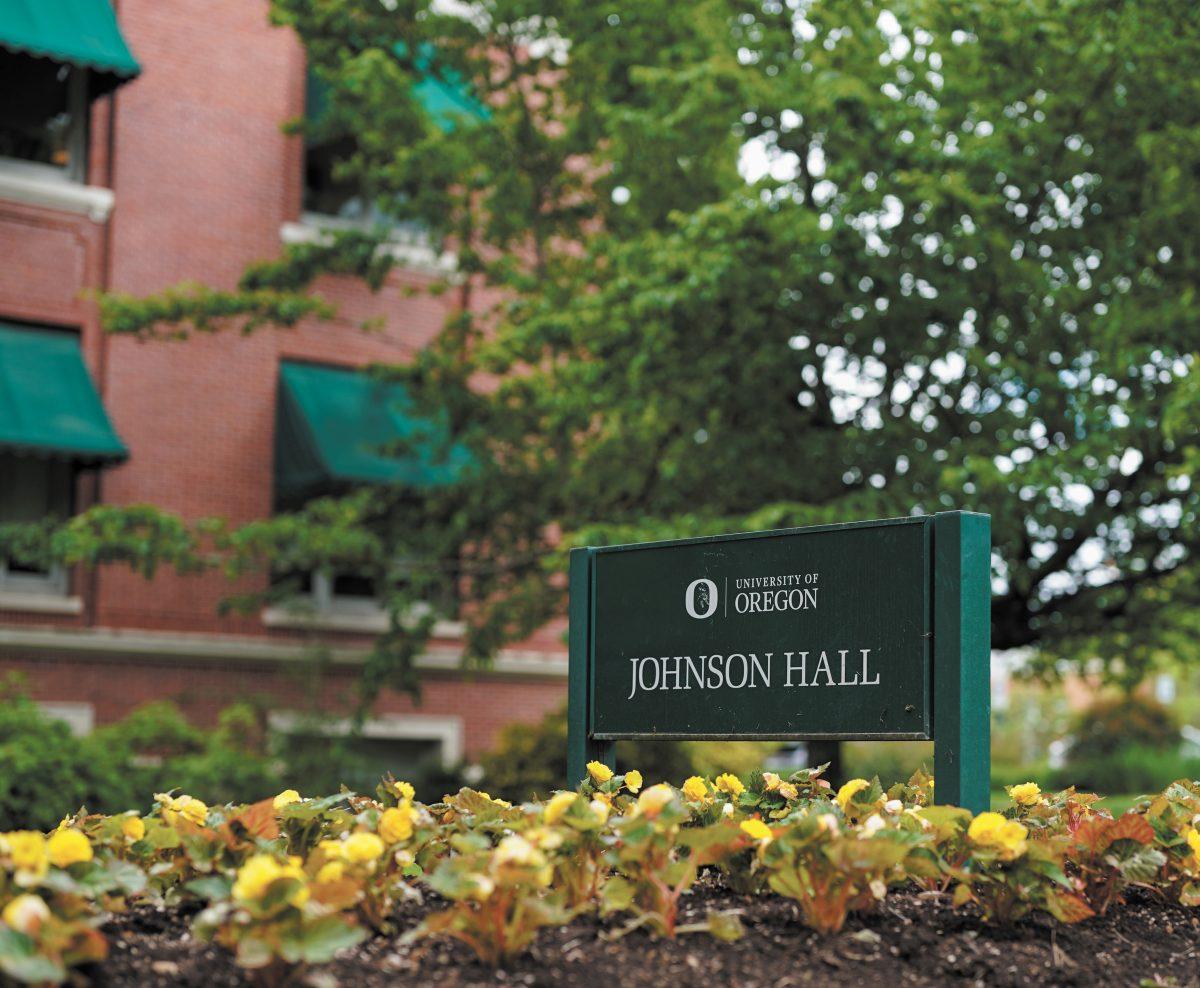
The first meeting went over their demands regarding federal activity on campus. On April 10, the coalition presented the list of demands as well as a petition with 2,600 signatures to university administration at Johnson Hall.
The UO Anti-ICE Coalition is a student organization formed by a collection of pre-existing organizations, including University of Oregon Young Democratic Socialists of America, Graduate Teaching Fellows Federation, Community Awareness and Emergency Response, University of Oregon Student Workers, Associated Students of the University of Oregon, Party for Socialism and Liberation, Movimiento Estudiantil Chicano de Aztlán and University of Oregon National Lawyers Guild.
The coalition’s purpose is to make UO a campus dedicated to protecting students and faculty from ICE and to stand as a resource to members of the community who might be at risk. It was involved in the “Day Without an Immigrant” rally last term in collaboration with other student organizations, including YDSA, UOSW, PSL and Mecha.
Forest Reszka, a speaker at the first meeting, spoke about the goals of the UO Anti-ICE Coalition. One of the main issues discussed was the passing of the Safeguarding Students and Families Act, a legislature from the state of Oregon that mandates all school districts and public universities in Oregon to send notifications to students and families if ICE activity is reported in the area.
According to Reszka, schools are not mandated to put systems into effect until next September, essentially leaving students unprotected through spring and summer. Reszka also said that the act only requires one person to be manning the notification system at each district or university.
“Our demand is that they implement it sooner and have a robust system … we want the university to actually protect its students, not use a loophole to comply with the legislature,” Reszka said.
The other main demand from the UO Anti-ICE Coalition is that the university should not use its code of conduct against students who push back against ICE presence.
“The university said they would use the code of conduct against students who interfered with the kidnapping or detentions,” Reszka said. “Students should not be punished for trying to protect one another.”
UO administration responded to the initial demands by the coalition on April 15.
According to an email sent from the Office of the President to the coalition, university administration “values (their) students’ ability to express themselves, advocate for change, and engage in their community. At the same time, the university has a responsibility to address behavior that may create safety concerns in ways that violate university policy… the student code of conduct is applied consistently and focuses on behavior, not the viewpoint or cause behind it…our approach remains viewpoint‐neutral and grounded in the consistent application of university policy.”
Ava Forn, a speaker at the second meeting and a member of UOYDSA, said the administration’s response “literally does not address our demands at all… it is not binding. The university does not have to listen to us at all, based on their response.”
According to Robin Bailey, a rank-and-file member of UOYDSA, the group is implementing a mass meeting structure to “engage the most people possible…the power of a movement lies in the masses and the people,” Bailey said.
Bailey said he hopes people who are joining campus politics now understand that they are “part of the same struggle that people have been part of here for over 100 years.” He recalled the situation last spring when multiple international students’ visas were revoked.
“It was students and faculty and staff who had to step up first,” Bailey said. “(They) were the ones that these students went to for triage in legal matters because they didn’t trust the university to be the one to help them.”
Bailey added that there has now been a “radical increase” in ICE and Department of Homeland Security presence in the community, and “we’re not seeing the university stand up like it should.”
Bailey wants to see the university actually listen to the UO Anti-ICE Coalition’s demands and allow students and faculty to actually be a part of the governance of the university.
“We want to take a stake in the university and protect our fellow students. We want to be part of that,” Bailey said.
The university’s response to the demands did not reflect those wishes, because they said they will work directly with UOSW, but not the Anti-ICE coalition.
According to the administration’s email response, “UOSW is the exclusive representative of undergraduate employees, and therefore it is appropriate for the university to work directly with the union on matters related to the collective bargaining agreement and the interests of undergraduate employees, rather than engaging separately with other groups on these same topics.” The email then suggested the coalition collaborate with ASUO instead.
Another demand of the coalition was for the university to construct a concrete plan for the building of a Latinx cultural center, which UO President John Karl Scholz made no commitment to when he met with ASUO President Prissila Moreno on April 23.
Victoria Robison, an ASUO member and YDSA steering committee member and treasurer, said she was disappointed in the university administration’s lack of cooperation amid ICE activity in the community.
Robison has been organizing at the university for two years and said she believes the university has a responsibility to protect students against ICE.
“It’s pretty clear that the university won’t do anything unless students actively pressure them, which is really disappointing,” Robison said. “Someone has to do the work to make that happen, and that’s why the anti-ICE coalition is important.”
The next step for the campaign is May Day. Also known as International Workers’ Day, May Day is celebrated on May first. According to Isaak Ordaz, the co-chair of UOYDSA and a speaker at the second meeting, May Day has historically been a day of protest, stemming from the Haymarket Affair of 1886, when workers fought for the eight-hour workday. Notably, the U.S. is one of the few countries that does not celebrate International Workers’ Day in May, but instead has Labor Day in September.
The Anti-ICE coalition is calling for a day of no shopping, work or school on May 1, and encouraging students to walk out of classes at 2:30 p.m. Then, there will be a rally in front of Johnson Hall to “show the university that we, the students, can hold them responsible for their actions,” Ordaz said.