

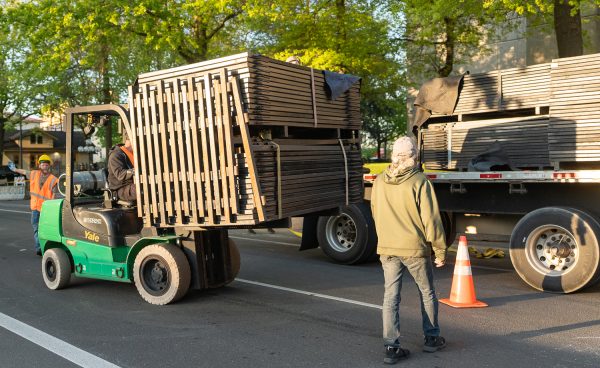
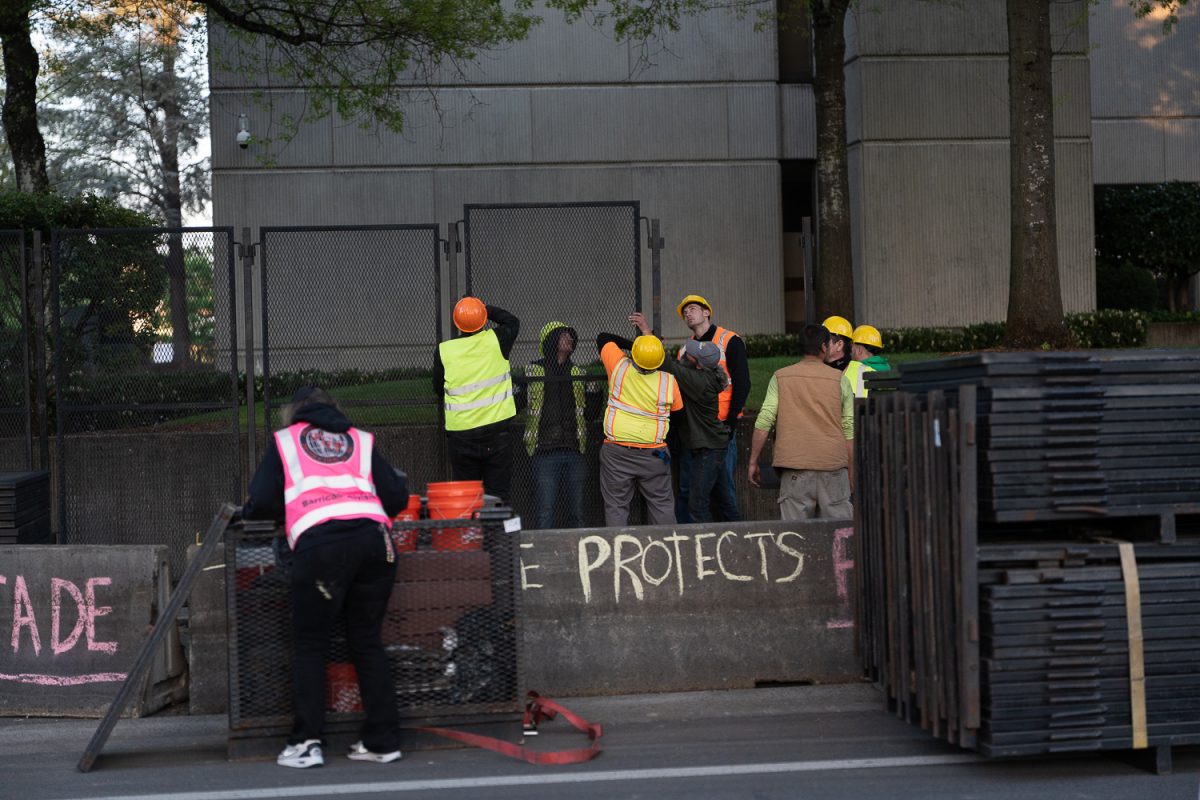
Construction began Tuesday morning on a permanent sidewalk along Pearl Street between 6th and 7th avenues outside the Eugene Federal Building.
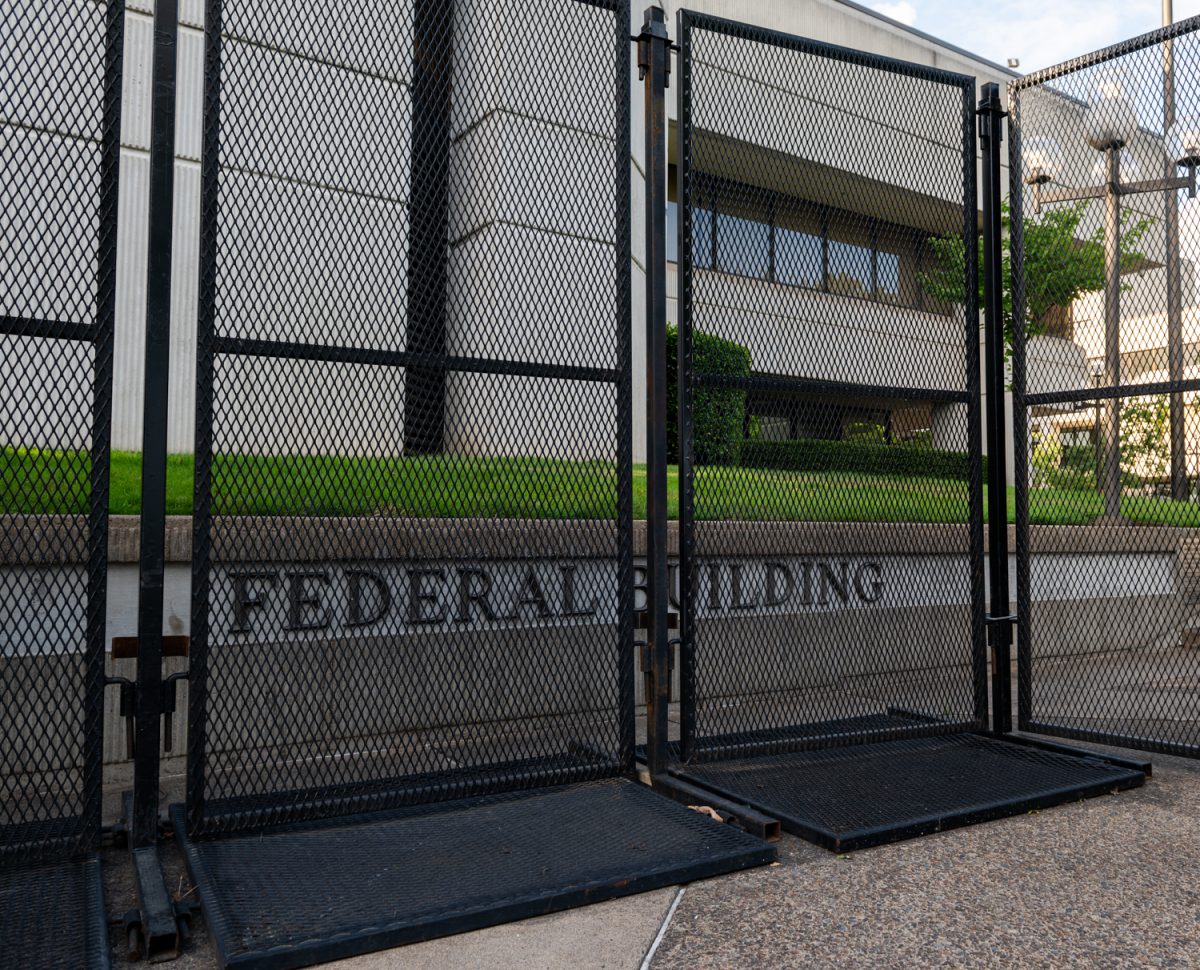
The sidewalk replaces a temporary pedestrian path installed in April after the federal government erected a wraparound fence around the building.
With the fence expected to remain in place for approximately two years, the City of Eugene will spend $50,000 in local road funds to construct the sidewalk.
The eastbound lane of Pearl Street will be intermittently closed through June 23 to accommodate construction.
The project comes as a federal lawsuit challenging the fence was filed last week.
On June 4, six Eugene activists sued the General Services Administration, alleging the fence violates their First Amendment rights by restricting speech and assembly.
The lawsuit, filed by attorneys Marianne Dugan and Lauren Regan of the Civil Liberties Defense Center, also alleges the fence violates the Administrative Procedure Act because the federal government’s decision was “arbitrary and capricious,” and was implemented without an opportunity for public comment and creates accessibility barriers.
The suit seeks a court order requiring the federal government to remove the fence or reopen public access to the upper portion of the Free Speech Plaza.
In the complaint, plaintiffs repeatedly argue that the fence prevents elderly and disabled protesters from accessing the upper Free Speech Plaza.
Federal officials have said the fence is necessary to protect the building and its employees while repairs are completed following damage sustained during protests earlier this year. The federal government has also said a designated protest area remains available on the lower portion of the plaza, though plaintiffs argue the remaining space is only a “sliver” of what was previously accessible.
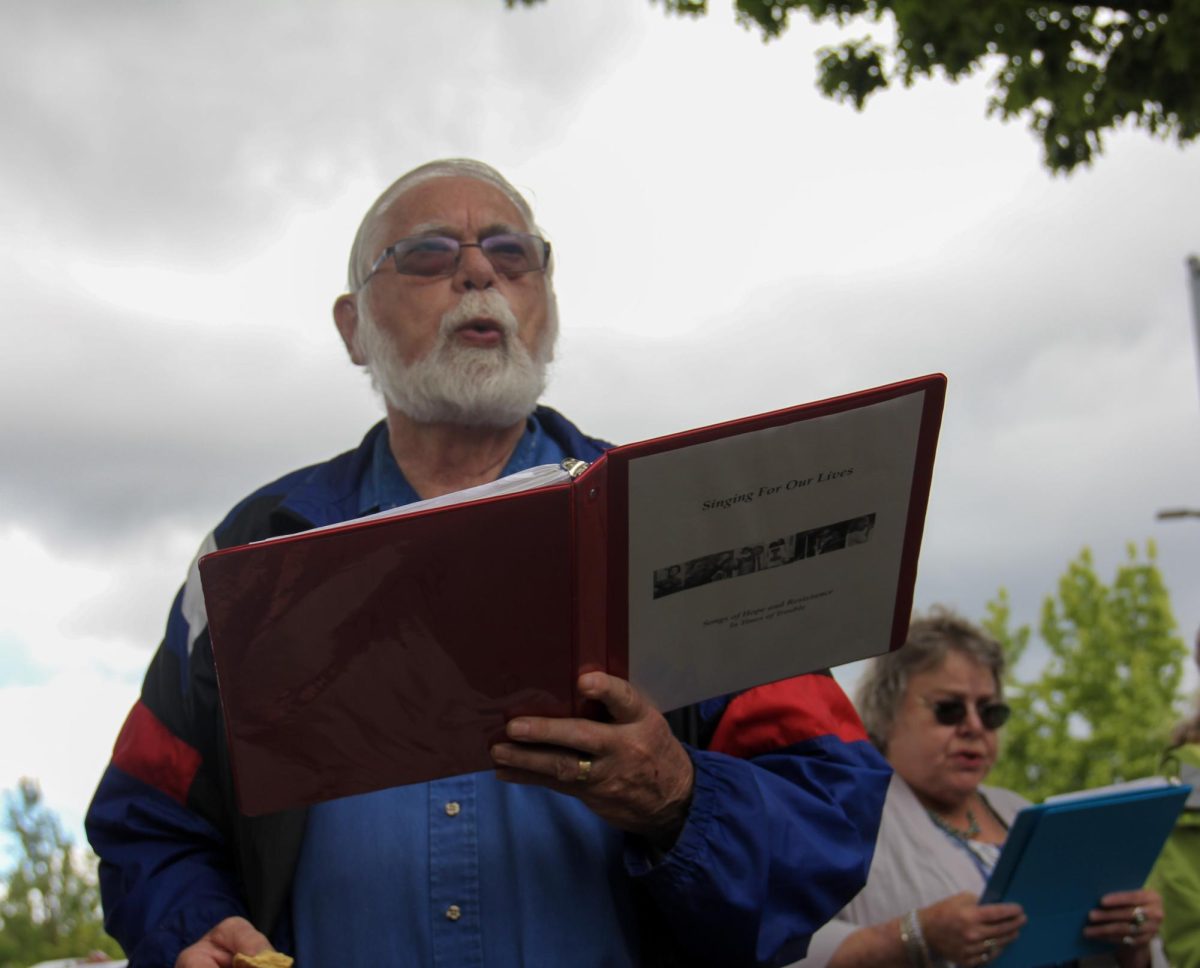
One plaintiff, Naphtali Renshaw, states in the complaint that her group, Singing for Our Lives, has held weekly vigils at the plaza since September 2025, with portions of the program dedicated to remembering victims of ICE violence. She argues the fence creates safety and accessibility challenges for participants with mobility limitations.
The lawsuit also emphasizes the historical role of the federal building and Free Speech Plaza as a gathering place for demonstrations over the past 50 years, including protests related to the Vietnam War, Gulf War and Iraq War.
Plans for the fence became public during a Feb. 12 Eugene Police Commission meeting, where then-Eugene Police Chief Chris Skinner said, “We are facilitating the arrival of some fencing that will go up there.”
Though Skinner discussed the project publicly, Eugene police were not involved in constructing the fence, according to EPD spokesperson Melinda McLaughlin. The Federal Protective Service, a branch of the Department of Homeland Security, was responsible for installing it.
The city’s involvement was limited to issuing a right-of-way permit related to the project.
Throughout the beginning of the year, protests occurred frequently outside the Eugene Federal Building. In January, Eugene police declared one protest an “active riot” and ordered demonstrators to leave the area.
The building has since become a focal point in debates over the use of tear gas, pepper balls and other crowd-control munitions by federal agents responding to demonstrations.










Steve Scarich • Jun 12, 2026 at 4:59 am
That sidewalk will cost a whole lot more than $50,000.