
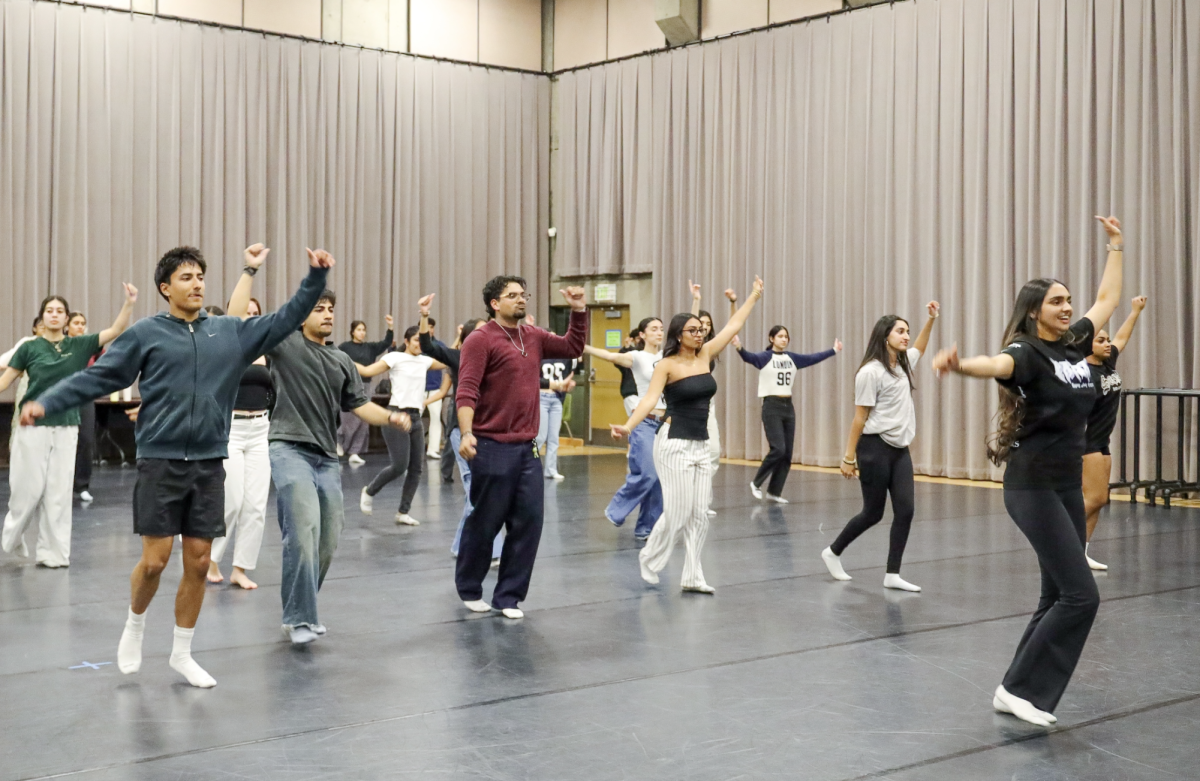
Every Thursday at 7:30 p.m., a group gathers in the Rec Center’s Studio 41. It’s tucked away from the main bustle of the open rooms filled with machines and weights, but it isn’t cramped by any means. Tonight, they’re practicing a routine to “Iski Uski” from the 2014 Indian rom-com, “2 States,” in front of the wide mirror. The team splits into two groups alternating motions. They laugh as they move through the steps together, swinging their arms and stepping side-by-side.
This is a typical session for Desi Ducks, UO’s co-ed Bollywood fusion dance club. Zaara Arora, a sophomore, has been dancing her whole life and teaches each new routine. It’s a role she has established for herself through her co-founding of Desi Ducks, an organization formed out of a desire to create a space on campus for students like herself. In April 2025, Arora, Ameya Shenoy, Thara Rao and Anjali Srirama founded the dance group.
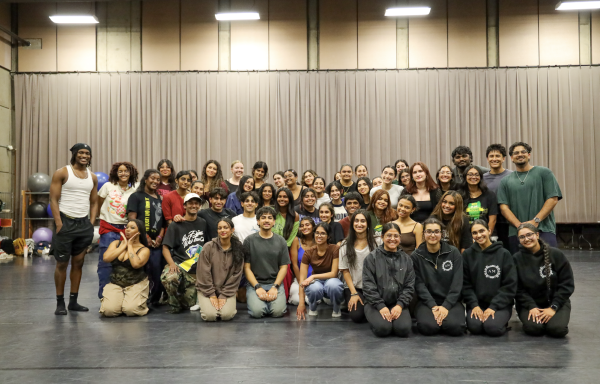
Each meeting is dedicated to learning new choreography to popular Indian songs, many derived from Bollywood films. The group has held events sparsely throughout the year; their most recent workshop focused on Bhangra, a high-energy style of Punjabi dance, alongside local all-female dance team Ankhi Mutyaraan.
Many of the attendees hadn’t been introduced to the style before, and Desi Ducks enjoyed sharing it with them. It was also the group’s first independent event. Hosting was “definitely a big learning curve,” according to Arora, as they have only recently become an ASUO-recognized organization eligible for a surplus budget.
“It was really cool because this was the first time that we’ve had Punjabi representation here at Oregon,” Arora said. “But since we hadn’t had a finance person yet, it was definitely a learning experience when it came to filling out the right forms and coordinating, catering and logistics. And it was definitely a lot, but seeing how many people showed up and the support that we got from it was a lot more than I expected.”
Jai Pandhoh and Hridi Bhakta, students who have been members since the beginning, have both enjoyed watching the group evolve over the past year. Bhakta specifically noted that the group’s inclusive environment creates the opportunity for non-South Asian students to learn about culture through dance.
“I like to see non-South Asian people come and do the dances that I kind of grew up doing. It’s very nostalgic and just heartwarming to see. Like, now you’re all grown up and see your non-South Asian friends doing it,” Bhakta said. “It’s really fun, and it’s a very inclusive community.”
Pandhoh, who helped coordinate the Bhangra workshop, agreed, adding that it’s been exciting to see students from various cultural backgrounds join the group. “I think that’s a beauty of South Asian dancing,” he said. “Something like Bhangra is one of the dances that we do, and a lot of people, even if it’s not their type of dance or where they’re from, they still like doing it.”
Both Pandhoh and Bhakta are looking forward to watching Desi Ducks grow while introducing the community to the practice of South Asian dance. A crucial factor in establishing a presence on campus is through collaborating with other student organizations, something they hope to do more of moving forward.
They have worked with several other cultural organizations on campus this year. Most notably, with UO’s South Asian Cultural Alliance for their Navratri celebration in October and their Diwali celebration in November. A standout collaboration, however, was a workshop with UO’s Muxeres in October to a mash-up of “Dil Dooba” and “Con Calma.”
To Ameya Shenoy, vice president of public relations and marketing, Desi Ducks is an initiative to “create a space where our culture is visible and celebrated on campus, especially during these divided times.” Shenoy said, “One of our biggest goals is collaborating with other cultures and just showing people that collaboration is what connects us. Culture is so important, and I feel like we miss that a lot at UO.”
Arora emphasized the importance of keeping Desi Ducks a low-stakes, casual, collaborative environment. She said that as members continue to practice, their skills will naturally improve, but that shouldn’t be the driving incentive behind participation; creating a space of inclusion and cultural appreciation is what matters most. Next year, the Desi Ducks executive board is expanding to include two choreographers and a vice president of finance.
“I mean, I just think it’s incredible how much we have grown in the last year,” Arora said. “I think it just shows the love that people have for it out of something that we built from the ground up. And it’s just been really, really meaningful to see the growth of it. Dance meant so much to me my entire life, it’s part of who I am, and it’s kind of cool that I get to embed that into other people’s lives too.”


