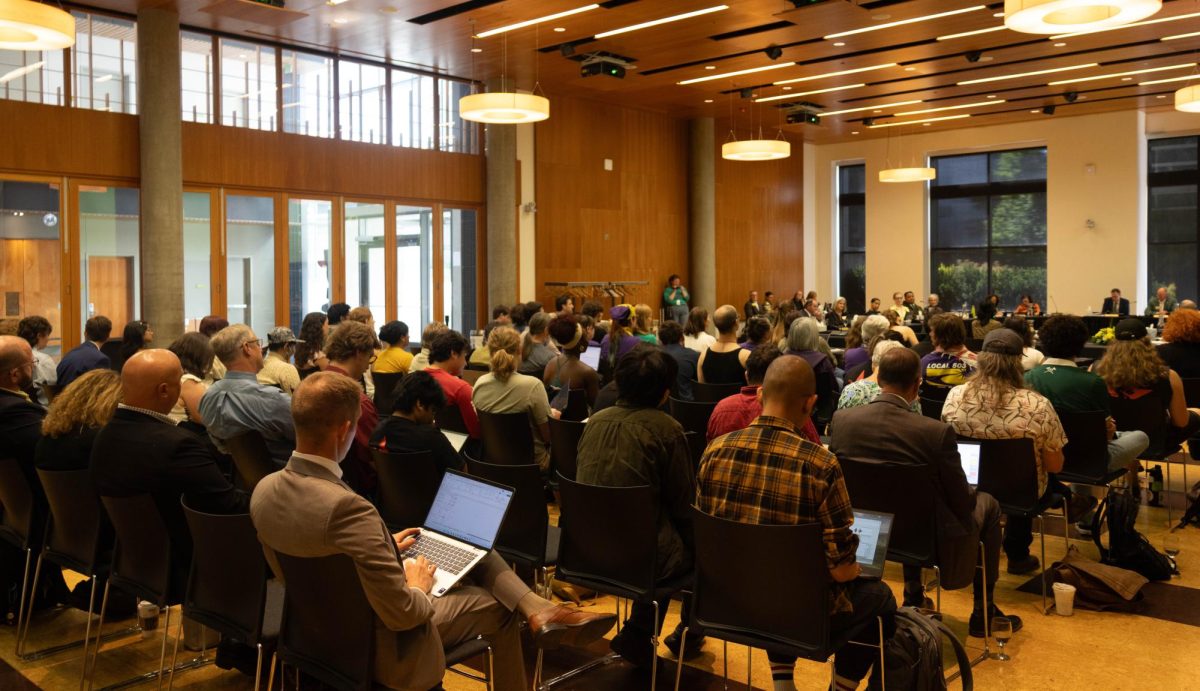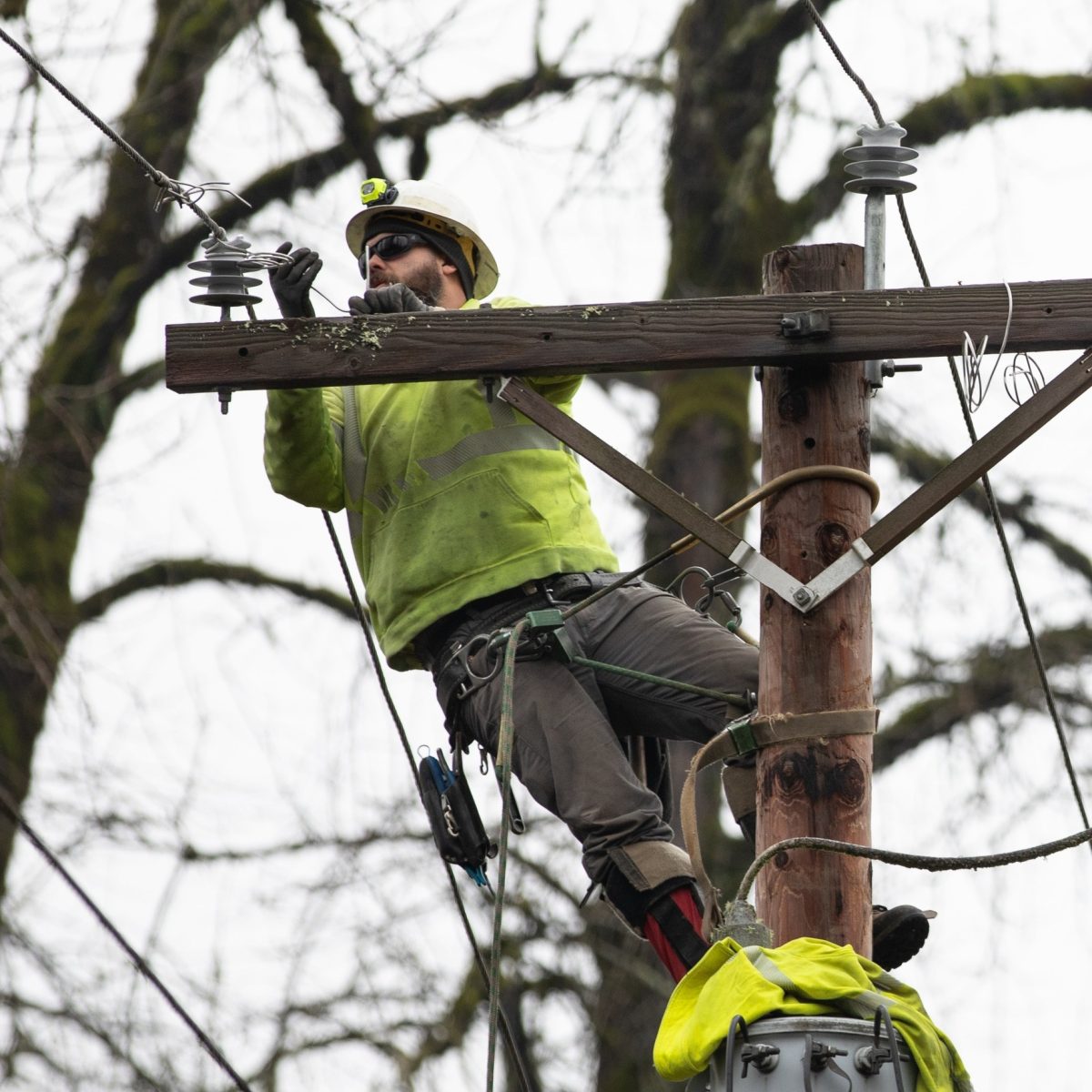
A district judge dismissed a lawsuit against Eugene Water and Electric Board from environmental groups that claimed the utility has been violating the Endangered Species Act for 16 years.
The lawsuit was filed by Cascadia Wildlands, the Willamette Riverkeeper, Oregon Wild and the Native Fish Society as a response to the delayed construction of a fish passage at the Trail Bridge Dam by EWEB. The environmental groups claimed that the utility has been dodging multiple federal laws that require fish passages to compensate for blocked bodies of water, like dams.
Bethany Cotton, conservation director at Cascadia Wildlands, said that EWEB initially made an agreement with the Federal Energy Regulatory Commission to build a fish ladder during the Trail Bridge Dam’s relicensing process in 2008, but backtracked several years later and decided to do trap-and-haul operations instead.
“The fish agencies said to EWEB that (trap-and-haul operations) weren’t as good, but if they can build it and have it running within three years, then we’ll agree,” Cotton said. “That was in 2016, and now it’s 2025, and EWEB still hasn’t built a trap-and-haul facility or otherwise provided fish passage at the dam.”
Trap-and-haul operations are considered significantly inferior to the fish ladder due to multiple reasons, but even more so recently due to increased wildfires. The system involves fish being attracted to the flow of a climb ladder, where they will then be trapped and transported by a fish hauling vehicle to be released elsewhere.
“The trap-and-haul system needs to have humans there 24/7 to move and access the fish. This area of the river is prone to wildfires. The road has been closed multiple times in the past five years. So even if there are fish, there is no one to get the fish,” Lindsey Hutchinson, staff attorney at the Willamette Riverkeeper, said.
Cascadia Wildlands moved to file a lawsuit alongside environmental groups such as the Willamette Riverkeeper after years of these delays.
“We proceeded with a notice letter under the Endangered Species Act, and other than acknowledging that they’ve received it, they did not reach out,” Cotton said. “There’s a process where you send a 60-day notice letter, and the idea is that the parties could potentially reach an agreement. EWEB didn’t make any effort to do that during these couple of months, and so ultimately we filed the lawsuit.”
The lawsuit was officially filed in March 2025. In EWEB’s public response, they claimed delays were due to experiencing “one obstacle after another,” and that FERC postponed construction due to safety issues.
EWEB motioned to dismiss the case due to a lack of jurisdiction from the district court. District Judge Mustafa T. Kasubhai granted the motion to dismiss, concluding that all issues with FERC licenses must be resolved exclusively through the Court of Appeals, as stated in the Federal Power Act.
Since the decision, EWEB has announced a plan to build a permanent trap-and-haul system by 2032.
Despite this, Cotton is not expecting her fight to end anytime soon. “We are reviewing the opinion and are discussing next steps as a coalition. Rest assured, this is not the end of our efforts to ensure adequate fish passage for bull trout and Chinook salmon at Trail Bridge Dam as soon as possible.”