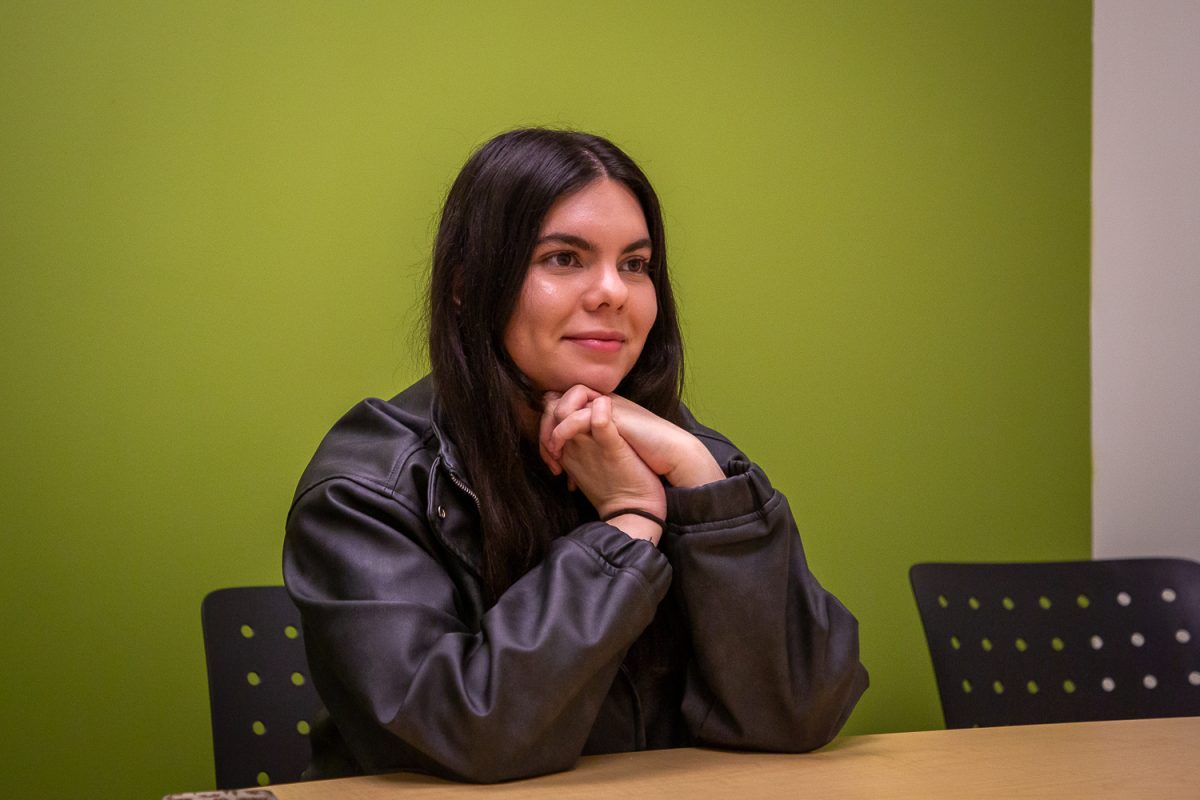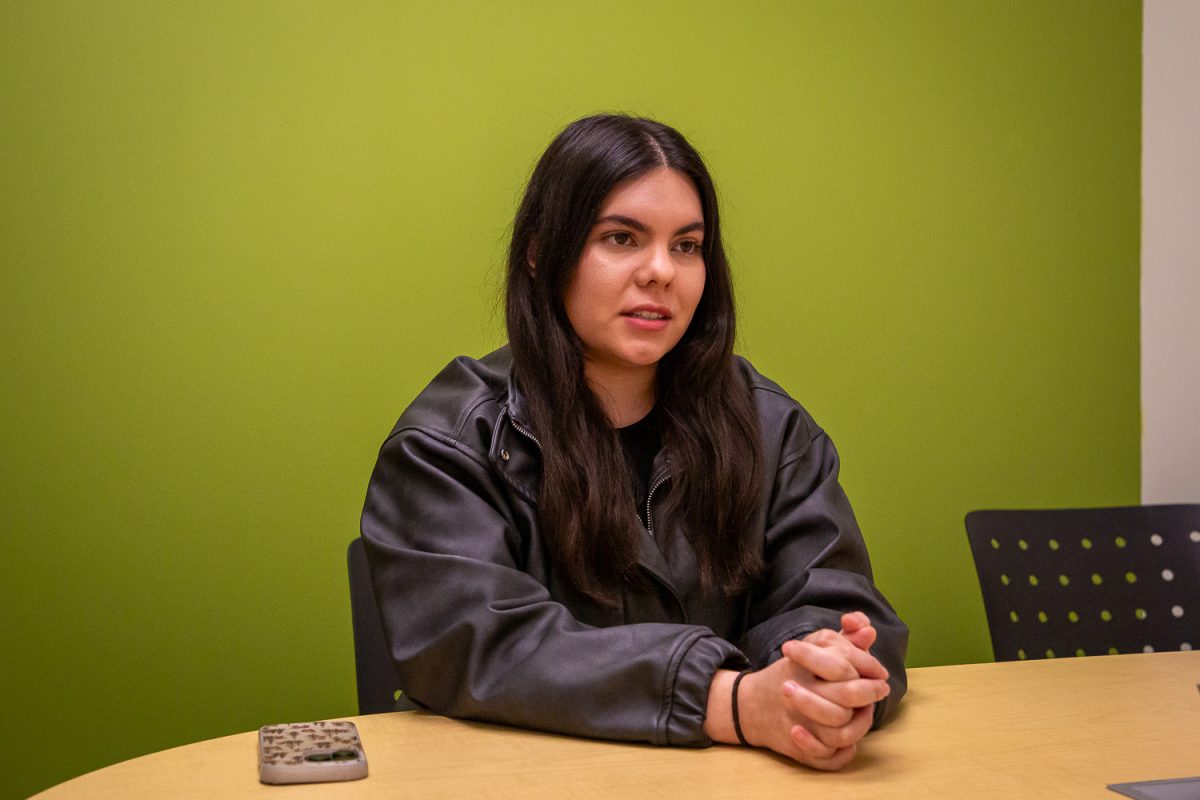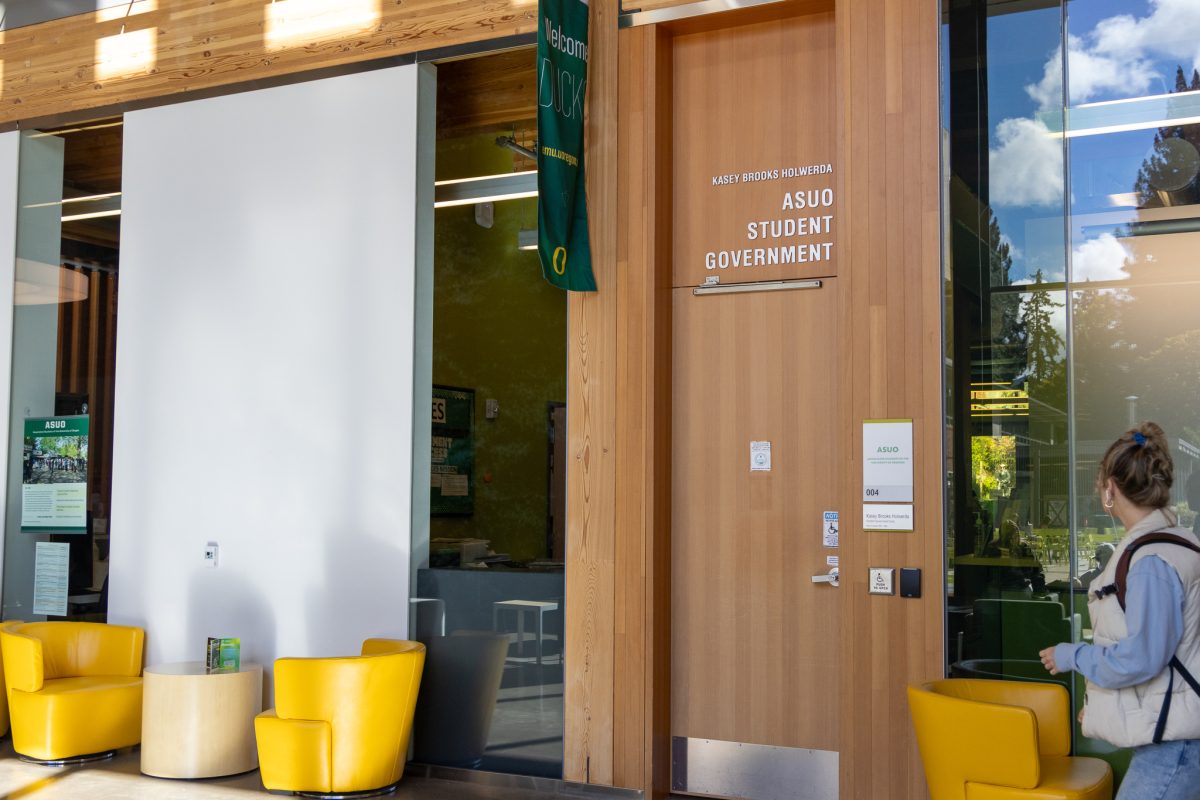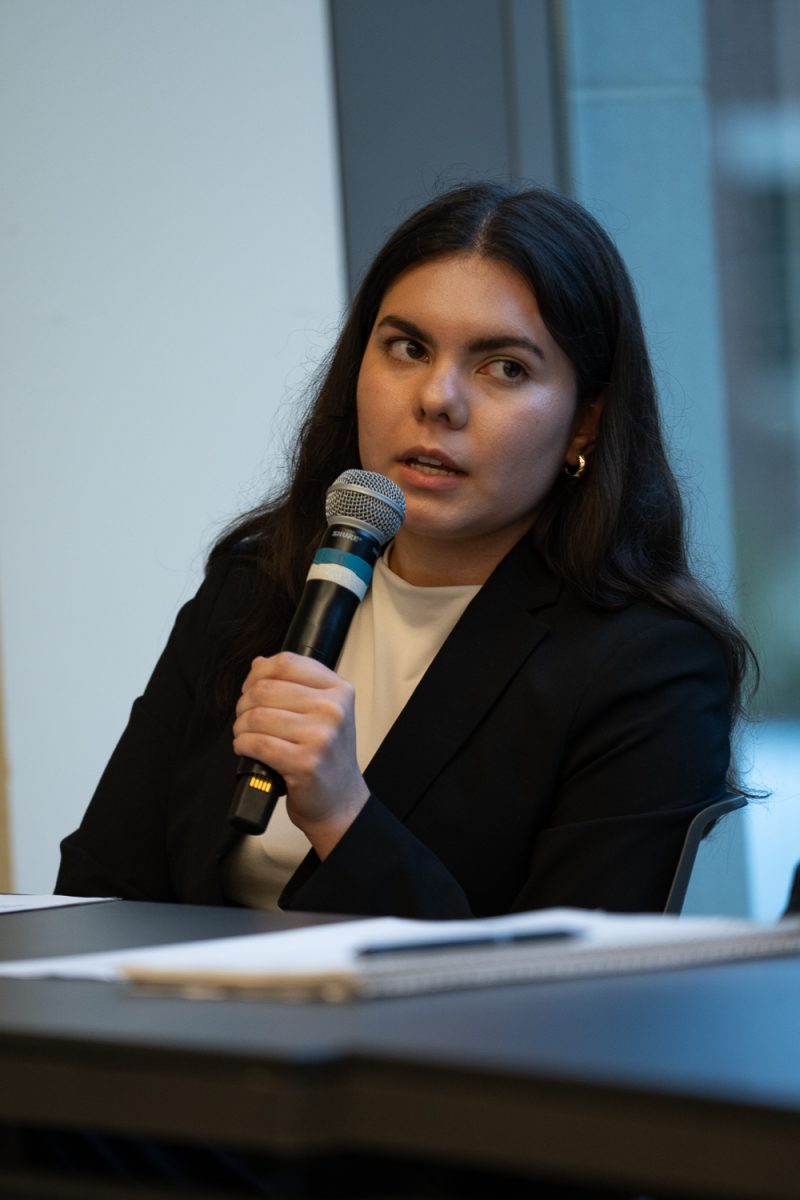
Running on the Student Power slate, Prissila Moreno was elected as ASUO’s president last April. The Emerald sat down with Moreno to ask about her background, goals and challenges she might face during the upcoming academic year.
Editor’s note: The following responses have been edited for brevity and clarity.
Emerald: What sparked your interest in student government?
Moreno: I have my background in organizing with (Oregon Student Public Interest Research Group) students on campus; we’re a group that works on social and environmental justice issues, and I did that my freshman year and my sophomore year. It was through OSPIRG students that I learned about ASUO, and I was very interested in the dynamic between OSPIRG students and ASUO.
During my time as a freshman and a sophomore, there was an interesting dynamic of feeling like the student government at this university didn’t really see the value and the type of work that a group like OSPIRG did, and that really confused me because we did a lot of really cool stuff, like registering hundreds of students to vote and passing a bill in Salem to ban one of the worst kinds of single use plastics. So I just couldn’t really understand why there were some actions being taken to kind of diminish our ability to do our work well. And that’s why I ran to be a senator my sophomore year, and I won.
I ran on the Student Power slate because I believe that was a group that really understood the power in organizing and grassroots tactics and winning campaigns.
Then, to run for president, it was a little bit unexpected. Student Power was forming its platform and its slate again this year, and we had all of our senate seats filled, but we didn’t have a front runner. So we were sitting there for a couple of weeks thinking: ‘Well, what do we do? Do we run an all-senator slate?’ But ultimately, we figured that it would be most impactful to have front-runners. So, Jordan (Ackemann, Moreno’s running mate) and I were sitting in a room with our campaign manager and just said, ‘We’ll do it. We’ll be the front-runners.’
Emerald: What are your biggest goals for the upcoming year?
Moreno: As things come up, it feels like our goals change a little bit. For example, this past summer, with all of the budget cuts, it was really a hard reminder that shared governance at the University of Oregon might not exist the way that I went into this role thinking (it did).
So I really thought, ‘Wow, ASUO is really credible when it comes to the university and is taken seriously. So we’re going to be in rooms where hard decisions are being made.’ And once that was not the case with the budget cuts, I realized, ‘Okay, maybe shared governance is not as strong as I thought it was.’ So I think that’s a way in which my focus has been skewed a little bit, and that’s something that I really want to invest a lot of time into.
But I think first and foremost, trying to deliver on our campaign promises is a big goal. So (that means) expanding academic services is still on our minds.
We’re also interested in expanding our cultural centers. I’m really interested in hopefully creating a coalition of Latinx students who push for a Latinx center. I’ve read a couple archives of that being an effort that students have made for decades now. So I’m really interested in talking to some students over at Mujeres/Muxeres and MEChA who might have been part of those conversations historically and see where I can support them.
Emerald: Across the US, there is a push to dismantle DEIA, including in higher ed. How do you plan on increasing cultural centers and DEIA at UO in the face of these federal pressures?
Moreno: I think there’s a balance of being really loud about ‘Hey, we’re not going to be afraid of the pressures coming down from the top!’ but also considering how that might make the University of Oregon a target for a lot of these attacks. We’ve seen the Trump administration have lists of universities that should be watched for for things like unlawful sanctuary laws, and that’s really worrisome because we value our sanctuary laws, and we would love UO to come out and say that they’re a sanctuary campus, but there has to be a strategic way to do that which also protects the communities that are most at risk, like our (UO’s) international students.
So I think that our (ASUO’s) advocacy department really wants to focus on DEI this year and ways to make our communities feel safe by providing things like legal services, making those resources known to them.
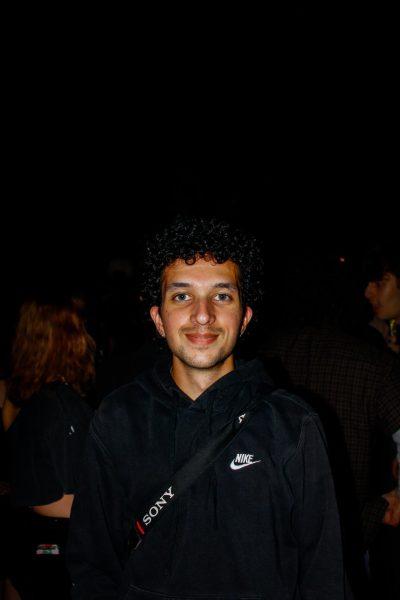
We have an amazing DEI secretary. His name is Daniel Gyekye, and he has a lot of institutional knowledge being in student government for a couple of years at his past college. And that’s something that I’m going to rely on a lot (for advice on) how to do this strategically while also keeping those communities in mind, because I can go into rooms or I can make statements that might ultimately harm the communities that I’m trying to help. So it’s something that I’m trying to be very careful about, and also surround myself with the people who are being most impacted, so that I know how to best support them.
Emerald: What does “shared governance” mean to you, and what would be your vision for an ideal shared governance situation with UO administration?
Moreno: When we talk about stakeholders at the university, we’re talking about students, because there’s no university without students. So we have to be consulted, but it has to be meaningful and it has to be real. Because right now, shared governance is not real because it’s not written anywhere with specific language.
Shared governance, to me, is who is at the table. And it’s interesting to me that when we’re talking about the key stakeholders at the university, we’re talking about faculty, staff and administration, but it seems time and time again, we’re leaving out students as key stakeholders, students who are paying thousands of dollars to be at the university. So to me, shared governance that is real includes all of the parties that I mentioned and students who are paying to be at this university.
Correction: A previous version of this article misidentified the Secretary of DEI as Daniel Getty. The correct name is Daniel Gyekye. The Emerald regrets the error.