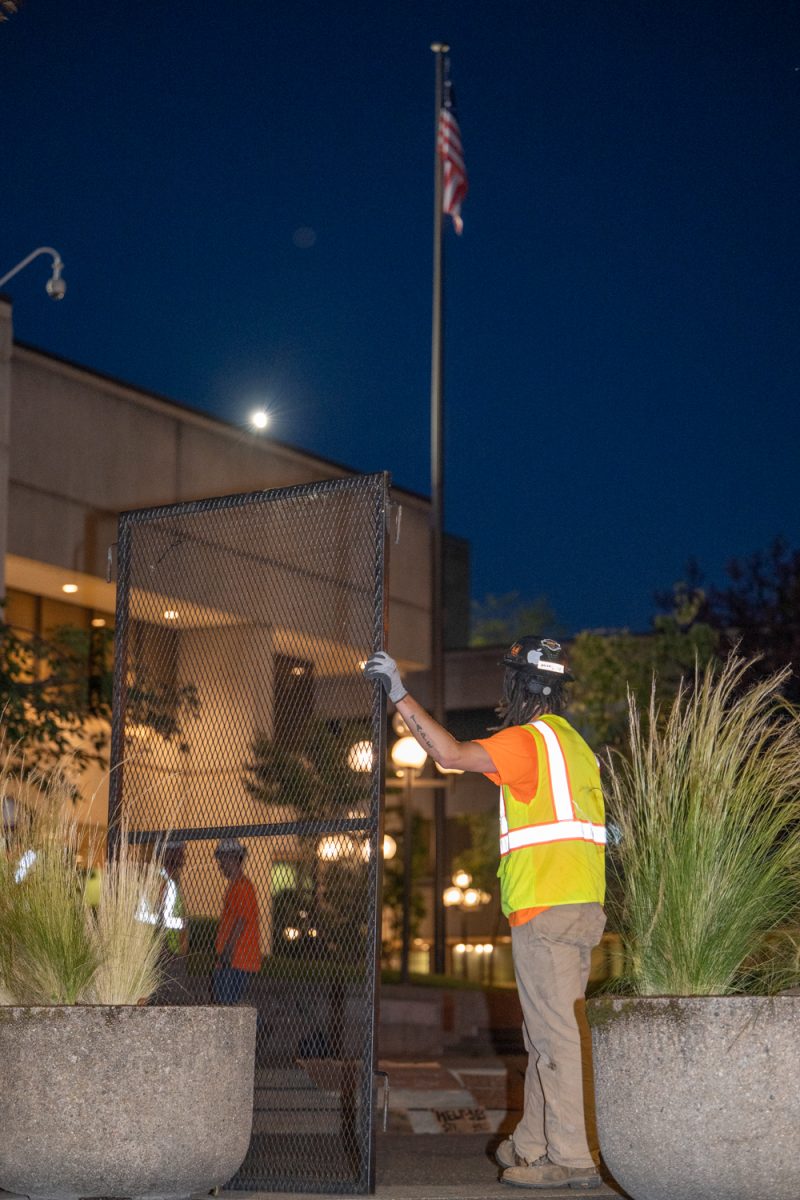
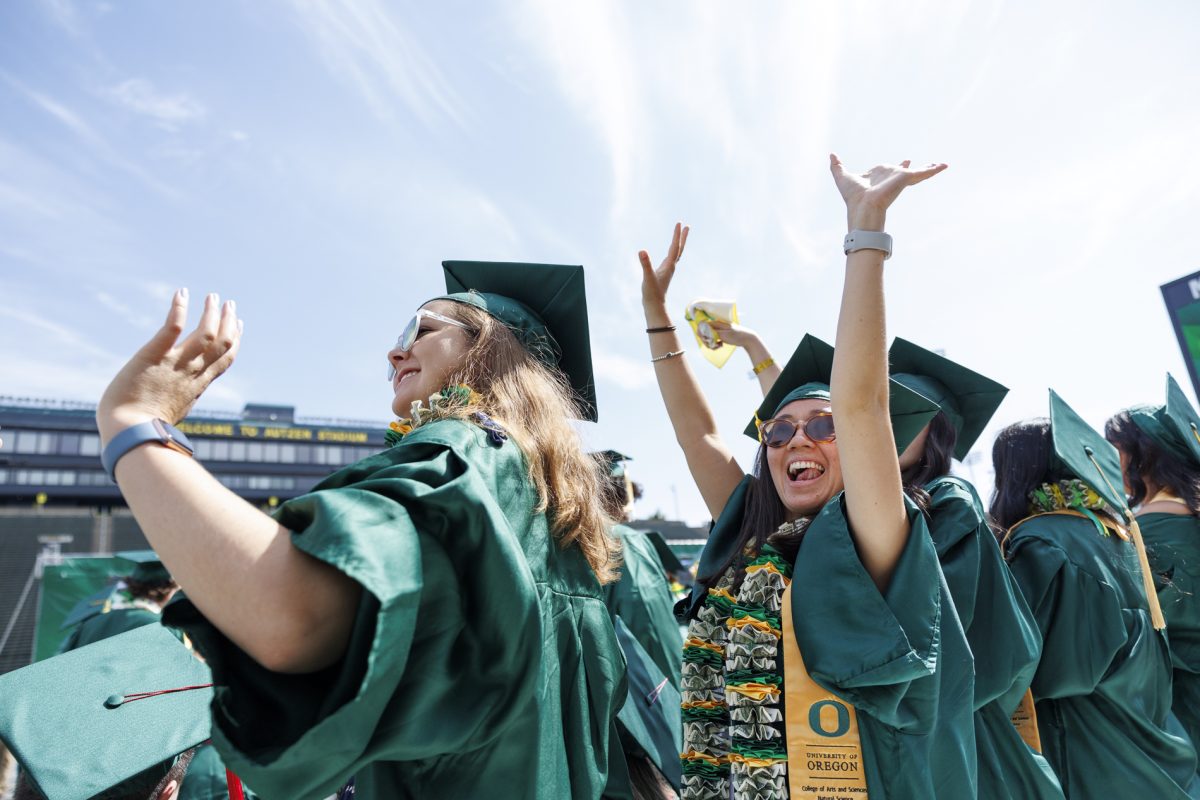
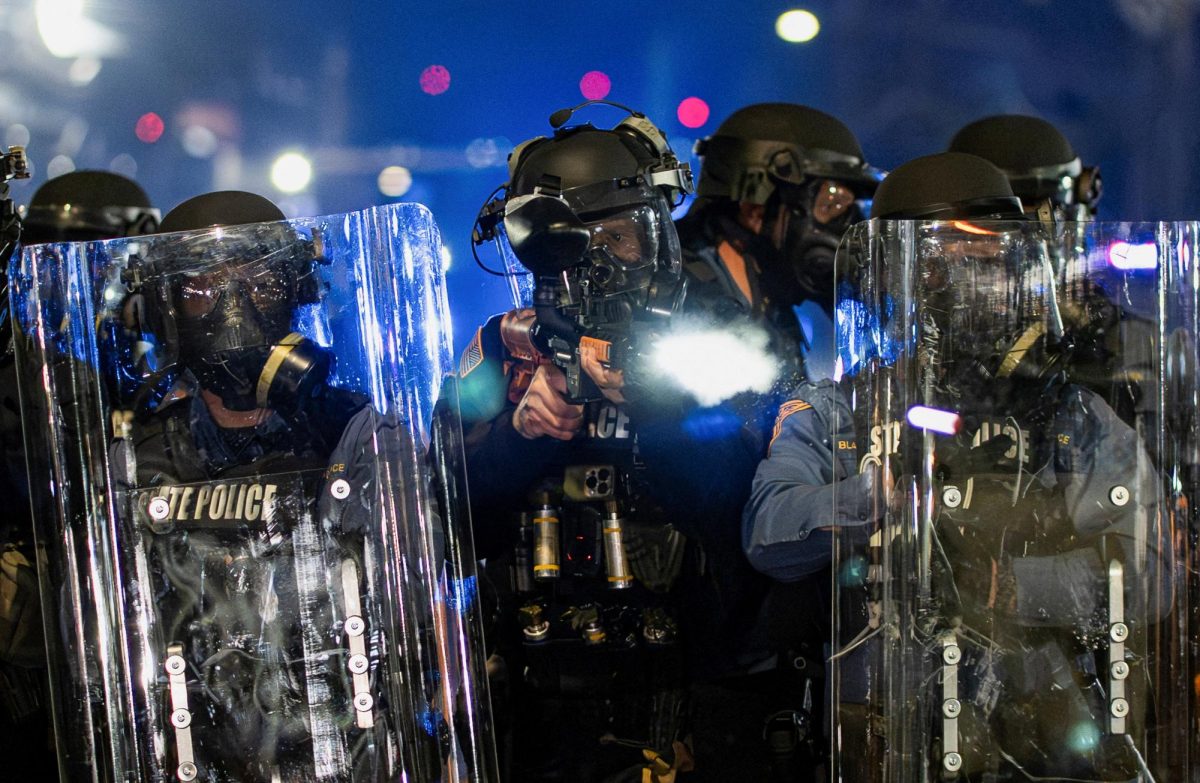
With a family engaged in activism, I’ve known the power of protesting since childhood. From making signs for my mom to bring to a 2016 women’s march, introducing friends to their first protest after the overturning of Roe v. Wade or standing up against armed neo-Nazis with riot police lining up around the crowd at a 2020 Black Lives Matter Protest, I’ve experienced a range of different protests.
One thing that remains the same at these protests is the energy of change. People who protest are showing up to express their frustration, but also their support, hope and solidarity in an effort to create actionable change.
I recently attended the No Kings 2 Protest in Eugene, where I noticed the majority of people present seemed to be middle-aged and elderly. With a limited Gen-Z presence, I realized that in an era of political polarization, it’s essential for students to show up for what they believe in.
Around 10,000 people attended the June 14 No Kings protest. By the time the No Kings 2 Protest rolled around on Oct. 18, there was “a crowd of approximately 4,000 protesters.” This sharp decline speaks to the decrease in local momentum and the importance of student participation in sustaining a movement of change.
It is vital for intergenerational representation to ensure all perspectives are heard.
Ky Fireside is an organizer and one of the founders of Eyes Off Eugene, a local advocacy group opposing mass surveillance. The organization has held Anti-Flock protests in response to Eugene’s installation of the Flock Safety system.
Fireside explained how student participation has increased as awareness of their cause has spread, but they’ve seen this increase across the whole community. Fireside said they’ve noticed time constraints are a huge barrier for students in getting out to protest.
“Frankly, it’s incredible that any student is able to find time for activism,” Fireside said.
“Students have been great about involving their social circles, and when we’re trying to enact change, our power is in our numbers. These institutions know that it’s not just a couple people speaking out; it’s an entire diverse community demanding accountability,” Fireside said, after discussing the impact their organization has made with increasing local participation.
Our presence matters not just for numbers but also to bring further inclusivity, creativity and action into activism.
The United Nations Children’s Fund said, “Mass protests where young people are on the front lines are more likely to be effective and to achieve positive outcomes in their aftermath.”
Professor Nathalie Hester, who teaches about student movements in her courses on French and Italian culture, said France has a long, well-organized tradition of student protests. She noted that universities have been “privileged spaces to express one’s views.”
“The university has to be a space where students can practice their civic engagement,” Hester said. “If not here, then where? Especially right now, given the attacks on academic freedom.” She noted that fewer students are protesting today likely because of the vulnerability and risk that come with protesting, as well as burnout from advocating for a multitude of global issues.
The American Bar Association shares an important reminder of the nature of protest being linked to the principles of democracy. They wrote, “While the First Amendment’s solution of meaningful dialogue may be uncomfortable, it has the potential to advance the interests of both the protesters and their detractors.”
“America does not assume that every protester is correct. Instead, it recognizes protests warn of areas where meaningful dialogue is absent. When the country heeds this warning, the resulting dialogue has the power to strengthen the union and change the course of history.”
Students may learn about the history of creating change through protest in classes, but can also actively participate by joining in on collective action. Protest is a force for change, but only if we are showing up and using that right.