The holiday season is in full effect, but the reality of finding an available meal has become increasingly difficult for communities. Amid recent changes to the country’s Supplemental Nutrition Assistance Program benefits, Oregon food banks continue to face pressure to feed hungry Oregonians.
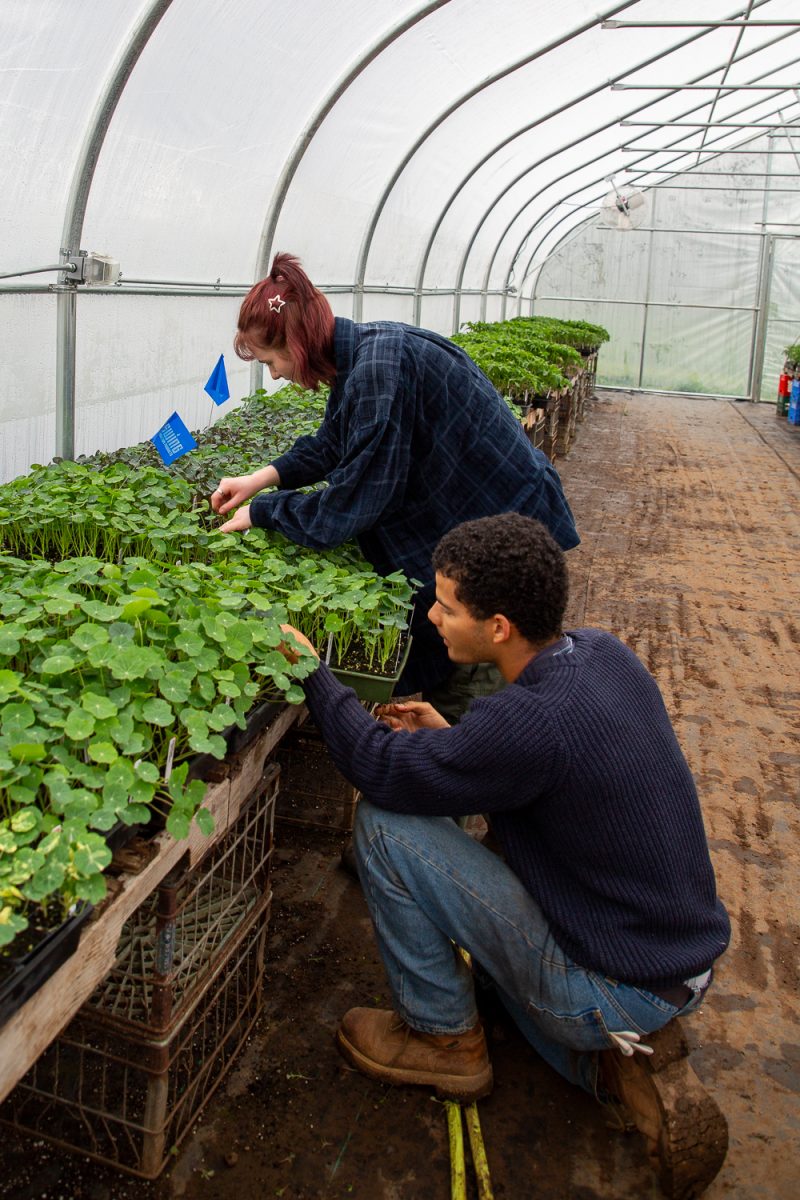
Food for Lane County, a nonprofit organization founded in Eugene, has worked to reduce hunger in Lane County since 1984. The organization relies on both staff and volunteers to provide over eight million pounds of food to the community each year through a variety of programs, including youth farms, food drives, and food banks.
Thanks to over 61,000 volunteer hours last year, Food for Lane County continues to extend its support despite changes made to SNAP by the Oregon Department of Human Services The federal law, House Resolution 1, was signed into law on July 4,which added tighter restrictions on SNAP eligibility.
“A huge swath of the Oregon population that receives SNAP has already been impacted by H.R. 1, but what it completely looks like is not entirely known,” Carolyn Stein, executive director of Food for Lane County, said.
Before H.R. 1, also known as the One Big Beautiful Bill Act, work-time requirements applied only to Able-Bodied Adults without Dependents who had to work, volunteer or train for at least 80 hours per month to remain eligible for SNAP. The work rules for ABAWDs previously applied to adults ages 18 to 54 without a child under 18.
After the federal law was passed, changes are expected to impact three main groups of SNAP recipients: “households receiving utility assistance, able-bodied adults ages 18 through 64 with no child under age 14 in their SNAP group and certain lawfully present immigrants,” the Oregon Department of Human Services said.
The new restrictions made receiving benefits a formidable process, resulting in fewer individuals being approved for SNAP, increasing demand at food banks across the state and leaving families who previously did not rely on food assistance uncertain about where they can get help.
“Food banks are not prepared to bear the burden of losing SNAP, a $148 million program that circulates federal funds into Oregon’s economy every month,” Stein said.
Although partnerships are still used regularly, Food for Lane County has developed new methods to meet the community’s needs, such as food-buying, which began during COVID. With food-buying, the organization purchases bulk quantities of stable pantry goods with the help of monetary donations, directly from distributors and wholesalers.
According to Stein, it’s not a traditional practice within food banks, and prior to COVID, the food bank’s work was to collect food from the community through donations or through its partnership with grocery stores, the Fresh Alliance program, which donates food nearing expiration.
As recipients face unprecedented federal cuts to the program that haven’t been seen in 50 years, more inquiries are being made about where people can get help and find food. Holidays like Thanksgiving bring an influx of volunteers and visitors to pantries. Food for Lane County serves as the distribution hub for 150 partner agencies, handling all food entering the community. With holiday pressure, plans to meet these needs are necessary.
“Instability in the SNAP program is likely going to drive more people to the pantries that need food assistance. This year, we are having 11 additional distributions through our mobile pantries that include holiday foods like turkeys,” Stein said.
The need for food assistance is not limited to the holidays. “Hunger doesn’t go away after the holidays; we deal with it year-round,” Dawn Marie Woodward, events and media relations coordinator for Food for Lane County, said.