


Paul Brainerd, businessman and philanthropist who coined desktop publishing, which revolutionized print publication, has died at 78.
Originally from Medford, Ore., Brainerd earned a Bachelor of Arts in business administration from the University of Oregon and went on to receive a Master of Science in journalism from the University of Minnesota.
Brainerd co-founded Aldus, which would later produce PageMaker, a desktop publishing software program. Brainerd is said to have created the term desktop publishing, referring to the creation of documents using dedicated software on a desktop computer. This software could generate page layouts and text content, and was widely used by print publications like newspapers, and would later be used for digital content. Aldus would later merge with Adobe in 1994 in an all-stock deal valued at $525 million, or over $1 billion today.
During his time at UO, Brainerd was a photographer and editor at The Daily Emerald, and served as editor-in-chief during the 1969-1970 school year, just prior to when the Emerald became independent from the university.
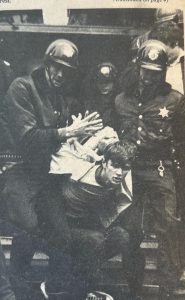
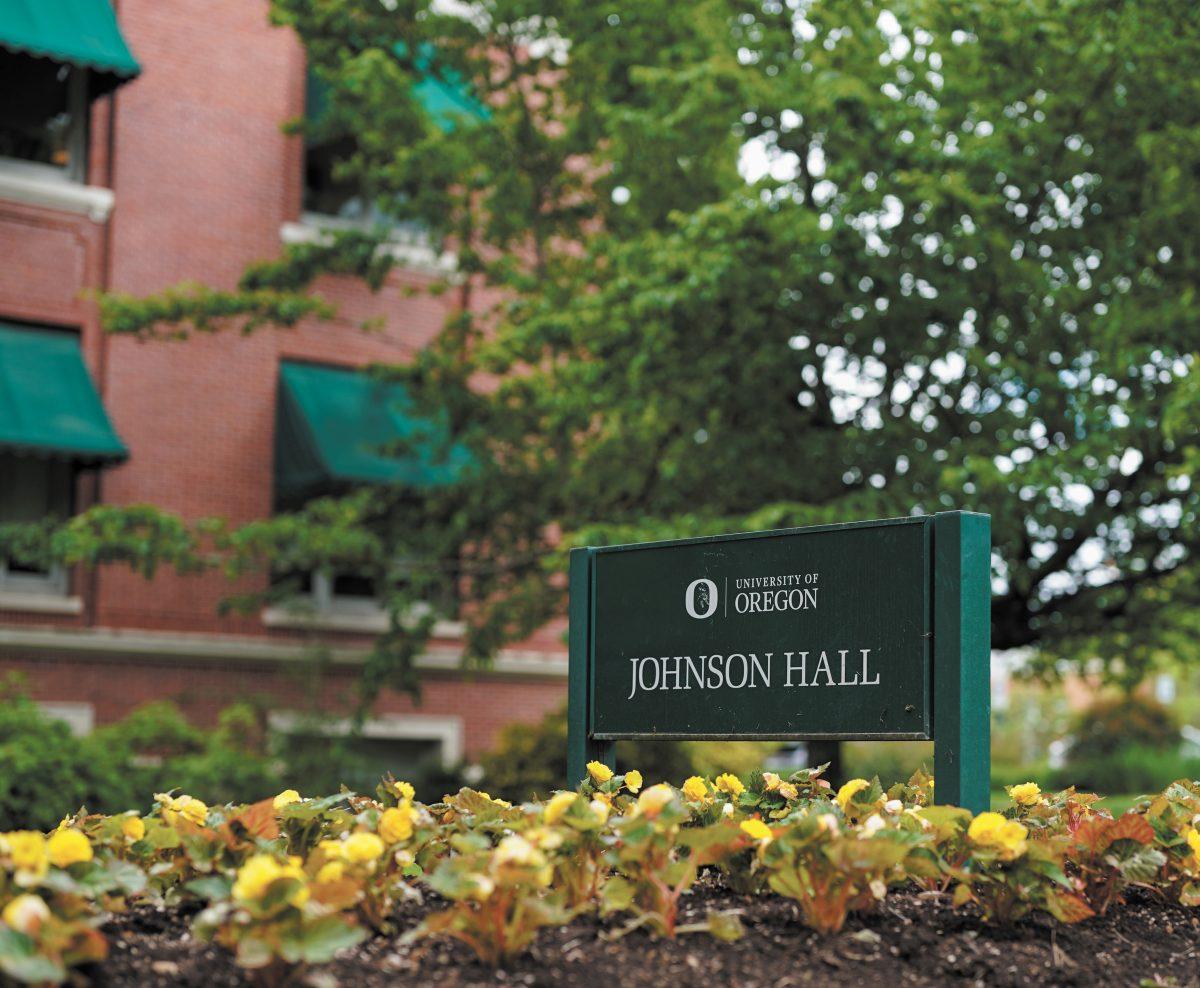
Prior to becoming editor-in-chief, Brainerd documented a two-day sit-in at Johnson Hall where students were demanding the removal of the Reserve Office Training Corps from campus during the peak of anti-Vietnam War protests on campus. This resulted in the students being arrested, tear gas being deployed and the presence of the Oregon National Guard. Brainerd’s photos from the event were used on the cover of the paper the next day.
Brainerd would not be head of the Emerald after it split from the university, but played a large role in the shift.
According to an article written by Art Bushnell, who served as news editor under Brainerd during that time and later became editor-in-chief himself, Brainerd had discussions with the acting university president and the university president at the time. The next editor-in-chief, Grattan Kerans, finalized these discussions after Brainerd’s initiation, setting the Emerald up for its independence in 1971.
The university dissolved its publishing board, which had overseen the Emerald, in February 1971. According to Bushnell, that’s when the staff knew the newspaper would make the change, which it officially did in July of the same year.
“He was a visionary,” Bushnell said about Brainerd. “He was not the same kind of day-to-day ‘I want to go cover a hot story’ person. He was thinking about the big picture.”
Bushnell said that independence for the Emerald was Brainerd’s idea because, at the time, state authorities were looking to censor student papers, and Brainerd thought independence was the only way to continue practicing journalism “unfettered and unrestrained.”
After Brainerd’s push for independence from administration, it was Bushnell that became the first independent Emerald editor-in-chief.
“He was a quiet, unassuming guy with a big smile, and he led a newsroom by empowering the rest of us to cover the news while he figured out how to keep us in business,” Bushnell said.

After graduating from UMN, Brainerd went on to work for the Minneapolis Star Tribune. In 1984 he would co-found Aldus, where he would work as president and chief executive for 10 years before stepping down.
Two years after leaving Aldus, Brainerd shifted resources to focus on environmental advocacy in the Pacific Northwest, founding the Brainerd Foundation, a family foundation that funded organizations in the region that advocated for conservation efforts.
Additionally, Brainerd founded Social Ventures Partners in 1997, which worked to match philanthropists to community organizations to provide mentorship. Currently, SVP has 2,100 philanthropist partners.
In the 2000s, Brainerd focused more on environmental and community stewardship, founding IslandWood, a nonprofit educational center for children in the Seattle area, and Headwater Glenorchy Eco Lodge in New Zealand, which was the first net positive energy accommodation in the world.
A statement on IslandWood’s website regarding Brainerd’s passing, wrote that he always had a passion for the outdoors and spent the last phase of his life focused on environment and community stewardship.
Brainerd died on Bainbridge Island, Wa. on Feb. 15.
Tarek Anthony contributed to this reporting








Steve Dodge • Mar 3, 2026 at 5:08 pm
Nice piece, thanks! Did he ever appear in court about the protest photos?