
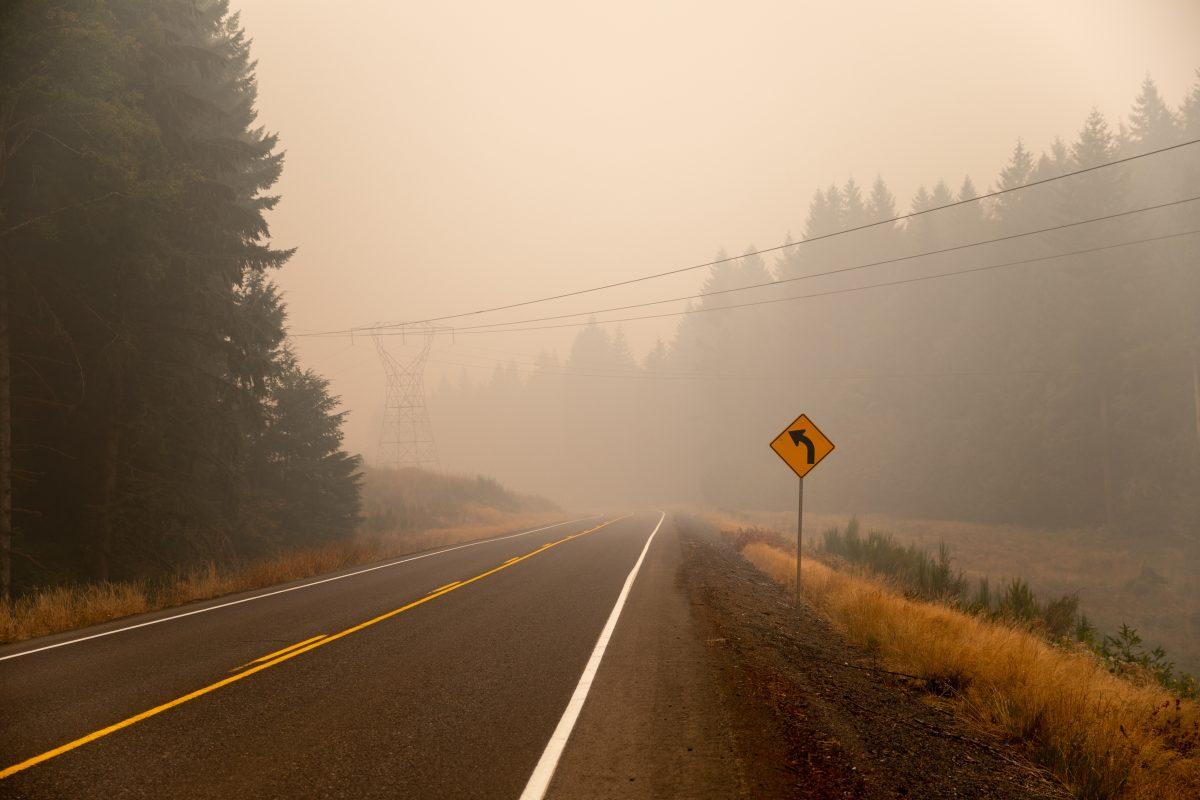
Every September brings an all-too-familiar scene for Oregonians: the skies are hazy with smoke, air quality worsens and many families are forced to evacuate. Due to climate change, wildfires have become an annual occurrence, and mitigation efforts are funded directly by taxpayer dollars. In 2025 alone, more than 200 homes were destroyed by wildfires, leaving families in disarray, studies from the Oregon Capital Chronicle found.
A study by the Forum on Oregon Climate Economics estimated that Oregonians lose $12,000 annually due to climate change, and that families exposed to wildfire smoke incur an additional $450 per day in costs.
Oregon communities are paying the price for climate disasters that are perpetuated by the biggest polluters in the state — these have been the global fossil fuel industry. People have lost their homes, their belongings and even their lives due to climate catastrophes over the years, and the main polluters are being let off the hook.
Climate activist organizations, such as Beyond Toxics and Climate Justice League, have launched a campaign for Senate Bill 1541, the Oregon Climate Resilience Superfund Act, to address the financial burdens of climate change. SB 1541 would require major, out-of-state fossil fuel companies to pay for their contribution to climate-related disasters in Oregon and to fund community resiliency. This would increase wildfire preparedness and recovery projects, such as home hardening, cooling and weatherization.
In an interview with Jennifer Eisele and Arjorie Arberry-Baribeault, organizers from Beyond Toxics, they elaborated on the bill and the importance of the climate funding:“The main thing this bill does is that it makes sure that Oregonians are not having to pay for damages they didn’t cause,” Arberry-Baribueult said. “And it goes from 1995 to 2024, and it pays for damages that we already made from big companies, like Exxon and Chevron.”
Thirty percent of the funds are allocated to making Oregon more resilient to wildfires, 30% to state agencies on the frontline and the remaining 40% to frontline communities exposed to climate damage. Only large multinational companies that have sold oil, gas and coal in Oregon would be required to pay their fair share for past damages arising from climate change emissions from 1995 to 2024.
“There were a lot of people from the Holiday Farm Fire, or people from Talent or Phoenix that have testified in support of this bill,” Eisele said. “There were a lot of firefighters that were testifying at the hearing saying that this would benefit the services they’re able to provide to respond to people.”
Jack Dodson, a UO student on the steering committee of the Climate Justice League and a co-leader of the Fossil Free Eugene campaign, also emphasized the importance of the bill.
“This is a problem because, as young people, we didn’t have a say in causing this climate change, but we’re feeling the effects of it,” Dodson said. “It makes sense that the people who did cause it and the corporations who are perpetuating it have to clean up after themselves.”
Studies by Data for Progress have found that 74% of voters support requiring oil and gas companies to pay their share of climate-related costs, showing the bipartisan nature of this bill. The bill is currently in the Oregon Joint Committee on Ways and Means of the Oregon short session and is expected to pass in the coming days.
“We’re already paying by having to deal with these worse storms; we don’t also want to have to pay again out of our tax money to clean up after this,” Dodson said.







Steve Scarich • Mar 13, 2026 at 4:53 am
Ms Nag You are a polluter. I am a polluter. Every time we drive a car, we pollute. So, therefore, how much are you willing to pay for your pollution? 10 cents a mile? 50 cents a mile? Only fair, right? If the companies are forced to pay for their ‘pollution’, they will just pass the cost on to the consumer. They have no choice. Just look at California, where gasoline prices are 1/3 higher than Oregon, because of all the environmental laws that have been imposed on the oil companies. To make it worse, those same companies are shutting down refineries due to new regulations. As long as you, I, and all the rest of the population ‘demand’ fuel, we will experience pollution. Your punishment of oil companies is looking at the wrong ‘criminals’; you should look at a mirror.