The lack of affordable housing has historically been a challenge, one that Mayor Kaarin Knudson and the City of Eugene sought to emphasize. Affordable housing is a longstanding issue the city has faced, and steps are constantly being taken to try and solve it.
In Knudson’s 2025 State of the City address, she stated her goal to build 1,000 new units of housing over the next five years in Eugene, with at least 200 units in the Downtown Core area.
This past year, over 500 units of new affordable housing were catalyzed by city support, according to Knudson, meaning projects began or were accelerated through the help of the city government, a priority of hers in 2025.
Eugene has a lot of housing unit projects in the pipeline, including affordable housing, workforce housing and market-rate housing, according to Knudson. These include housing units that are planned or in progress, but not yet completed.
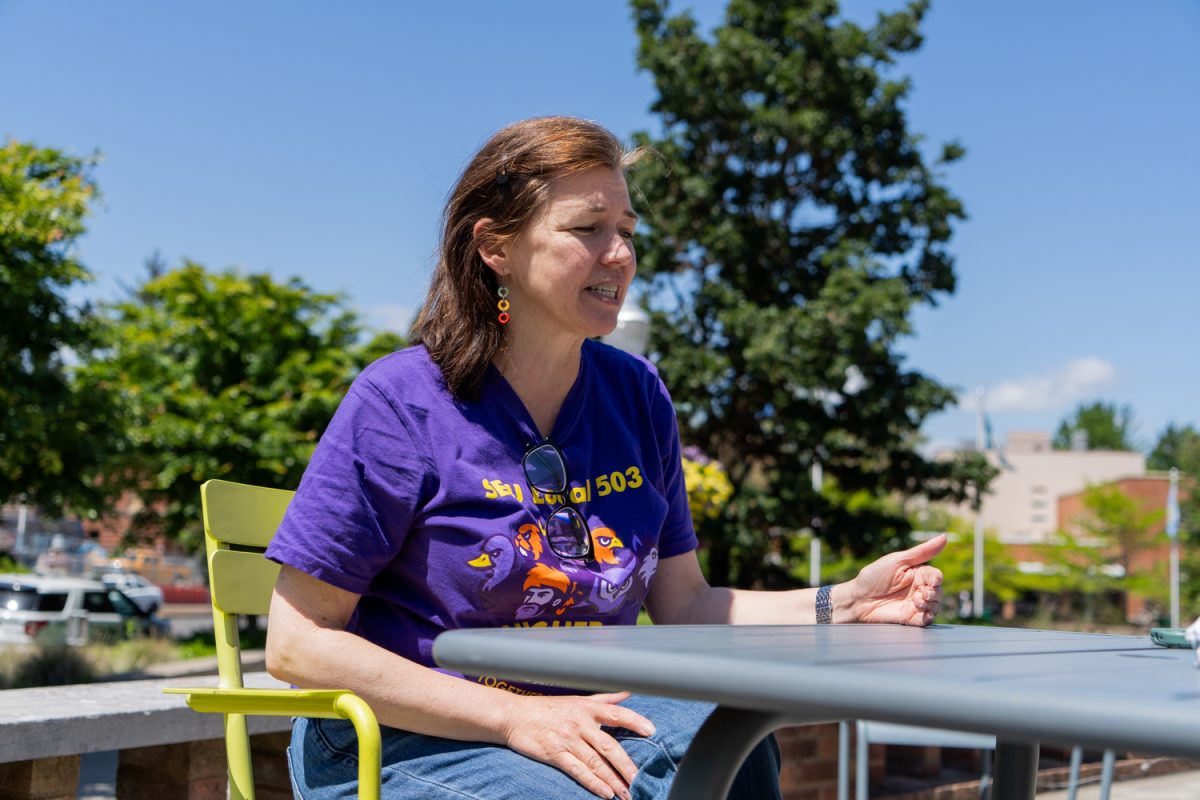
“I’m really happy to see the continued partnerships that we’re developing for workforce and market-rate housing across the community and in downtown,” Knudson said. “But I think that we can do more, and I’m looking forward to the conversations we’ll have about new partnerships in 2026.”
In an interview with Oregon Public Broadcasting, which was broadcast days after her first day in office in January 2025, Knudson said the goal of building 1,000 new housing units would be attainable if the city came forward with new proposals for housing development each year.
A year later, Knudson reflected on this statement with optimism that the city is getting there, citing her excitement for multiple ongoing projects that will continue to develop over the next year. Further, there is growing interest in building new partnerships to catalyze not just medium and large-scale projects, but also smaller projects throughout the city.
Regarding the progress toward reaching that goal, the city opened up several hundred units downtown in 2025 after continuing on the strategic plan from previous years and supporting the opening of new affordable housing units.
Much of this progress can be attributed to the Downtown Core Housing Initiative. The city has established two key incentive programs to support new housing development: Downtown Fee Assistance and an Accelerated Multi-Unit Property Tax Exemption.
Downtown Fee Assistance is an incentive that uses urban renewal funds to cover government-imposed fees and other costs, making downtown housing development more financially feasible.
The Accelerated MUPTE incentive offers a property tax exemption that allows projects to avoid property taxes on the value of new residential construction for up to 10 years, making financially challenging projects more feasible.
However, Affordable Housing Policy and Planning Manager Genevieve Middleton said there have yet to be applications for these programs, as of Dec. 30, 2025.
“We’ve spoken with parties interested in the programs but have not had any applications yet,” Middleton said. “We’re currently in the process of reaching out to downtown property owners to learn more about opportunities to help move potential housing projects forward.”
The Housing Implementation Pipeline is a five-year work plan by the City of Eugene to coordinate city resources, goals and priorities to address housing affordability, overall housing supply challenges and homelessness. The work plan began on July 1, 2022, and will conclude on June 30, 2027.
In the two-year report covering fiscal years 2023 and 2024, it was recorded that the city permitted 2,385 new housing units, a step in the direction of accomplishing its initial five-year goals of issuing permits for the construction of 6,000 units, increasing the amount of housing in downtown by 50% from 2021 and addressing gaps in housing while improving the state of homelessness.
“It’s possible to reach (Knudson’s goal of building 1,000 units) as long as state and federal funding stay consistent and interest rates don’t increase substantially,” Middleton said.
Additionally, the 2023-26 City of Eugene Strategic Plan has helped establish goals such as mitigating the impacts of homelessness, stabilizing housing costs and increasing the vibrancy, economic vitality and livability of downtown Eugene.
But in terms of the city’s role in housing development, it can be limited in certain areas, such as having a limited influence on market feasibility. However, it can directly influence land and infrastructure through zoning, planning, regulations and design requirements.
“While the city does not own, operate, manage or build any housing, our funding programs are used to leverage state and federal funding to subsidize new affordable housing development and for the preservation of existing housing,” Middleton said.
A glimpse of housing development projects in 2026
A project that Knudson said she is excited about, heading into 2026, is the North Butterfly Lot Redevelopment, a development project aimed at transforming an underused 0.67-acre parking site into a mixed-use building that includes new housing units.
This project is part of the Downtown Core Housing Initiative with the goal of supporting a vertical, mixed-use building and adding new housing units with high-density housing in the downtown core. It also aims to create an active ground floor and an enhanced pedestrian connectivity to expand the atmosphere and draw more people to downtown Eugene.
“This fall, the Urban Renewal Agency Board selected a team that is currently working on a full proposal for the housing redevelopment on that site,” Middleton said. “We’re hoping to bring the full proposal, which will likely include more than 80 residential units, to the Agency Board in late spring 2026.”
According to Knudson, the city will also continue to work with the development team that has been focused on the project to redevelop the 1059 Willamette St. property. It’s also the city’s first attempt to combine workforce and market-rate housing in a redevelopment site in the downtown core.
However, many projects, including the 1059 Willamette St. project, have encountered different challenges due to economic difficulties and state and local policies. These projects, along with the many aforementioned proposals in the pipeline, have yet to break ground due to the obstacles.
“We’ve been facing a lot of headwinds as a community this year, and certainly high interest rates and inflation, and high cost of materials are not helping construction in any way, and we’re seeing federal support for housing recede,” Knudson said. “So this community’s work at the city level, at the county level, is going to need to be even more focused and collaborative if we are going to see the progress that our community needs in terms of new homes.”
In 2025, the income-qualified affordable housing projects that were completed or opened include four units on Grant Street, 56 units at Bridges on Broadway and 28 units from phases one and two at Nelson Place, totaling 88 units.
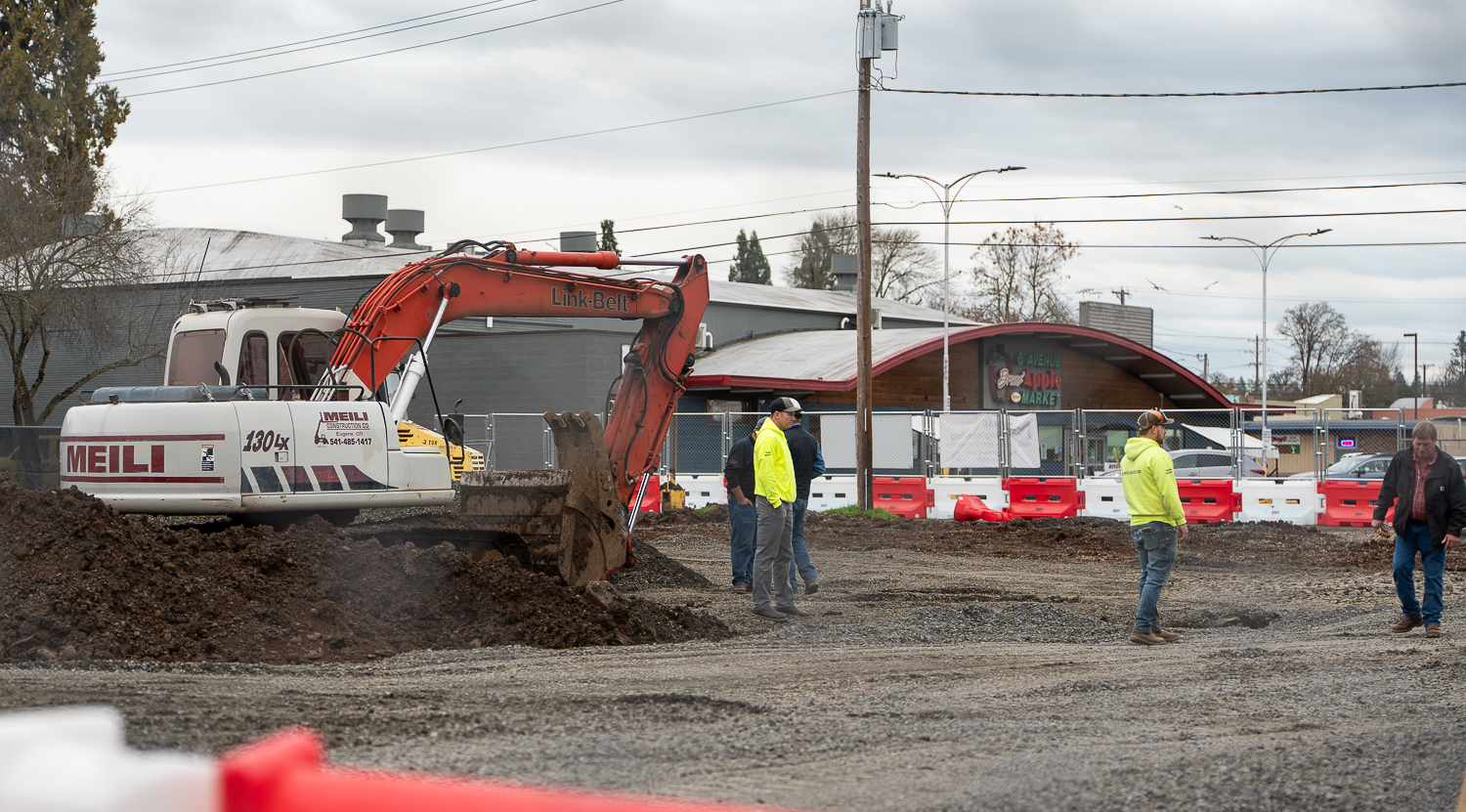
Some projects currently under construction are Ollie Court with 81 units of new affordable housing, 158 units at The Ava, formerly known as Park Run, 47 units at Legacy Park, 36 units at The Lucy – Eugene, 120 units at the Whiteaker Commons and 52 units at Rosa Village, according to Middleton.
Eugene City Councilor Matt Keating recognized the importance of building more housing units without more sprawl. Essentially, figuring out how the city can build up responsibly more around downtown and along transportation corridors is critical to meeting the community’s housing goals.
“There’s a whole suite of new housing options, and we need more opportunities or housing options,” Keating said. “I share the mayor’s enthusiasm around meeting those goals, and I’m happy to dive into the work and roll up our sleeves to get it done.”
Knudson assured that one of the things she’ll continue to work on as Eugene’s mayor is to support community access to an affordable, high quality of life. It bothers her that the community struggles, and she said that creating more job opportunities and reducing the cost of living where they can will remain a focus of her work.
“I’m proud to be working with different partners locally and across our state on economic development efforts, because our work to bring jobs and opportunity to our community supports our work to build housing in our community,” Knudson said. “I think that for this coming year, the city will continue to work on every project that we can affect, and I will be highly engaged with economic development work that we’re doing with our university partners and business partners.”