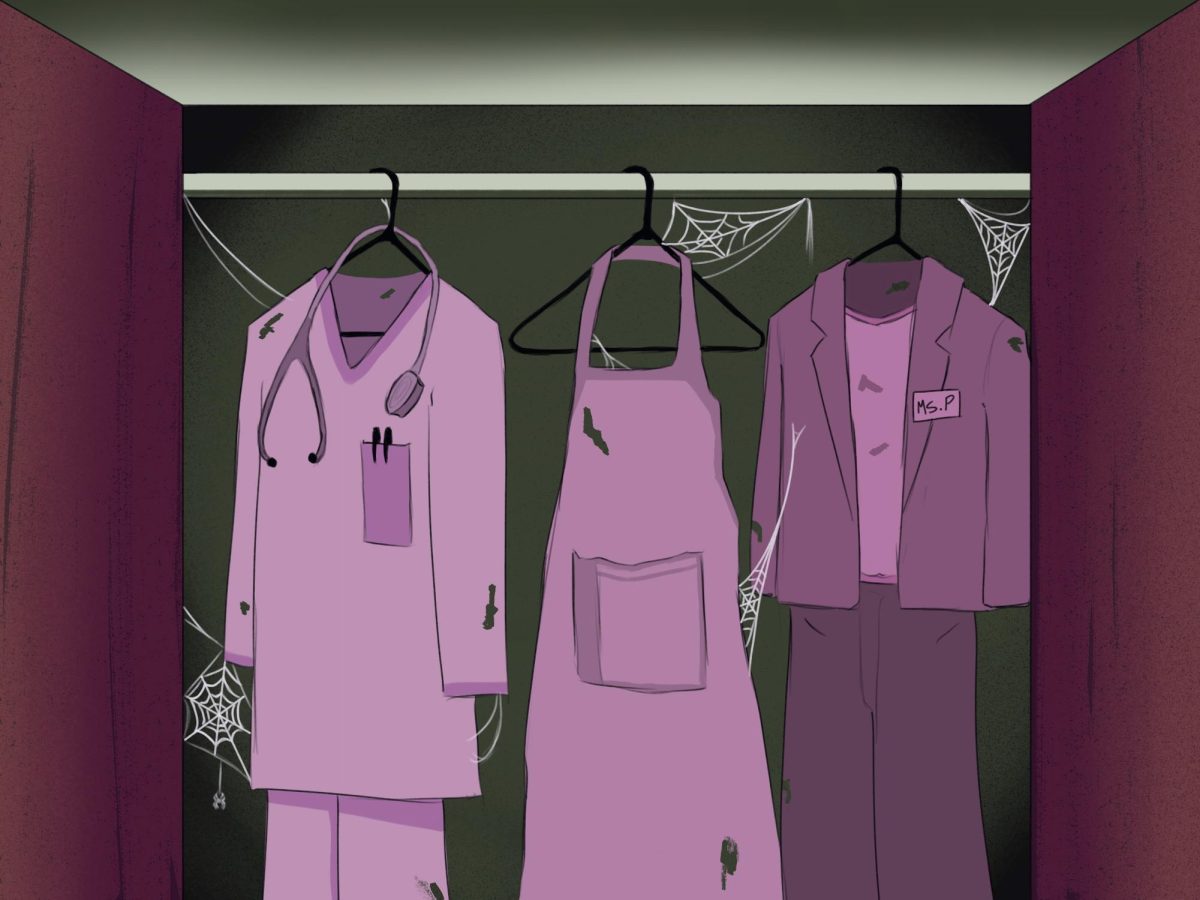
On the updated list of professional degrees, Trump seemingly left out some key careers: nurses, physician assistants, physical therapists, audiologists, architects, accountants, educators and social workers, all with the theme of being traditionally pink-collar jobs. Jobs predominantly filled by women. As well as women, these fields also have a high population of women of color who face extra barriers because of the intersectionality of their race and gender.
How does this impact people seeking pink-collar degrees? It means that they won’t get the same financial support as people seeking “professional degrees,” making it harder to cover the financial cost of going to school. Professional degrees come with different loan expectations and requirements, meaning students in those fields often qualify for more financial support (the ability to take out a higher federal loan). For people pursuing pink-collar degrees, this creates an unfair gap; they don’t receive the same level of loan assistance, making it harder to afford the education required for their career.
This shift could ultimately discourage people from entering fields that desperately need them. Kayla Hartman, a chemical engineering student at Oregon State University, said, “I think it’s now a deterring factor, and will make it harder for women to start getting into STEM.”
The price of seeking a higher education is getting higher and higher; with the government providing less financial aid, it makes obtaining these degrees all the more daunting. One question raised is whether a degree is considered “professional” will influence how much reimbursement a student receives for their higher education; student loan reimbursement program is when your job gives you money to help pay off student loans. Over the last 30 years, the average tuition for public and private colleges has nearly doubled, adjusting for inflation.
The new financial limits on higher education under the One Big Beautiful Bill will leave the United States with fewer nurses to fill the gaps, causing the healthcare crisis to get worse. These restrictions will discourage students from entering these careers simply because the education is too expensive. Ali Ramsey, a senior environmental science major at University of Oregon said, “Without the ability to open up a loan, it makes going to a higher education in these fields difficult.”
This declaration is expected to worsen an already growing healthcare crisis, especially as the U.S. faces a major nursing shortage. Some hospitals and clinics have already shut down due to recent healthcare cuts, adding even more of a strain to the system. All of this illustrates how essential these professions are and how important it is to support the people who do this work.
These degrees are essential for how the U.S. operates. If policymakers are willing to devalue these degrees, then it’s on all of us to push back by supporting the students pursuing them, demanding fair funding and refusing a future where women are priced out of the professions that hold this country together.