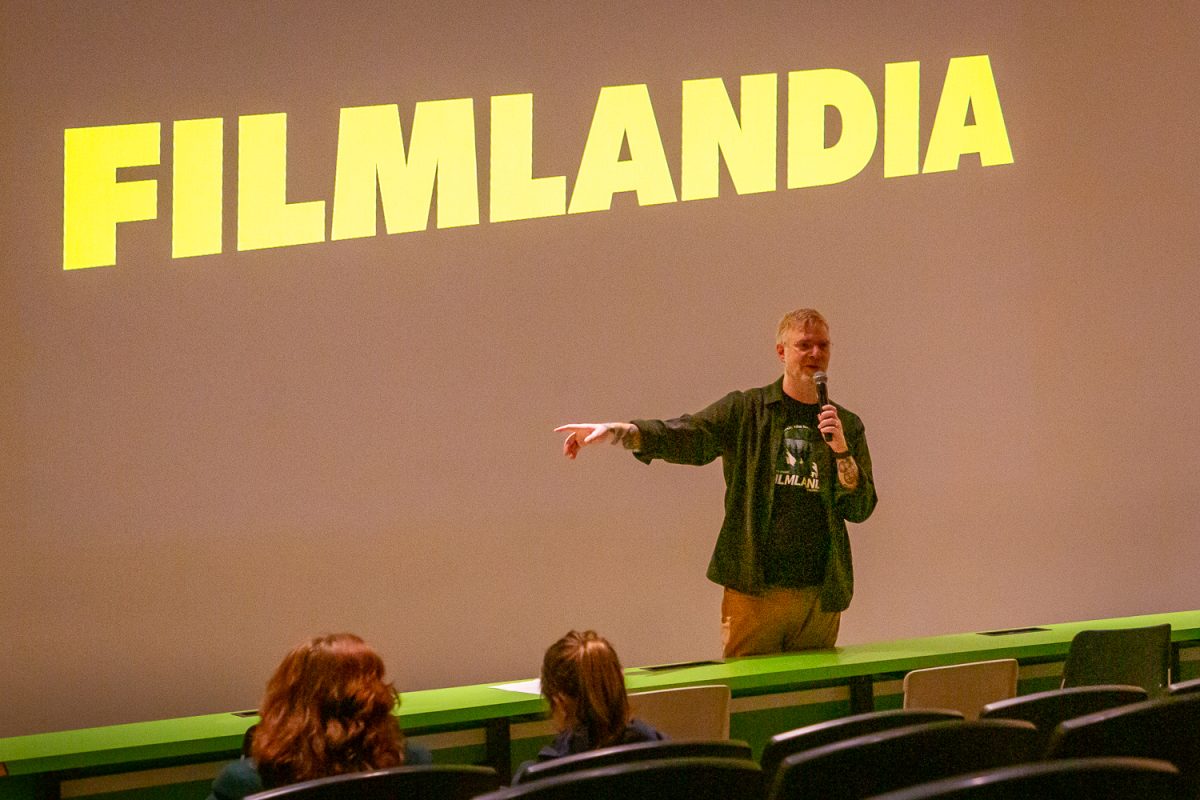
Over the course of winter and spring term, the UO Cinema Studies department is hosting a series of screenings, beginning this term with 14 films. Some notable features include “Coraline,” “The Shining” and a series of short films, one of which is the “Portlandia” pilot episode. It will close in June with a silent film, alongside a live musical accompaniment.
Peter Alilunas, an associate professor of cinema studies, co-founded the series with assistant professor Colin Williamson this year. The idea came to mind after the cinema studies program’s recent migration from McKenzie to Villard Hall.
“Partly to celebrate that, we thought, ‘Why don’t we do a screening series that will help us celebrate this new place?’ So, we were thinking about place as a theme, and that’s when we landed on the idea of Oregon,” Alilunas said. “Oregon is not just a literal place; it also has kind of these multiple layers of meaning.”
The big decision was carefully choosing a select group of films to screen. According to Alilunas, movies like “Animal House” have had their time to shine on campus; they wanted to do something fresh, create a space to explore the entire state from one room and share its influence on cinema.
To accomplish this, they constructed a catalog that includes filmmakers of Oregon origin, movies filmed in Oregon and stories that center Pacific Northwest ways of life. They also prioritized representation of the state’s diversity by paying homage to underrepresented communities in film.
“We have pretty solid representation across race, class, gender and sexuality, independent filmmaking, commercial entertainment … Indigenous representation was really important to us, too, thinking about the longer histories of those communities who have been here long before the U of O and the cinema,” Williamson said.
The event is also a celebration of our state’s eccentricity, one which holds a special place in the hearts of cinephiles. Alilunas said, “I think Oregon is a place where filmmakers have come to capture something that is slightly askew or different.”
Along with inspiring Oregon appreciation, the pair hope to revive an art lost on the UO campus. Labeling the series with “University Film Society Presents” on its flyer is a nod to the organization which was present and thriving in the 1960s, that hosted screenings with an abundance of participants.
“One of the things Colin and I have done is we brought that name back as a way of kind of bringing that past into the future and then the present and the future as well,” Alilunas said. The move away from communal filmgoing hasn’t just occurred on campus, but is a cultural shift felt around the world.
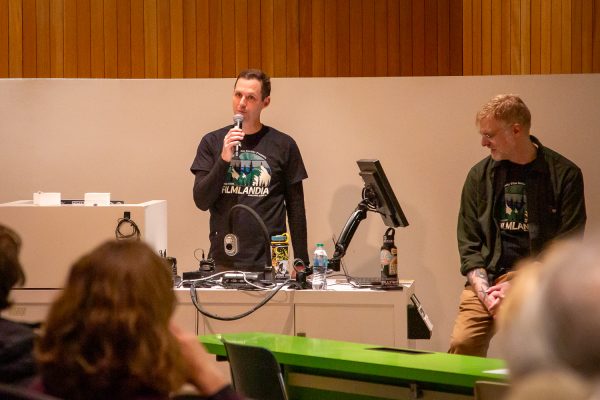
“I think we all feel that sense that something about the cinema has eroded or disappeared,” Williamson said. “A lot of the students that come through my classes talk about having nostalgia for those kind of communal forms of engagement that are not really readily available to them anymore or are more difficult to access, and with the series, one of our community building approaches was to say, ‘Here’s a designated place in time for us all to come together.’”
Each screening will begin with a short introduction to spark conversation between filmgoers, something Williamson believes is integral to their mission.
“It’s like, when you’re standing in the lobby to a screening and talking about it, or meeting people, (you’re) having ideas that typically you wouldn’t have, you know, sitting in your bed watching a movie or on your couch. Showing up, having time and watching people kind of model behaviors of engaging with the cinema is really important to us,” he said.
In an age of streaming, with tens of thousands of choices over hundreds of platforms, movie-watching can all be a bit overwhelming. Throughout this digital migration, there have been cries warning of the slow, painful death of cinema —- believe it; these professors/film historians have heard it all.
“The cinema has died many, many times before. Before it was a communal event, it was like a solitary, organized event with people looking in little peep show devices, right? And there have been cycles of this throughout film history. We are, I think, in the midst of a cycle,” Williamson said.
Williamson and Alilunas also believe we are still very much in control of cinema’s future. Filmlandia is one iteration of hope for communal moviegoing, a practice that will continue as long as we want it to. As long as we come together, mindfully absorb and discuss the art we consume, the integrity of cinema has nothing to worry about.
The event is free for all students and faculty, and films will be shown on Wednesdays at 6 p.m. in Lawrence or Villard Hall. On select dates, there will be special guests in attendance, including filmmakers, student speakers and community representatives. There will also be cinema studies “swag” that can be won via a punchcard based on screening attendance. Check the schedule for upcoming screenings on the cinema studies website.