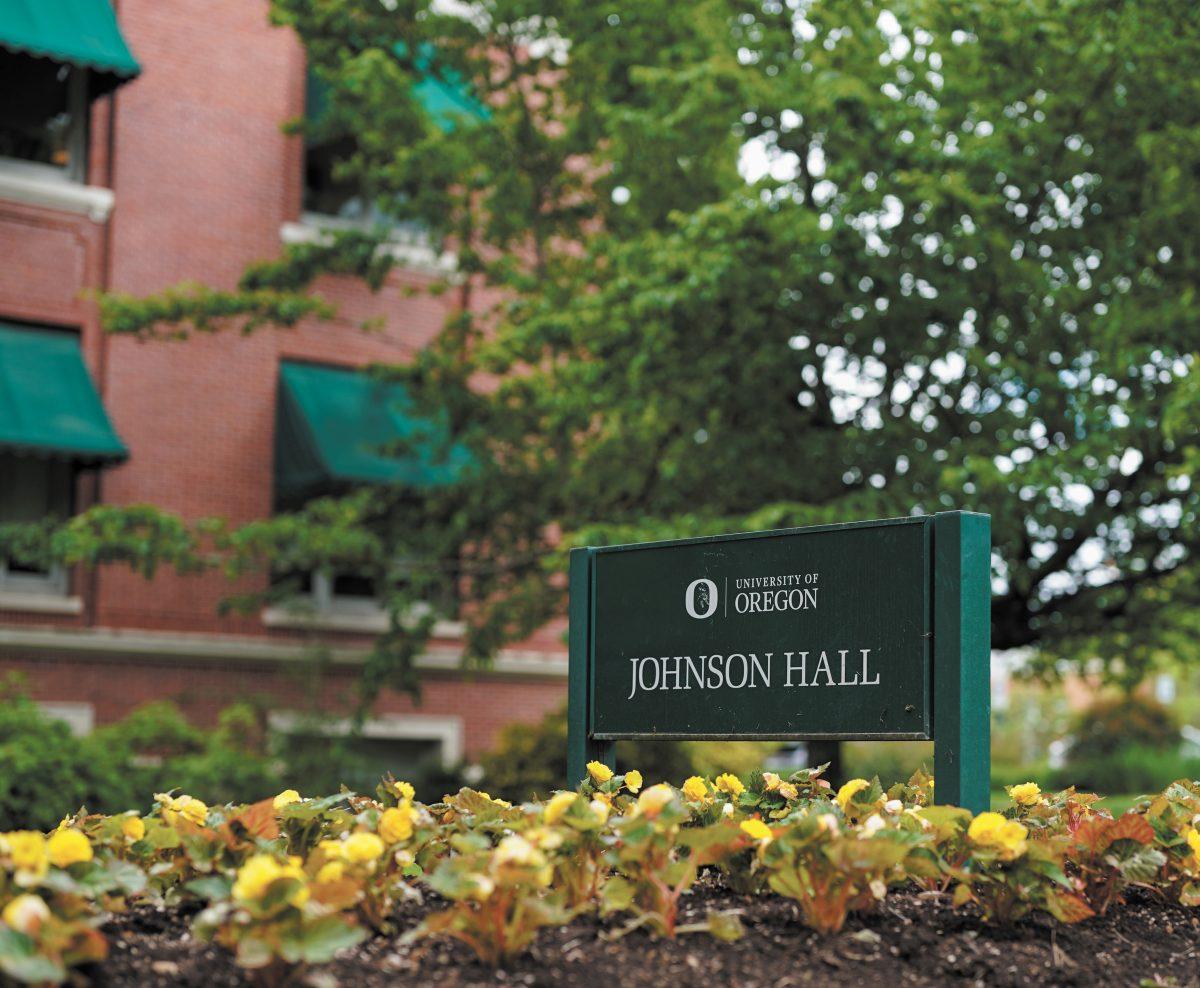
The University of Oregon Board of Trustees declined to approve a student proposal to use student building fee funds to help finance an electric boiler system, delaying a potential step toward the university’s climate goals.
The proposal was not approved during the board’s meeting Tuesday, but trustees directed students and administrators to continue discussions and revise the resolution before bringing it back for future consideration. Board Chair Steve Holwerda said the administration would “try” to hold a special meeting before June 30 to further discuss the proposal.
The terms of undergraduate student representative David Mitrovčan Morgan, graduate student representative Cy Abbott, non-faculty staff representative Lillian Moses and Trustee Jenny Ulum expire this month, adding urgency to efforts to reconvene and reconsider the proposal before the board’s membership changes.
Several students used public comment to advocate for a transition to cleaner energy on campus. UO student Jack Dodson, a member of Climate Justice League, urged university leaders to replace the university’s current boiler system with an electric alternative.
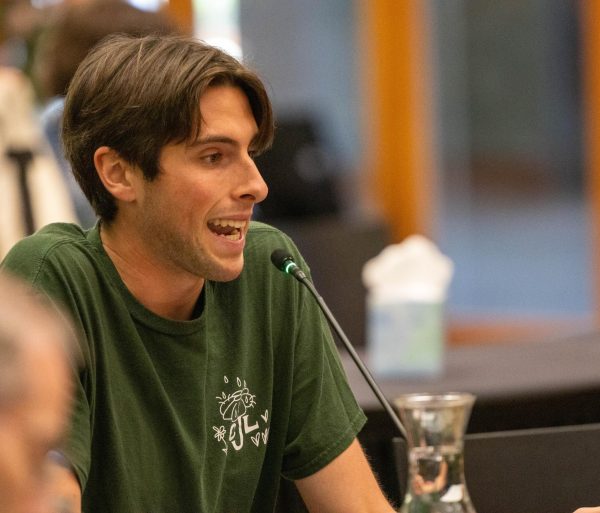
They referenced their disappointment in the lack of progress since the Thermal Transition Task Force presented its findings and proposal two years ago. Student Sophie Gordon, in her public comment to the board, explained that “it has been seven years since the UO committed to cutting emissions from the heating system,” adding that little progress has occurred.
Former ASUO President Prissilla Moreno and Student Planning and Construction Committee Chair Skyla Bird and Vice Chair Morgan Clemmer presented a recommendation that the university use SPCC building fee funds to pay for the installation of an electric boiler system.
The building fee is a mandatory enrollment charge to all undergraduate and graduate students in the amount of $45. It is traditionally used to pay for construction and debt service on capital projects, typically including projects that relate to student centers or recreational facilities.
Other members of Climate Justice League urged board members to vote yes on the Student Planning and Construction Committee resolution, with Gordon saying “we are in a climate crisis where time is crucial, and this inaction reflects poorly on UO’s commitment to the future of its students. Today, you have the opportunity to prove that you mean what you say, so vote yes.”
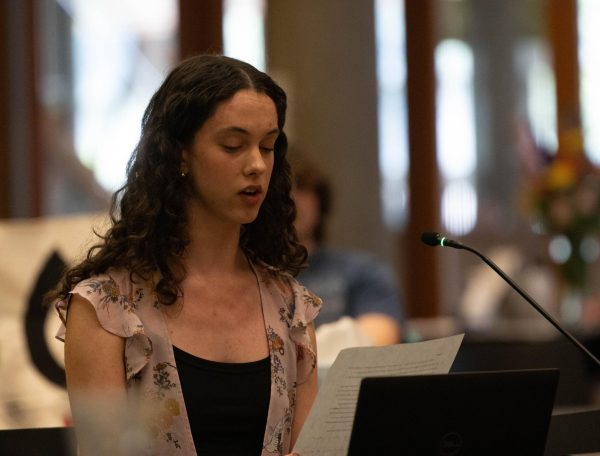
Bird said electrification is particularly important because “the UO campus heating system is the largest single source of greenhouse gas emissions in Eugene.” The SPCC recommended a possible increase of this fee to help fund electric transition efforts.
According to SPCC, in 2023 an 8-megawatt boiler would’ve cost roughly $15 million to construct. However, as outlined by Office of Sustainability Director Steve Mital in his presentation to the board on June 1, the cost and energy needs of the university have changed significantly. Mital told the board recent analysis shows the need for a 12-megawatt boiler, increasing projected costs significantly.
This increase would allow for adjustments during the summer season that would further reduce emissions by decreasing gas usage in a way that is not possible with the other model.
As contrasted by the task force and SPCC findings, the capital costs for construction alone for a boiler of this capacity would be $21.5 million to $25 million. This projected number reflects the cost of the boiler itself, erecting a building to house it, connecting the boiler to existing utility and steam systems and integrating the controls with existing campus heating systems.
If the university were to continue with the existing heating system, the substation would have capacity “well beyond 2050,” Mital said. However, if the proposed changes are made to the system, then in 2035, it would be necessary to expand the existing substation.
Additional annual energy costs are projected at $4.6 million to $6 million, a point of concern for many trustees. Clemmer said SPCC funds could also be used to offset annual electricity costs.
Due to the current budget crisis, if approved, these funds would be placed in a separate account and reserved specifically for the project until it is financially feasible to execute it. Clemmer also recognized that this change will not happen quickly but stated that they are “willing to commit six to 10 years of no other projects [under this fund] because this one is so important.”
Despite SPCC members stressing the importance of change as a “physical commitment to students,” trustees expressed confusion and concern regarding the proposal throughout the discussion.
A resolution drafted by the board based on the SPCC recommendation packet was provided to trustees prior to the meeting. This draft outlined an approval of “the SPCC recommendations to use the Student Building Fee income to fund the initial installation of the 8-megawatt electrode boiler.”
This specific language was contrasted with the SPCC’s own resolution, which was given to board members during their presentation. This document outlined the removal of funds to a separate account “for the electrification of the campus heating system, and for no other purpose.” This proposal also lists the boiler as simply any with “a capacity of not less than eight megawatts.”
While several trustees expressed support for the overall concept, they said they wanted additional time to review and revise the language of the SPCC proposal before voting on it. Board Vice Chair Marcia Aaron explained that their position in voting was difficult since she “agrees 100% in principle but not in language.”
This opinion was echoed by many other members of the board who hesitantly voted “nay” on the record. At the conclusion of the conversation, Trustee Andy Storment joined Trustee Amy Tykeson in urging the chair to bring the vote back to the table.
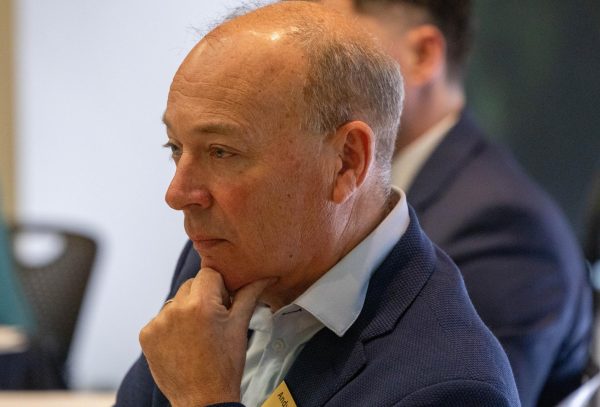
Tykeson, like Aaron, sympathized with the work of the SPCC and wished to amend her response after seeing a more cohesive, well-worded draft. Storment asked for another official meeting once the proposal was revised.
Holwerda suggested that prior to the special meeting, SPCC continue to work closely with Scholz and his team to find an agreement. Once revised, the proposal is to be reviewed by Vice President and General Counsel Kevin Reed to ensure that “it ties in with everything [the board] can do,” as requested by Holwerda.
Following the vote, Dodson expressed their feelings toward the decision after advocating directly to the board and listening to their discussion.
“I am grateful that we were not completely shut down, and I am hoping that we can continue to make progress on this pathway,” Dodson said.