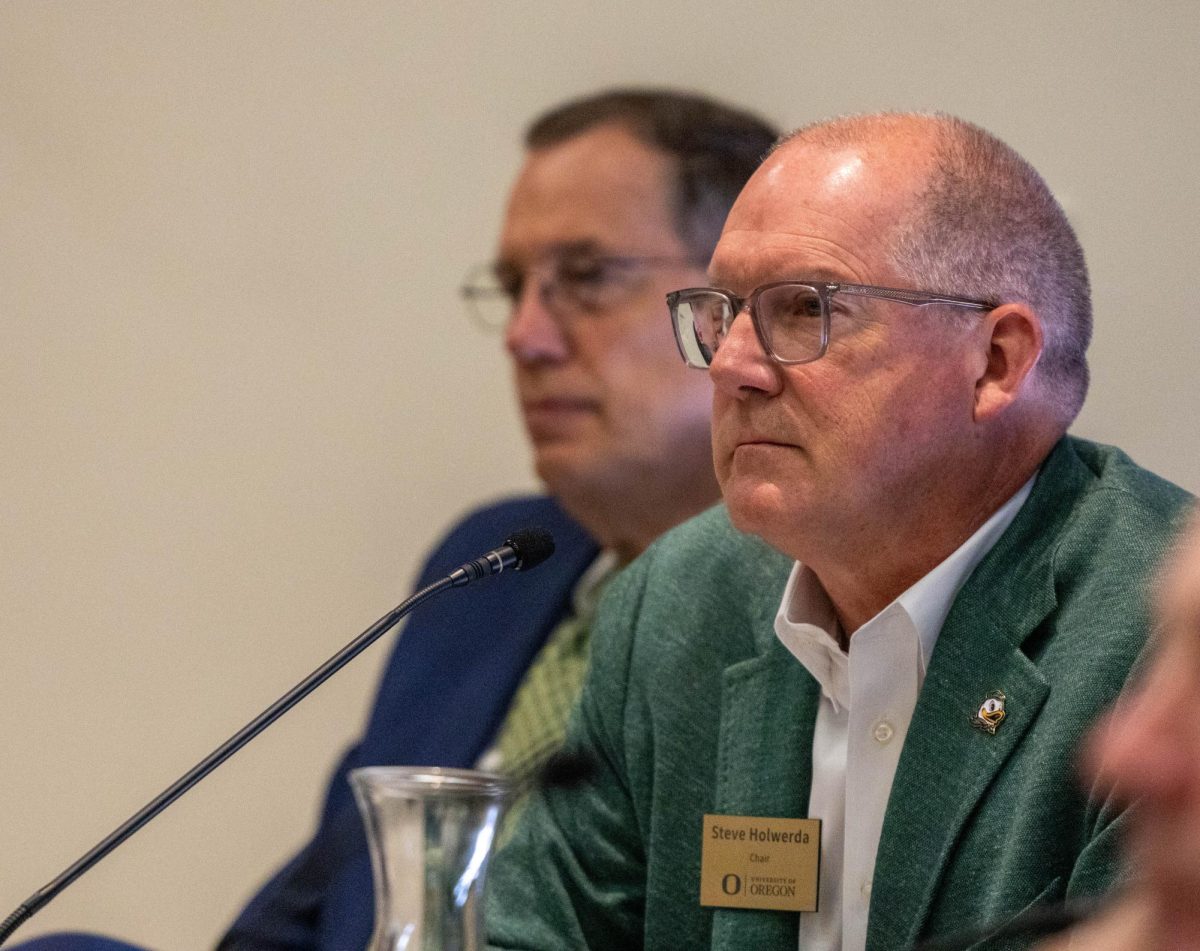
The Eugene City Council listened to testimonies on Jan. 20 from University of Oregon officials, supporters and concerned neighborhood residents regarding the university’s proposed zone changes and amendments that would advance the next generation housing development plan.
UO has been purchasing property in the east campus area since the 1960s to eventually expand housing. Due to anticipated growth, UO stated there is an “immediate need to build additional student housing” with the Next Generation Housing Development Plan.
“In addition to the total number of incoming students, which has been incrementally growing, and we anticipate over time will (continue to) incrementally grow, a greater number of those students are staying at the UO and graduating at higher rates,” UO Director of Housing Michael Griffel said.
The Next Generation Housing Development Plan outlines two phases of housing development, with each phase dedicated to the construction of each residence hall. Phase One is expected to be completed by fall 2027. Currently, Phase Two is awaiting approval from the Eugene City Council.
UO is asking the city to approve three different applications: a code amendment, a zone change and a refinement plan amendment.
The code amendment would address the land use overlay over the east campus area where the residence hall’s construction is proposed. This would allow student dormitories in the area and increase the allowed building height.
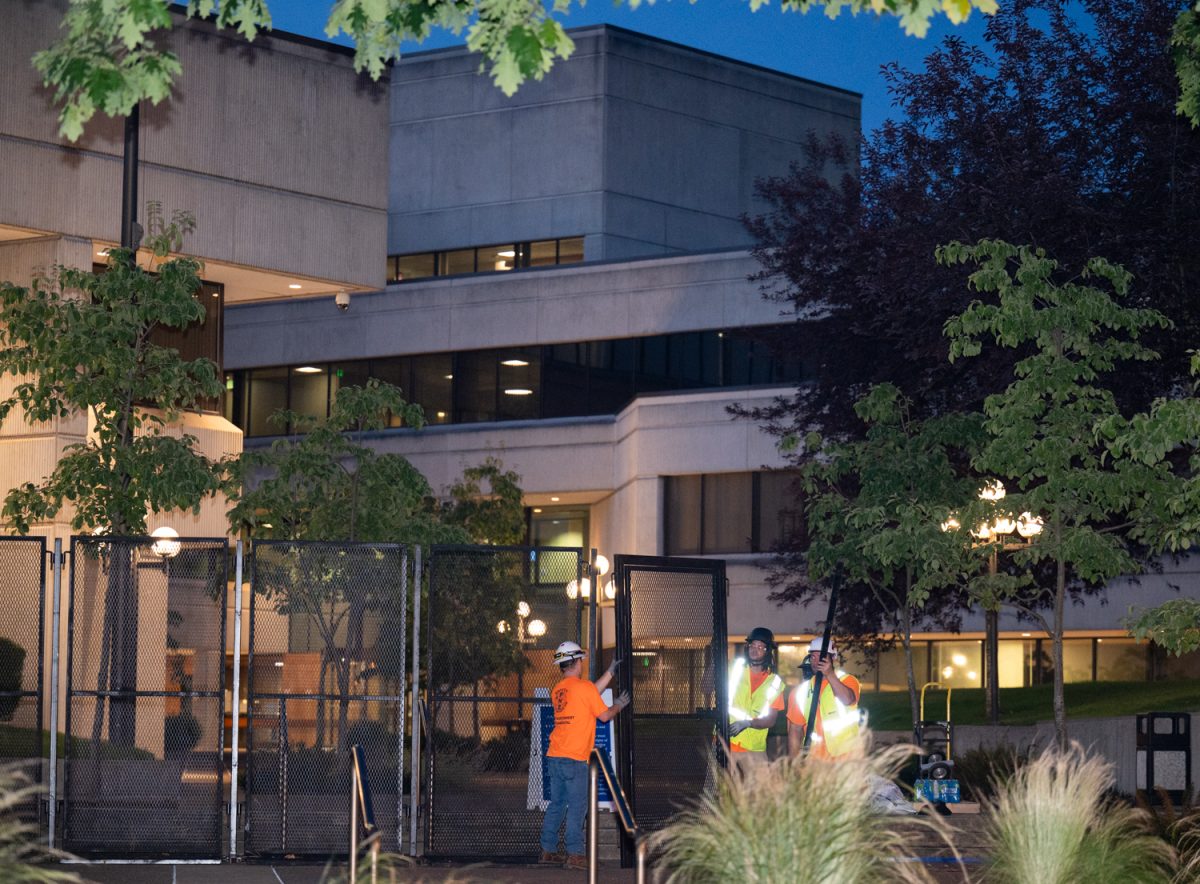
The zone change is requesting the removal of a land use overlay that covers nine properties by Matthew Knight Arena, which is where the Graduate Village apartments are.
The refinement plan amendment’s purpose is to update the Fairmount/University of Oregon special area study to include the changes that would be made by the code amendment, including the increased building heights.
The special area study started in 1982 as a way for the university and the surrounding Fairmount neighborhood to work together through housing expansion.
Jeff Philpot, co-chair of the Fairmount Neighbors Association, said the plan was made to integrate the university and the Fairmount neighborhood.
“The refinement plan was started as a sort of way to give tools to the planning process, to be inclusive between the city, the neighborhood and the university, (and) recognizing the university’s need to expand,” Philpot said.
Some Fairmount residents are concerned about the proposed amendments to the refinement plan, specifically on how increased building heights and residence halls will respect the “graceful edge,” or the transitioning zone between taller university buildings and neighborhood homes.
“Resident halls were explicitly prohibited in this area for one reason: they’re fundamentally incompatible in a transition buffer zone,” Steve Gab, one public commentator at the Jan. 20 hearing, said.
Other concerns ranged from the preservation of the neighborhood as low-density, traffic congestion and engagement opportunities.
Commentators in support of the amendments expressed a desire to combat Eugene’s affordable housing crisis by expanding student housing opportunities.
“I recognize some neighbors may be concerned with the character of the neighborhood changing. Change is scary and there will be no easy solutions to our housing crisis; every choice will have impacts and there might be more traffic after this development is built,” Peter Simmeth, a supporter at the hearing, said. “But quite frankly, I think it is more important that my generation gets to have a home, and this development would build those homes exactly where we need it.”
Many commentators in opposition to the expansion felt that their concerns could have been addressed through better collaboration with the university.
“There was no meaningful engagement around the full scope of the refinement plan changes and our concerns about conflicting statements, inconsistencies and factual inaccuracies remain unaddressed,” Mary Jaqua, a long-term resident in the Fairmount area, said.
Karen Hyatt, director of community relations at UO, works as the neighborhood liaison alongside Matt Roberts, the associate vice president of community relations. Roberts also works with city government interfaces. Hyatt has kept residents informed about the university’s next steps through the next generation housing website.
“There were a number of focus group meetings and open houses that we had with the community, where everyone was invited,” Hyatt said. “Some of those were with the neighbors, some of those were with the students and some of those were two ways: student-focused and community-focused.”
The city of Eugene confirmed that the university met all specific requirements for public involvement in a land use application.
The public hearing ended with the city council passing a motion to keep an open record for parties to submit any additional written testimony in support or opposition of the applications, which will end on Feb. 10. The council will deliberate on a decision on March 9.
Both the university and the residents expressed a desire for continued collaboration and engagement as neighbors.
“There’s a huge desire for collaboration. There is no interest at all in moving fast and not being considerate of folks,” Griffel said.
“It’s not a binary thing; it’s not us versus them or anything like that. It’s just getting the project done right,” Philpot said.