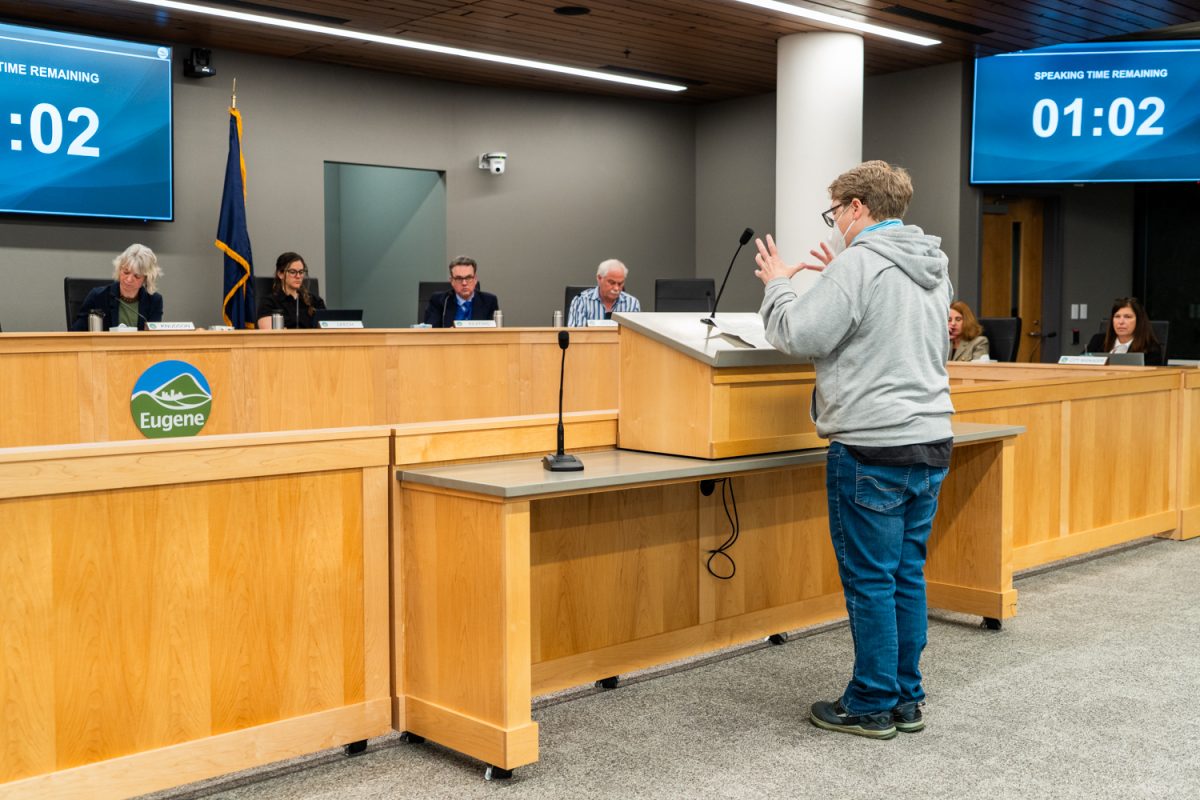
The Eugene City Council held a meeting Monday night, where public commentators spoke about increasing activity of federal officers, the future of Automated License Plate Readers in the city and a variety of other topics.
All council members were present for the public meeting, with Councilor Greg Evans of Ward 6 calling in from Zoom.
During the committee reports and items of interests discussion, Councilor Lyndsie Leech of Ward 7 introduced a motion to pass recommending the city manager to establish a grant program for the Human Rights Commission for local nonprofits that are assisting those impacted by immigration enforcement in the community.
There was previously $50,000 set aside to the council contingency fund, pending assessment by the Office of Community Equity and Community Engagement to recommend the best use of the money to assist those in the community.
“Its director has brought us a clear recommendation to establish a grant program administered through the Human Rights Commission,” Leech said. “This would allow the city to deploy these funds quickly and responsibility to local nonprofits providing direct services to (those impacted).”
The motion passed 7-1, with Councilor Mike Clark of Ward 5 voting no due to concerns regarding budget shortfalls.
“It’s not that I don’t think these funds spent would be wasteful in any way… There are quite a lot of things that need to be done in a difficult budget year where we know we may face some shortfalls and have to cut things, so it’s money that I don’t believe we can afford to spend in any way,” Clark said before voting no.
Both Councilor Alan Zelenka of Ward 3 and Councilor Matt Keating of Ward 2 said that they will be attending the Better Eugene-Springfield Transportation safety forum on Thursday, where the community and organization will discuss and workshop the future of bike and pedestrian safety in the city.
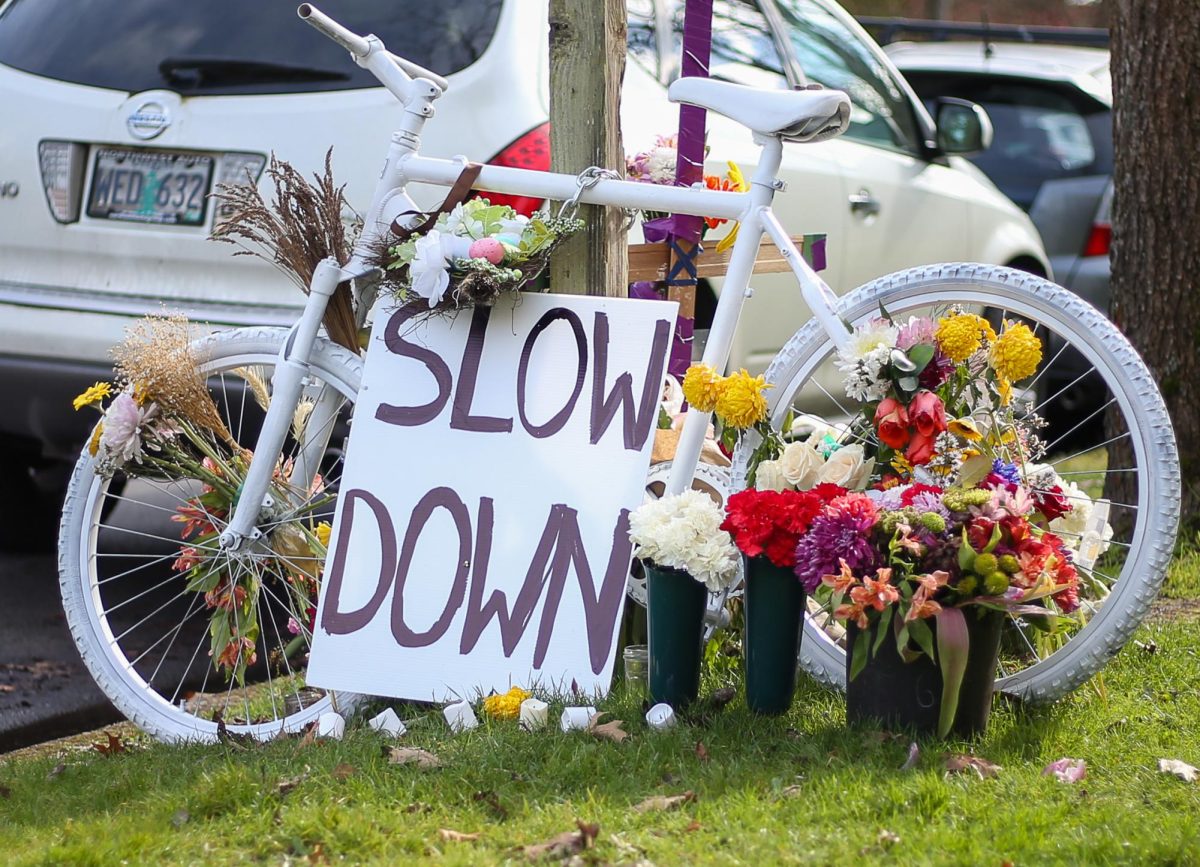
The safety forum comes after the tragic death of Erick Munene Nijue, a doctoral student at the University of Oregon studying special education after teaching high school in Kenya. Nijue was killed in a collision on Jan. 22 at 22nd Avenue and Patterson Street.
“I know I, as well as all of us in this room, see accidents like the one that killed Erick almost occur regularly on these two lane, one way streets,” Rhonda Nese said during public comment. “Now I am not an expert in traffic (controlling) measures… But one thing that I know is that these tragedies can be prevented and that our community members need safety.”
The council voted unanimously to approve the city manager employment agreement, with council-elected former city manager of Beaverton Jenny Haruyama starting as the new Eugene city manager on April 15, according to Councilor Zelenka.
The council also unanimously passed a resolution that was previously introduced and drafted by Leech, which declares a humanitarian crisis in the city of Eugene due to ongoing federal activity.
Public comment began around 8:30 p.m., with 43 commentators signed up to speak.
The Party for Socialism and Liberation posted on Instagram four days before the meeting, asking followers to pack public comment to urge councillors to reject the possibility of future implementation of ALPRs. The city council is expected to hold a future work session on operating agreements regarding ALPRs.
“We don’t need to help companies like Palantir build databases that track our movements and tell us and tell goons who are looking at our locations and where we are. We don’t need that,” Scott Lambert, one public commentator, said. “What we need is local governments to stand up against things like that and gum up the works so that we don’t get to a point where the FBI is knocking onto your door if you’ve gone to a federal building protest.”
A few commentators talked about the recent request for proposal regarding the Eugene Police Department’s developing Peer Navigation Alternative Response, which has been introduced in hopes to fill the gaps that the closing of CAHOOTs left. They expressed disappointment in the RFP, which they stated failed to fill the gaps that the city themself had identified, and urged the city manager to amend the RFP.
“Peer navigators as case managers, disconnected from non-emergency dispatch, is no replacement for the service Eugene lost last April, when Whitebird stopped running CAHOOTs in Eugene,” Robert Parish said. “Less than 7% of the RFP’s requirements have anything to do with the work of a community responder service like the one Eugene had for 36 years.”
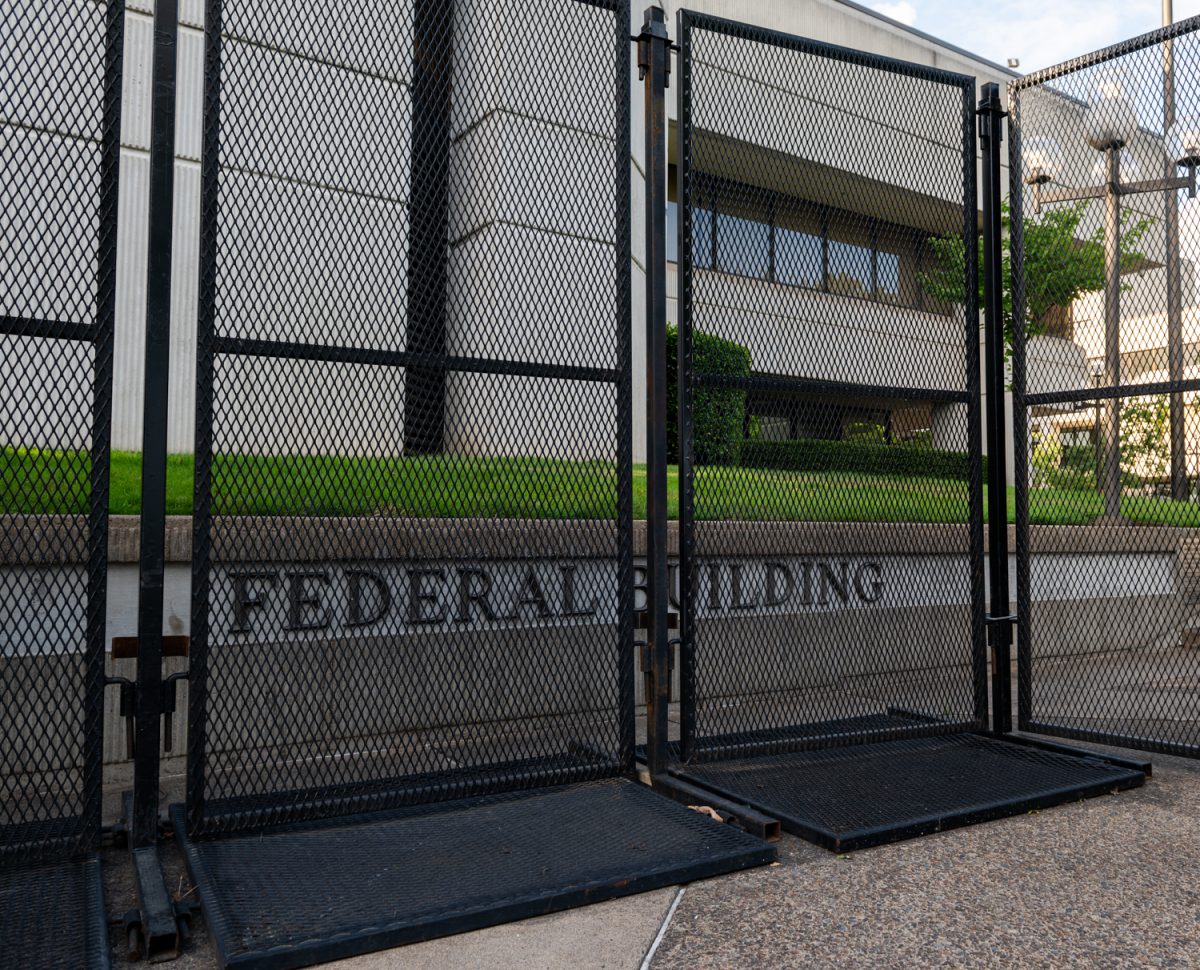
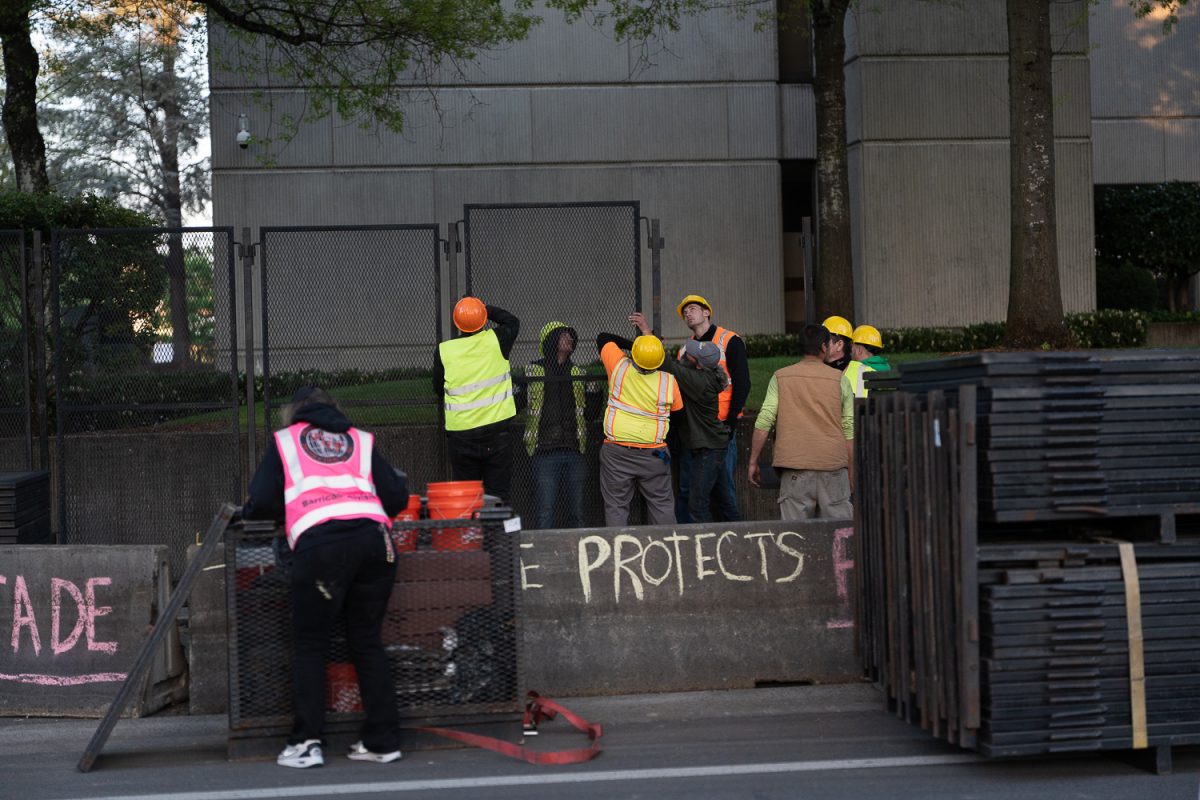
A large number of commentators focused on the impacts of federal immigration enforcement, with some speakers discussing their experience as protestors at Eugene’s old federal building.
“I was refused to have a female officer search me in DHS’s holding cell,” Anna, who did not provide a last name, an organizer with the Transalliance of Lane County, said. “I pleaded with them to allow a female officer to search me, they refused and they said there wasn’t one available.”
Another resident defended daily protests at the old federal building in Eugene.
“Words that I’m tired of hearing are unprecedented and peaceful protests. We are nonviolent protestors, it is nonviolent by design,” Shelly Devine said. “It is a nonviolent resistance tactic and it is meant to be disruptive, and we will continue to be disruptive, because the point of protest is not for everyone else’s comfort.”
Rebecca McCrosky, one speaker, received a round of applause for her comments.
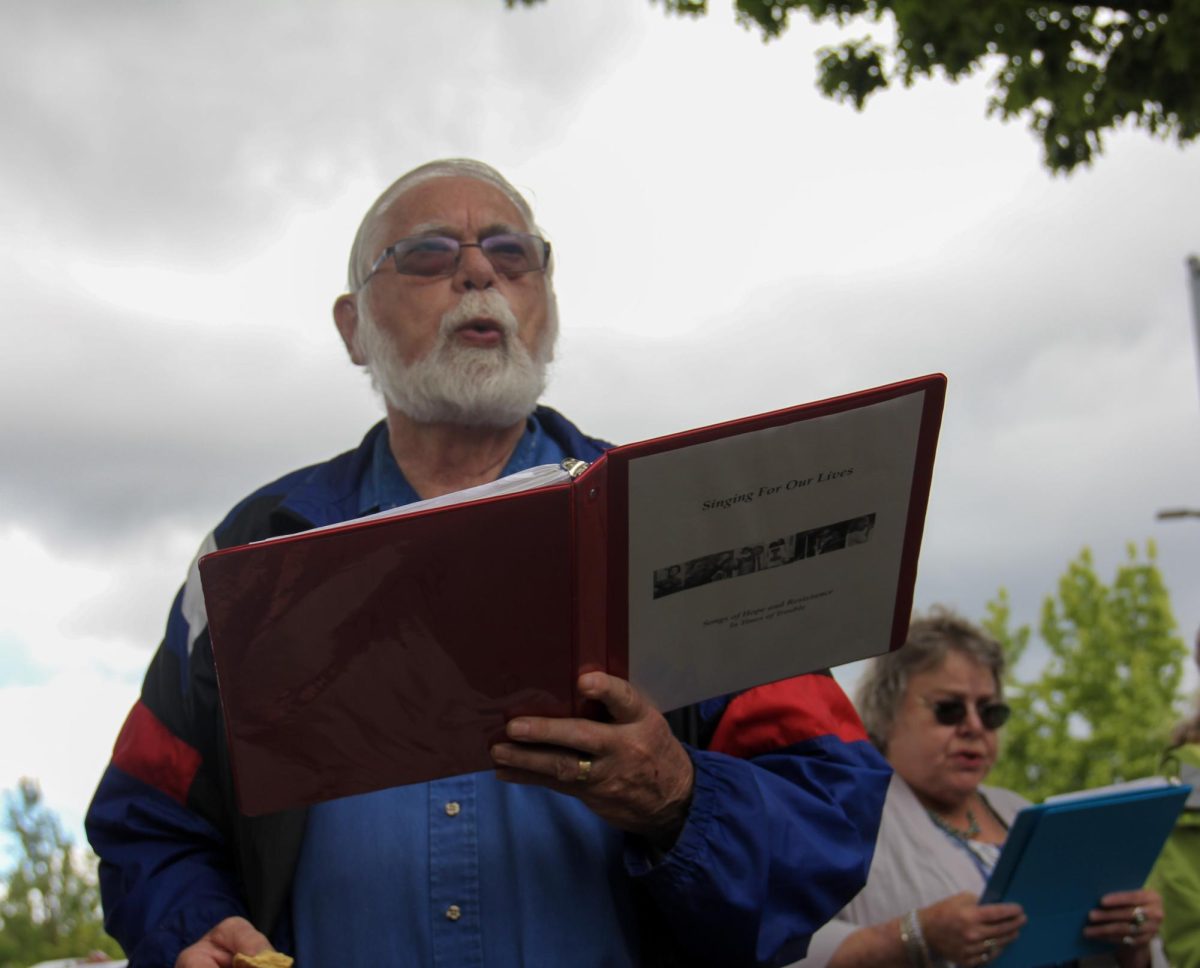
“ICE ramps up, we stay in the streets. Singers, surgers, legal observers, veterans, grannies, neighborhood workers, slugs and frogs, and planet preservers. We need to know that the city has our backs. It’s not enough to tell us to stay away from the federal building. We won’t, and we can’t stay away.”
City council meetings are held the second and fourth Mondays of every month. The next public meeting will be held on Feb. 23.