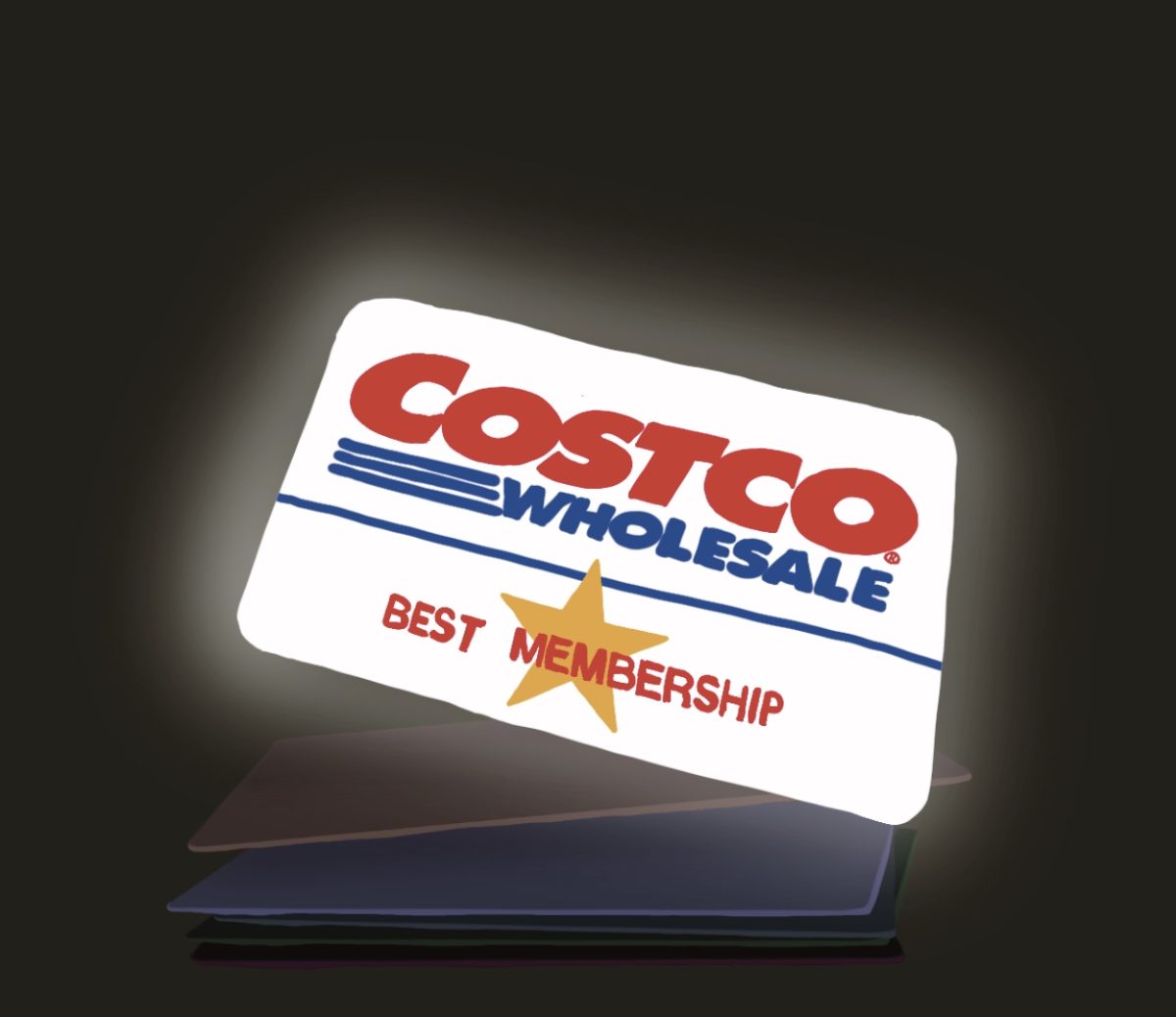
There are ways to buy paper towels without paying for the privilege — you can walk into any Walmart or Safeway for free. Yet somehow, Costco persuades more than 145 million people to do something slightly absurd: pay just to enter the store.
And they do it gladly! Then talk about it with reverence and glee! I am one of those people.
So is Hannah Neumann, a senior multi-disciplinary science major and proud member of what she called “a magical place.”
That is high praise in an era of widespread subscription fatigue. Every service wants a monthly fee; every app wants to rent you a feature you used to own. With Netflix tightening password sharing policies and Spotify inventing new tiers, the modern consumer has become a reluctant patron of a hundred tiny toll booths.
Yet Costco remains an exception, its membership remaining beloved and engrained as a moniker of adulthood. How did Costco manage? Incentive design.
Costco’s core profit engine isn’t the stuff in the aisles, but membership: in 2025, Costco reported 68% of profit came from membership fees.
This flips normal retail incentives on their head. Most stores make more money when you wander, overbuy and fail to notice that the package shrank. Their profit is extracted at the point of sale, so the point of sale becomes a battleground — end-cap psychology, coupon games and erosion of quality.
With Costco making its money before you touch a cart, the company gets something rare: permission to run the warehouse like a long-term relationship instead of a one-night stand.
“This means they can focus on other aspects of the experience, such as ensuring that they have… a low enough price point relative to traditional retail,” said Keaton Miller, an Associate Professor of Economics.
If you depend on membership, you don’t need to squeeze every item for profit. You need members to feel that the deal is real and the company isn’t playing games.
But that’s only one benefit found inside Costco.
Think about labor. Costco has become a case study in “good jobs” strategy: pay more, train more and get loyalty in return. “When you support the people doing the work, it reflects everywhere,” Neumann said.
There’s also the iconic private label, Kirkland Signature, beloved by many customers. “Kirkland Signature is the only paper towel I buy,” said Neumann.
Finally, Costco maintains a few sacred price points that function like an oath to the consumer, like the $4.99 rotisserie chicken and the $1.50 hot dog.
These items are special because they signal Costco’s commitment to low prices, since most customers have an “idea what a hot dog would cost at a pub… even if they don’t know what… a two-pack of 64oz ketchup might cost elsewhere,” Keaton said.
That’s why when a CEO considered raising the price, co-founder Jim Sinegal replied with: “If you raise the effing hot dog, I will kill you.”
So what’s the takeaway, other than the fact that America’s most beloved subscription is attached to bulk groceries?
Subscriptions aren’t the villain, bad subscriptions are — the ones that profit from confusion and fine print. Costco profits from clarity. Pay up front; we’ll keep margins disciplined; we’ll behave. If more businesses want Costco-like trust, then they must design their company so it wins only when their customer can feel, unmistakably, they’re winning too.