
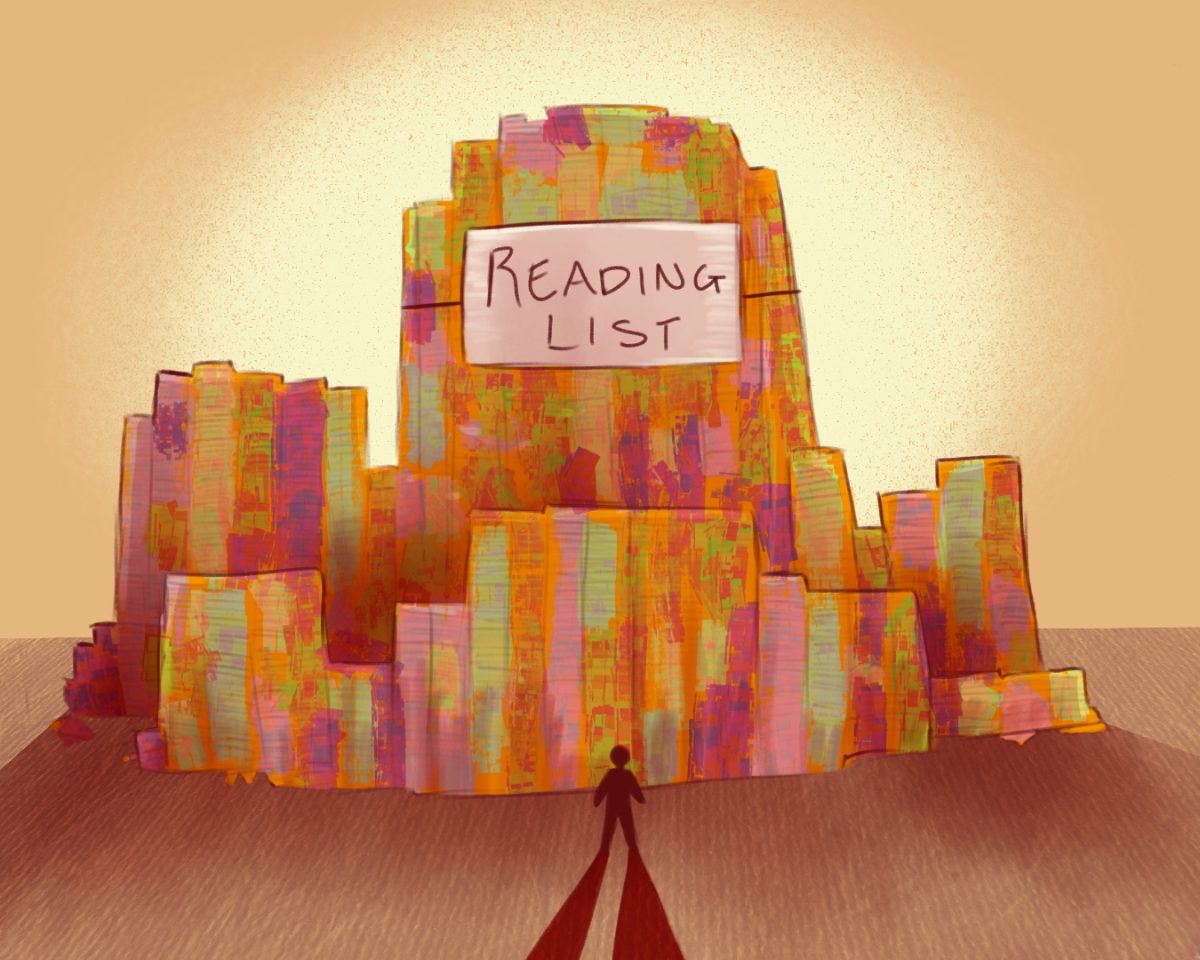
We are a quarter into 2026. If you set a reading goal this year, that means, in theory, you should be a quarter closer to finishing your goal than you were three months ago. So, how’s it going? Are you on track to realize your goal? I’m not.
I ventured to read 26 books in 2026, logging the goal on Goodreads, a popular app among readers for tracking reading habits and gleaning title recommendations. To read 26 books in 52 weeks at a consistent pace means I should have read six and a half books by now, and I’ve read five.
I’m proud of myself for reading as much, prioritizing eye-to-printed-page time over that of a screen; yet, I can’t help feeling as if I’m behind, the anxiety of a reading goal inhibiting my ability to feel I’m reading solely for fun.
Third year education student Sierra Hawes, however, has never felt like reading was a chore. She didn’t set a 2026 reading goal.
“I feel like reading, I do it when it calls to me, which sounds really dramatic, but… (a reading goal) just feels like a New Year’s resolution where it feels like there’s so much weight to it that you have to do it; but then, since it feels so intense, you kind of give up on it really early.”
Yet, Hawes is debating setting a belated reading goal this year. A “very flexible, flexible goal,” she said, sharing that she loves the idea of a reading target.
Fourth year English student Sasha Fish is determined to read 55 books this year, vying to best her record of 54 books set in 2025. She understands any gravity, stress associated with the 2026 Reading Challenge to be productive.
“I think a part of the sort of idea, or experience, with the reading goal is the reward of being ahead or being on time, but also the stress of wanting to catch up to it. And how that does sort of add, sometimes, a layer of stress to reading,” Fish said. “But also, the feeling of adding a new book once you’ve finished it and getting back on track is just like the best feeling ever. So it’s like, to me, it’s worth the stress.”
Worthwhile goals prompt love-hate relationships with those who set them. Some might see the inclination to quantify hobbies as concerning, perhaps indicative of a greater societal trend: something ideally for pure joy becoming underscored by stress and competition, even if only with oneself.
Alternatively, how is any college student supposed to prioritize their hobbies without providing structure to them, something to work toward that isn’t an essay deadline?
“I don’t read to accomplish the reading goal necessarily. But it’s definitely a reward, or a psychological reward, to reading,” Fish said, later sharing that her reading goals are all the more attainable considering they intersect with her English degree work and professional aspirations.
“One of my biggest goals in general, especially someone who’s going to be teaching our future generations how to read and analyze books, is to be very well read. So I think for myself, setting a reading goal is helpful because it sort of keeps me on track,” Fish said. Hawes similarly aligned her pending reading goal with aspirations related to her Spanish minor.
Fish is one book behind her 2026 schedule, and Hawes committed to reading 10 books in the remaining nine months of the year. Both gave themselves permission to adjust their target number throughout the year because, ultimately, they want to challenge themselves without a goal dominating their lives, taking time away from friends. If anything, Goodreads is an additional opportunity to connect with the readers in your life.
“Whenever I finish a book, I definitely will post about it,” Hawes said, describing Goodreads as Letterboxd for books and maintaining that it’s a great place to discover relatively personal reviews.
“It’s so fun. It’s actually like one of the best social medias ever, because it’s just all books, and it’s great,” Fish said.


