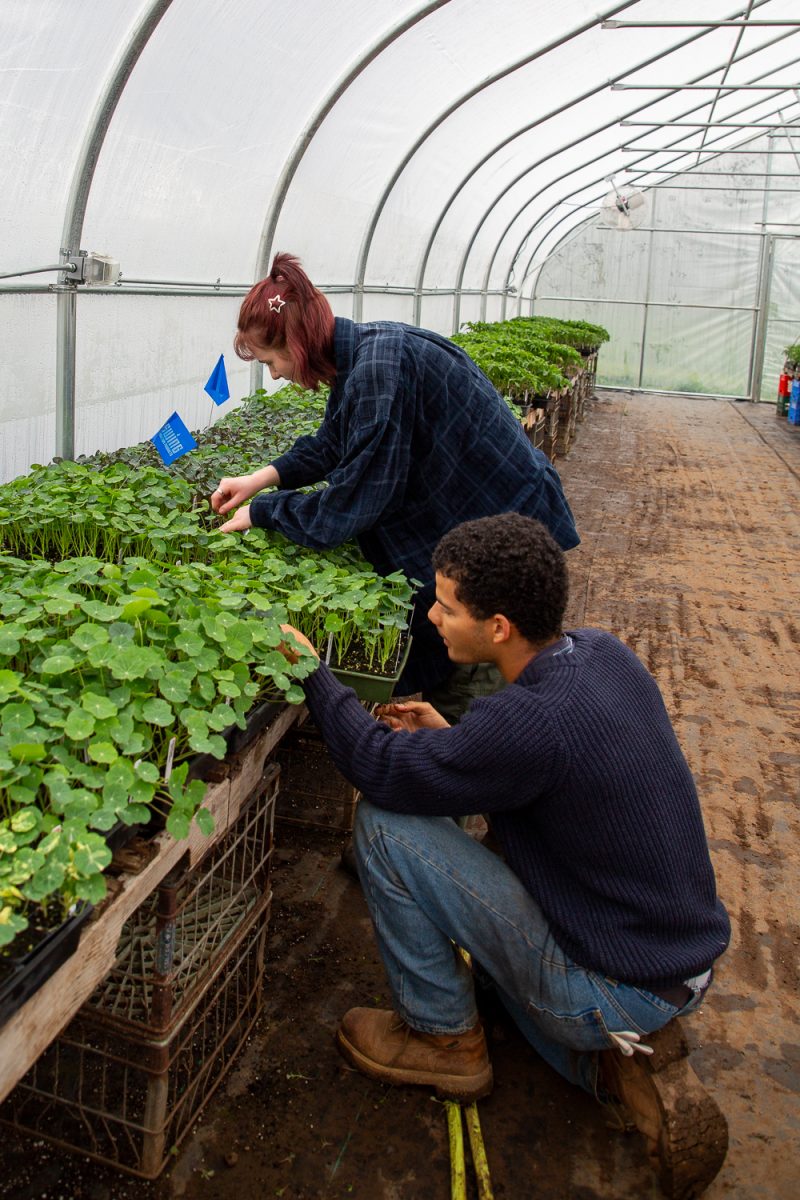
Sunshine or rain, below freezing or sweating bullets, dusk or dawn: at Food for Lane County’s Youth Farm, plants must be tended, and people must be fed. Food for Lane County has purchased a 25-acre parcel of land at 34596 Seavey Loop, just alongside Mount Pisgah Arboretum, for its new Youth Farm program. Rooted in community, the Youth Farm program has worked for over 30 years to reduce hunger by growing and distributing food while providing education through experience.
The original Youth Farm planted its first seeds in 1995 as an extension of the nonprofit GrassRoots Garden Program, operated by Food for Lane County. The property was leased on a 6-acre plot of land owned by the Springfield School District, which was zoned for high-density residential use, making the relocation inevitable. It aimed to provide youth and young adults with education and experience through outdoor work and conservation projects. The operation was small at first.
“We had an outhouse and van, that was it, we locked the tools in an outhouse,” Harper Keeler, University of Oregon professor and direction of the Urban Farm Program said.
Keeler has been a professor at UO since 2001 and has been alongside the Youth Farm Program every step of the way, serving on the original farming crew. He graduated with a degree in Landscape Architecture from UO in 1995 and became involved with the UO-run Urban Farm program around 1992. Now, as its director, Keeler sends around 300 Urban Farm students to do service learning at the Youth Farm.
“We all have a part to play in this conversation,” Keeler said. “Mine is to teach students how to be involved and celebrate the community.”
Its efforts to connect the community to the process of how we grow our food continue to create hundreds of volunteer opportunities for the youth and build bonds with UO.
Food banks have experienced a surge in demand, up 51% over the past year and reaching a record 2.9 million visits, according to Oregon Food Bank. For Food for Lane County, there is no ignoring the growing pressures.
Just last year, Food for Lane County distributed 8.1 million pounds of food and harvested 120,000 pounds of produce from its garden programs. Youth Farm’s role is substantial in food production, donating 40% of its annual production to food banks, but also emphasizes education.
“If we’re really going to look at community food security, it’s also about how we can help folks understand how to grow and use their own food?” Jen Anonia, garden program manager for the Youth Farm, said. “How can we provide opportunities for more of that in our community?”
Anonia has been with Food for Lane County since 1989. After college, Anonia felt she had to give back to the world. With experience in environmental education, she decided to pursue her love of the outdoors, volunteering as an education coordinator for Food for Lane County. 37 years later, her job has seen plenty of change through the growth of the program and opening of new ones, like fundraising plant sales, but the Youth Farm’s mission hasn’t changed: to reduce hunger by encouraging our community to create access to food.
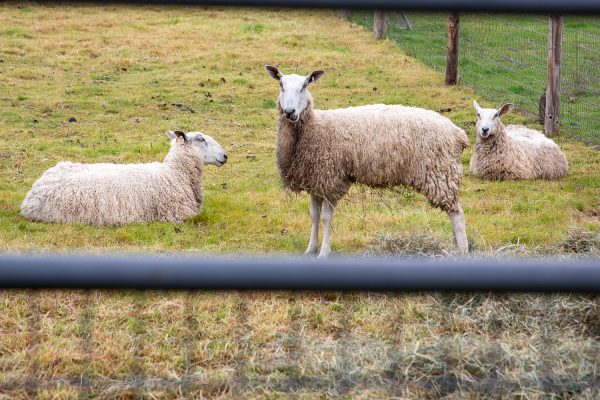
Through the Oregon Legislature, the state allocated Food for Lane County a $1.15 million grant in 2023 for the purchase of farmland. Alongside the grant, donations from outside contributors helped push the purchase of its new location in 2024, now almost three times the size of its first site. With increased land, the farm can now experiment with new crops and more volunteer opportunities.
“It’s giving us an opportunity to both grow different types of produce and more produce, as well as developing a more robust composting system, looking at doing hedgerows and demonstration gardens, more of those to have a fuller education,” Anonia said.
There is a level of excitement felt around the farm. Four new greenhouses have been built, as well as acres of freshly plotted land growing over 40 varieties of farm-grown fruits and vegetables and plans for more to come. The land before the Youth Farm took over was an old, overgrown horse farm, and the growing area was uneven and needed to be leveled. The project’s completion needed a set of hands to straighten up and ready the soil for farming.
A farm of this size relies on water rights through the state of Oregon. Water is publicly owned and regulated by the Oregon Water Resources Department, and to farm in Oregon requires water rights to irrigate commercial crops, typically governed by prior appropriation, meaning to prioritize senior rights. To own water rights is a make-or-break issue, one that the Youth Farm acquired by purchasing its new property.
Now the farm can use well water via three-inch pipe irrigation lines, dug underground to support spigots, low-flow drip irrigation, and impact sprinklers, along with two large rainwater-collection cylinders stationed behind the barn. Without water, there’s no produce, and without produce, people don’t eat.
“We’re trying to engage our community to reduce hunger,” said Anonia. Selling produce has been done through stands set up by volunteers, and Anonia aims to continue its practice. Produce stands typically run every Saturday from June through October, although they might expand depending on the farm’s yield.
The Youth Farm provides a variety of opportunities for the community to buy produce, accepting SNAP benefits and will match your purchase, doubling your dollar. They also run a 180-member Community Supported Agriculture program, providing weekly boxes of organic, locally grown produce delivered to drop sites for pickup.
In April and May, the Youth Farm hosts a fundraiser to sell thousands of baby vegetable, flower and berry starts, encouraging people to start their own gardens. Plant starters that are left over are distributed to other agencies, like community gardens.
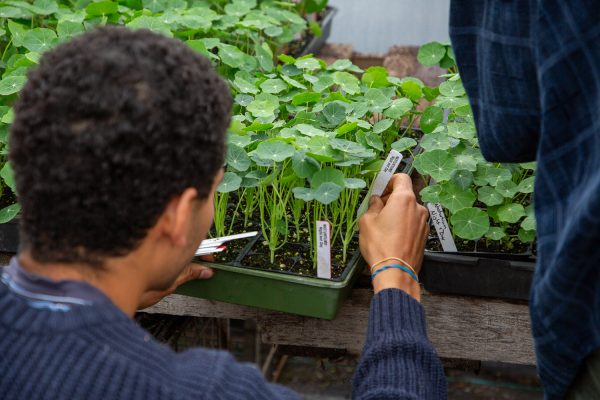
Walking around the farm, Anonia points out the dozens of rows, some with vibrant green sprouts popping out or tree orchards soon to bear apples, pears, peaches and plums. The land behind the ex-horse stable holds the potential for blueberries and strawberries, all of which have never been grown by the Youth Farm.
However, growing the essentials is critical. Potatoes, onions, tomatoes, carrots, squash and cabbage are commonly grown for food banks because of their extended shelf lives. Food for Lane County prioritizes these crops as they are ubiquitous, especially in a time of rising food demand.
The community is deeply connected; both Keeler and Anonia met each other while farming at the Youth Farm in the late 90s. For decades, the Youth Farm and Urban Farm have shared a similar mind- set of delivering food and connection to the community. A collaborative goal that benefits both programs, one that works off of each other.
“A living laboratory for landscape architect students to learn about food production and productive landscapes, and native pollinator habitat and water and all these dynamics that are happening at the Springfield Youth Farm serve as a testing ground for the subjects and topics that we teach in landscape architecture,” Keeler said.
However, the farms act as more than just a source of work.
“Oregon pays me to teach students how to grow food,” Keeler said. “Its my job. How f*cking cool is that.”