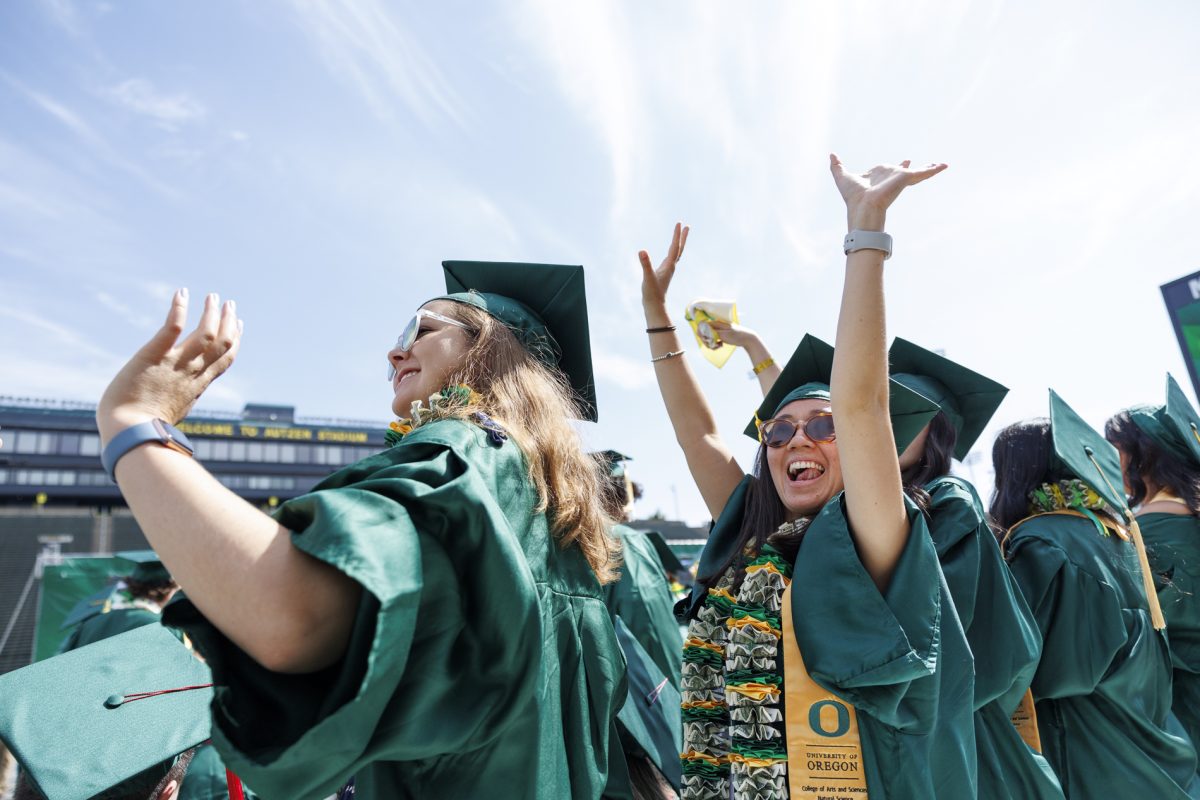
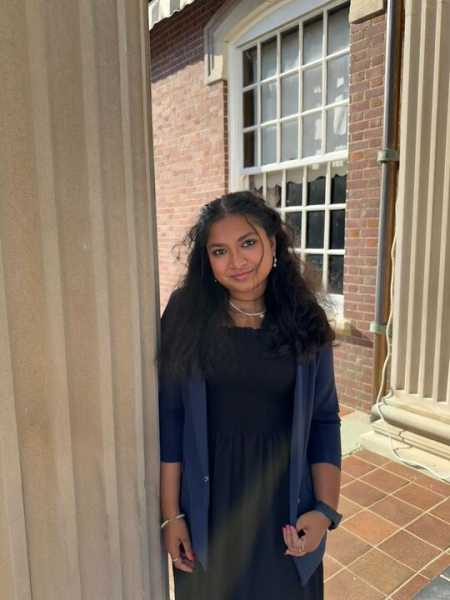
After the April 23 meeting with ASUO President Prissila Moreno, UO President Scholz proposed a task force to assess the feasibility of a Latiné center on campus. However, the university has had a shaky history with task forces, and many within the Latinx coalition fear that this would be redundant and ineffective.
Both Moreno and Giovanni Bazan-Espain, the Latiné Male Alliance president, referenced the history of the university’s initiative to be designated a Hispanic-Serving Institution and the lengthy, exclusive process undertaken by their task force.
An HSI is a federal designation for accredited universities with a student body in which at least 25% of students are Hispanic. This designation allows campuses to compete for Title III and Title V grants for academic programs and support services for Hispanic students, diversify educational access and provide further financial assistance.
Oregon currently has several HSI’s, such as Western Oregon University in Monmouth, Warner Pacific University in Portland, Columbia Gorge Community College and Chemeketa Community College. Universities like Portland State University and the University of Oregon are actively working toward the official designation.
“The HSI status exists to show that a university has the proper resources in place to ensure that Latinx students thrive on campus,” Moreno said. “And we believe that directly related to that is a physical space for our people.”
Bazan-Espain wanted to join the task force for UO’s HSI designation when he entered as a freshman last year. He found the process largely bureaucratic and exclusionary of student voices.
“I said, ‘how can someone get on the task force?’ I really wanted to get to work. But you had to be nominated, and then after a whole year of practically begging to be on the task force, I was just shut out,” Bazan-Espain said. “I wasn’t nominated. I wasn’t invited. I wasn’t whatever process (required) that the administration has to add someone to the task force, and I didn’t get the time of day.”
After that experience, he reached out to ASUO; the current ASUO administration set a goal to expand cultural centers on campus, such as the SSWANA Center, and he pivoted to push for a Latiné center.
“Within three meetings, ASUO drafted a backward plan for the winter terms and how we can start ramping this up and getting to work,” Bazan-Espain said.
Both Moreno and Bazan-Espain emphasized the tangible wins they have seen through the Latinx coalition in building the center; they continue to meet every Friday and host public events to build support for Latiné students on campus.
“Not even half of what the coalition has done has been done by the (HSI) taskforce that has been around since 2019. All they have done is release a study about the diaspora of Latinx students who are first gen.” Bazan-Espain said. “And then a Latiné commencement, which is great, but it took them seven years to get a commencement for their second largest ethnic group.”
Currently, the coalition has produced detailed studies on a budget proposal for over-realized ASUO funds that can be used for a center, a budget analysis and proposal for the total building costs and a comparative study on other Latinx centers within the Big Ten conference.
Bazan-Espain mentioned that task forces meet monthly, and that the HSI task force has yet to meet this term; the infrequency of meetings and the bureaucratic aspects of the process further stall tangible commitment for the center.
“It’s readily apparent to me that the upper administration is stalling and waiting us out with another task force – this institution does not have a good history with task forces,” Bazan-Espain said.