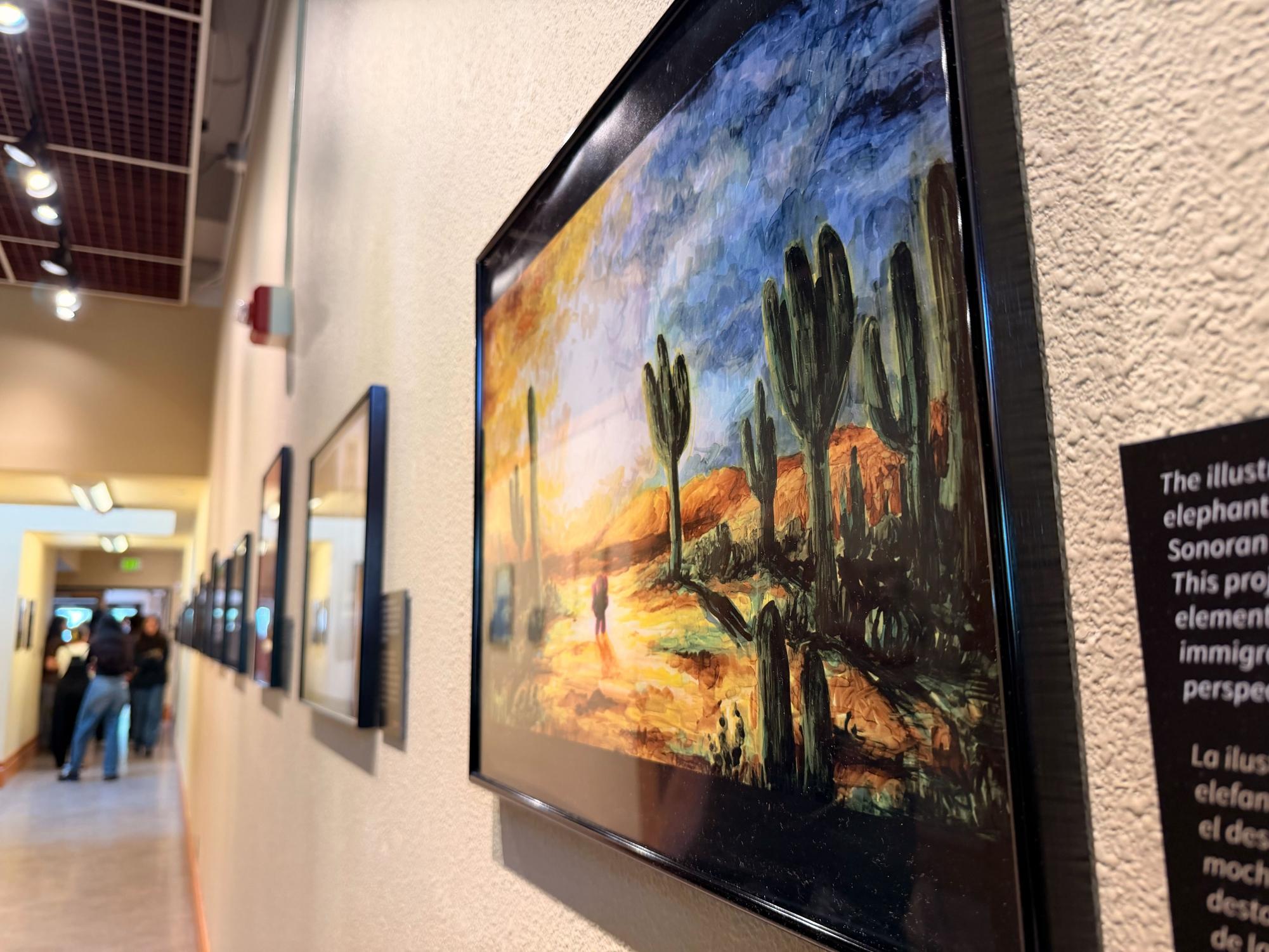
The hallway at the Museum of Natural and Cultural History is lined with framed photos of wallets, rosaries, waterbottles, pictures of family members, memorabilia from various pop-culture shows and house keys. These items all once belonged to migrants who were coming to the United States, and these items were taken from them by border patrol agents.
The exhibit houses 40 objects, with 20 of them being through a rotational exhibit on a tablet at the end of the hall. This was a project curated by students in the “Migrant Belongings” course at the Clark Honors College, which sought to build empathy for people who migrate through the belongings that they have lost during travel, or when they have been apprehended by federal authorities. This project was led by professor Tobin Hansen, who specializes in deportation, migration, the borderlands and belonging.
Within “Shakedown,” a report published by a borderlands NGO called No More Deaths, they found that dispossession of belongings have become a widespread issue — with a third of the 400,000 surveyed deported migrants being released without money or personal belongings. Additionally, the survey revealed that 81% could not afford to travel home; 69% could not afford shelter, and 77% could not afford food as a result of being deported without access to their money.
“I found it to be really a place of reverence. There was so much personal stake in personal belonging,” junior Piper Bringman said.
Bringman said it was akin to “walking through a graveyard” — except in graveyards, you know a person’s name, date of birth and date of death, but not much about who they are as a person. Within this exhibit, Bringman said you understand what was important to every single person; however, you don’t find out key identifiers.
“I think that in our culture, death is something that’s obviously very inevitable, but it’s not something that’s very normalized. Whereas, in the context of something like immigration and deportation, (death and dispossession) is something that has been incredibly normalized in our culture,” Bringman said.
No More Deaths suggested important policy measures for the Department of Homeland Security to stop dispossession during deportation. One of the most notable ones is to ensure access to vital belongings during deportation proceedings, including detention. One of the most problematic separations during the chain of custody is separating migrants from medication that they carry on them, which can cause detrimental impacts to health.
“I think a lot of what we hear about what happens on the border is in the form of numbers, or testimonials, and I think that can lead to a middle ground where it can lead to an intellectual understanding that something is wrong,” Nitai Gaash, a senior studying human physiology, said after visiting the exhibit. “I think that this just showed me that seeing (the belongings) in front of you is completely different. I mean, it’s like hearing a news story about a tragedy versus knowing someone there.”
Gaash said the framed series of letters particularly stood out to him, which in the correspondence discussed a migrant’s mothers health, admissions of guilt and other personal details of their life, which were then intercepted by border patrol.
“I think part of it is how relatable it is. All of those people had things that the average person, like myself, carried with them,” Gaash said. The stolen items create an important grounds for community building with UO students and Eugene community members to critically engage with the culture of cruelty within deportation processes in the US.