
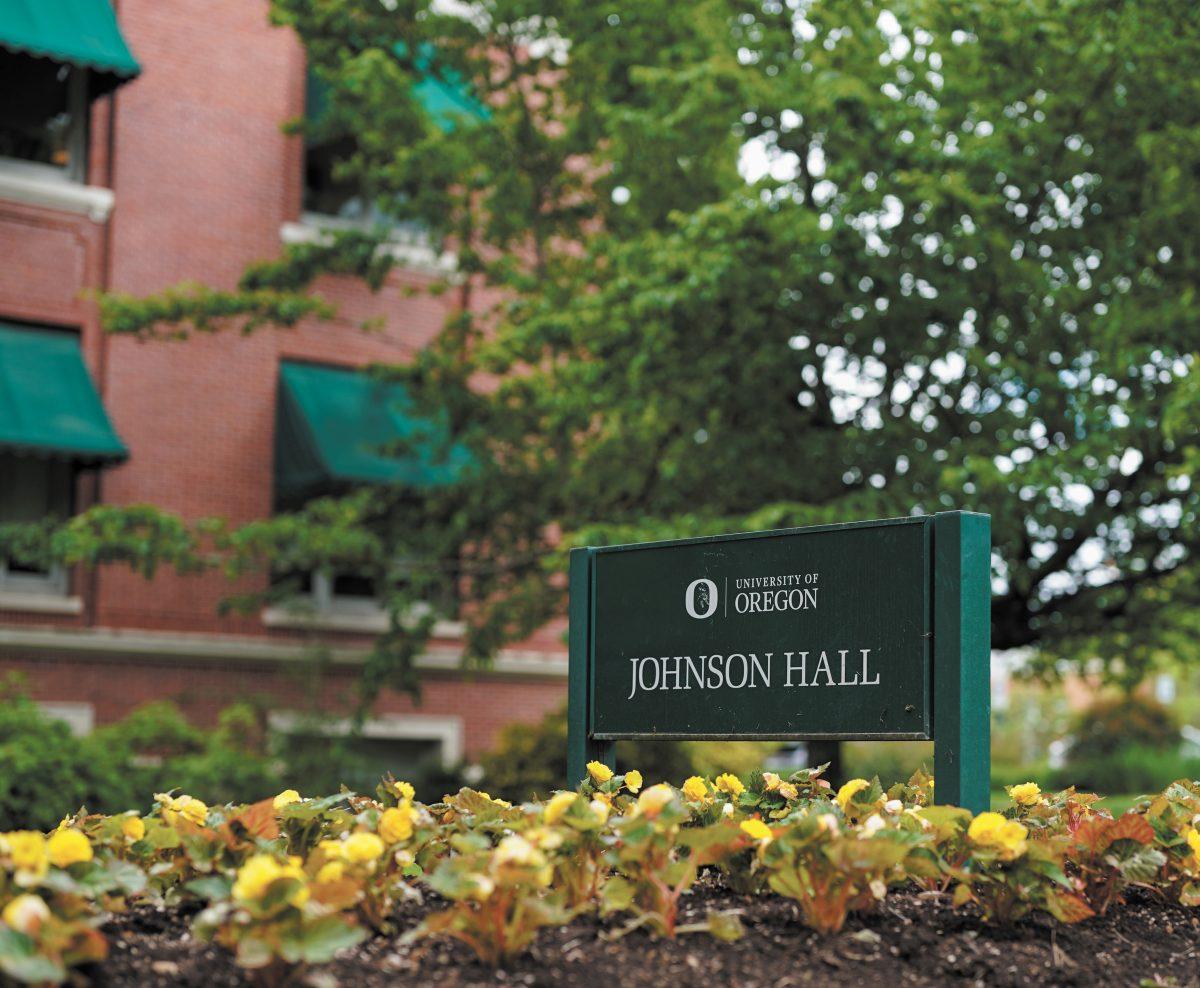
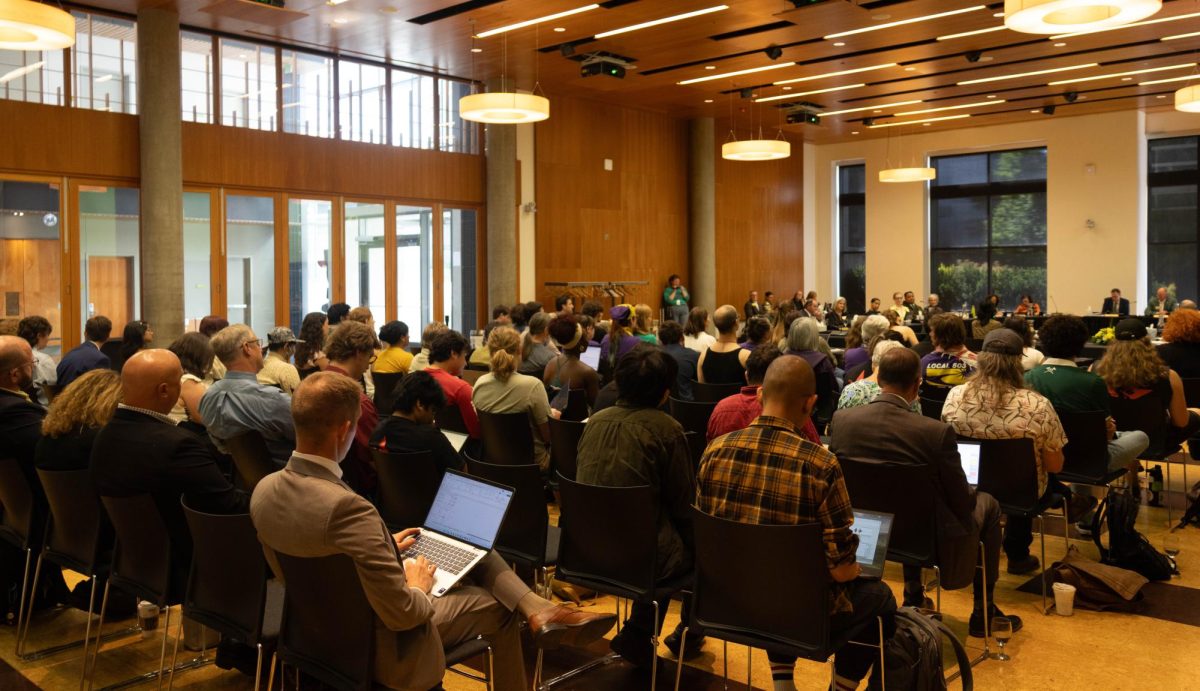
During the May 20 University of Oregon Senate meeting, President John Karl Scholz discussed the recent announcement of $65 million in additional budget cuts to the university, and senators approved the formation of a committee to formally give input when significant academic changes are proposed.
In a campuswide email sent last May 14, Scholz said a main reason for the budget cuts was lower than projected levels of non-resident student enrollment.
At the senate meeting, Scholz explained that enrollment had dropped by 500 students, lower than the university’s predicted numbers. Scholz said these 500 students would have contributed about $20 million dollars to the university each year for four years.
Going forward, Scholz said UO would be “lowering assumptions about out-of-state enrollment.”
Scholz said that there would be more details on “the changes that need to be made” at the December 2026 UO Board of Trustees meeting.
One aspect of change Scholz touched on was narrowing the university’s focus, which he said in the initial announcement would see the school shift to investing further in research and making UO known for specific areas of research.
“We cannot do everything but by focusing thoughtfully we can focus on doing some things exceptionally well,” Scholz said, and went on to say that UO would “double down” on what makes the university “special” and “distinguished.”
Budget cuts have to be made quickly so costs do not continue to build on each other every year, according to Scholz.
“The longer we wait the larger the problem becomes and the deeper those cuts need to be,” Scholz said.
Several senators and faculty members raised questions about the specifics of the university budgets and expressed concern about slashes to specific departments.
“You are projecting cutting our mission,” Pedro García-Caro, a senator and professor of romance languages, said.
The Academic Modification Advisory Committee, created by the faculty senate, aims to act as a body that will provide input if and when significant changes within academic departments are proposed.
The committee will comprise of six faculty across departments, one student, one classified staff member and one member of administration.
Edward Davis, vice president of the senate and earth sciences professor, described the creation of the AMAC as a “process of creating trust.”
“The party that has the power has to become vulnerable and I think President Scholz and Long have been vulnerable though this process. I appreciate the collaborative work we’ve engaged in,” Davis said.
The AMAC will consider a number of factors when giving feedback on significant changes, including “academic quality” of a program, the program’s interdisciplinary value, the program’s effect on diversity and operational costs.
“We want to make sure we are thinking about that inherent interconnectedness when we are making changes,” Davis said. “Our disciplines are so different it is really hard to measure music against chemistry or the business school against architecture.”







Charlie • May 21, 2026 at 10:31 am
UOwe knew this was coming. Many of us said it was a terrible business model to depend on outta state students paying multiple times more in tuition than if they stayed in CA. Admins were also warned the Department of Education would limit the amount of student loans they’d be subsidizing going forward.
It’s The Reckoning…