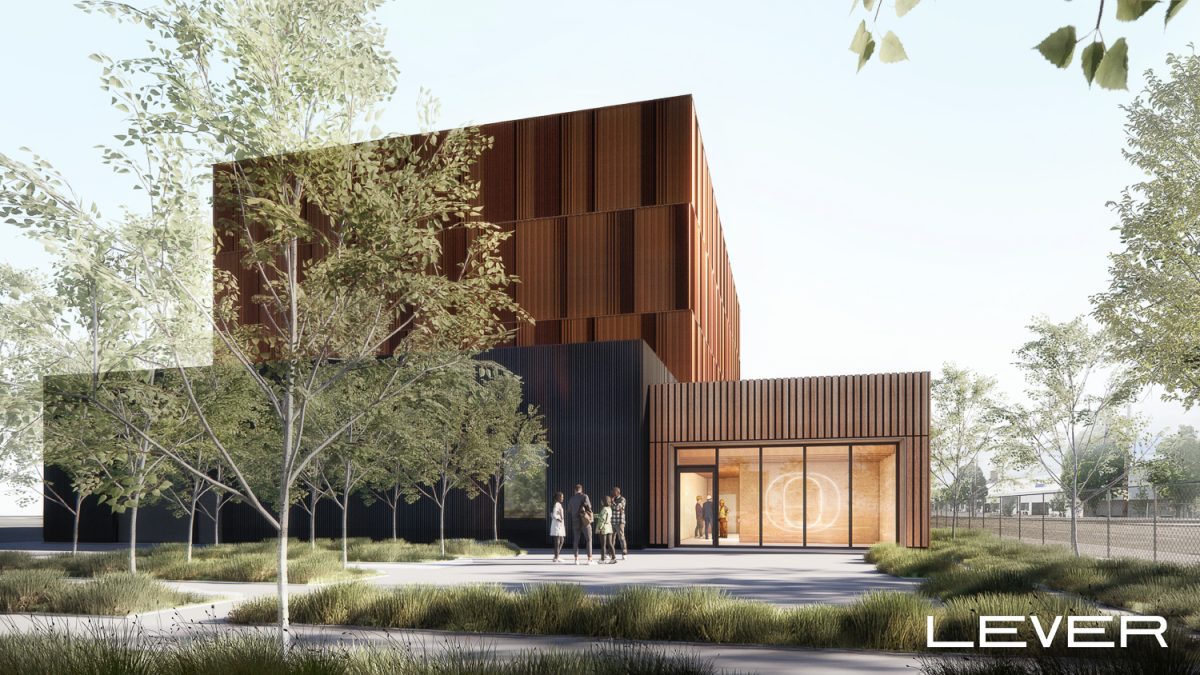
The University of Oregon is one year away from the completion of the new Oregon Acoustic Research Lab, which tests for sound and impact transmission in mass-timber.
The timber tested in the new lab, which is located in Terminal 2 in the Port of Portland, will be used to build affordable, multi-family housing.
As a marine terminal, Terminal 2 is used to ship wood and steel out of Portland. In 2017, the city of Portland chose to repurpose the land for “new sustainable timber products and technologies and a major increase in Oregon’s housing supply.”
Talks of an acoustic lab date back to 2018, but following the Labor Day fires that ravaged Western Oregon in 2020, multiple state agencies and special districts including the Port of Portland, the Oregon Department of Land Conservation and Development and the TallWood Design Institute came together to brainstorm solutions for what to do with wood coming out of post-fire restoration projects and ways to rapidly produce new homes.
In 2021, an application was submitted by the group for funding for multiple projects related to the issue and research into the development of the mass timber ecosystem in Oregon.
In September of 2022, the Oregon Acoustic Research Lab project was awarded.
Due to building code requirements, all mass timber must be tested for sound transmission and impact transmission, especially for residential structures.
“In order to meet those requirements, you have to be what is known as ASTM certified, which is the American Society for Testing and Materials,” Judith Sheine, professor of architecture and director of design at the TallWood Design Institute, said. “You have to have certified tests that say this particular assembly of this type of mass timber at this thickness, with this kind of acoustic mat, meets these code requirements.”
The OARL is just one step in the “supply chain” that takes the wood from tree to structure.
“(Wood goes from) being logged in a forest to a sawmill or to a peeling plant and then to manufacturers that make either cross-laminated timber or mass plywood. Then those are specified by architects and engineers for particular projects,” Sheine said. “If they want an assembly that has not been tested yet, or they want to try some other thickness they don’t have testing for, that (wood) goes to the new (OARL) facility, and it can be tested and certified or not.”
The Acoustic Research Lab will consist of two chambers, an upper chamber and a lower chamber, with slabs of timber covered in various materials such as acoustic mats or concrete in the middle. In these chambers, sound transmissions can be tested by having sound played in the upper level and measuring what comes through to the lower level.
The OARL will primarily focus on floor and ceiling timber which, according to Sheine, is harder to test than timber used for walls.
“You have to use a crane to get these very heavy samples into the chambers, incredibly particular requirements for the chambers themselves, so you don’t have what is called flanking noise, which is noise that leaks in that interferes with your tests,” Sheine said.
The importance of having the Acoustic Research Lab in Oregon, Sheine said, cannot be overstated. Mass timber is closely related to both the economy and the culture of Oregon and the state is the leading producer of softwood lumber products in the country.
“We see this as a way of reviving communities, because these factories that make mass timber panels are located in rural communities and it makes sense to not take the material very far away,” Sheine said.
According to Sheine, the total cost of the project is $25.88 million and the completed lab will be approximately 14,000 square feet.