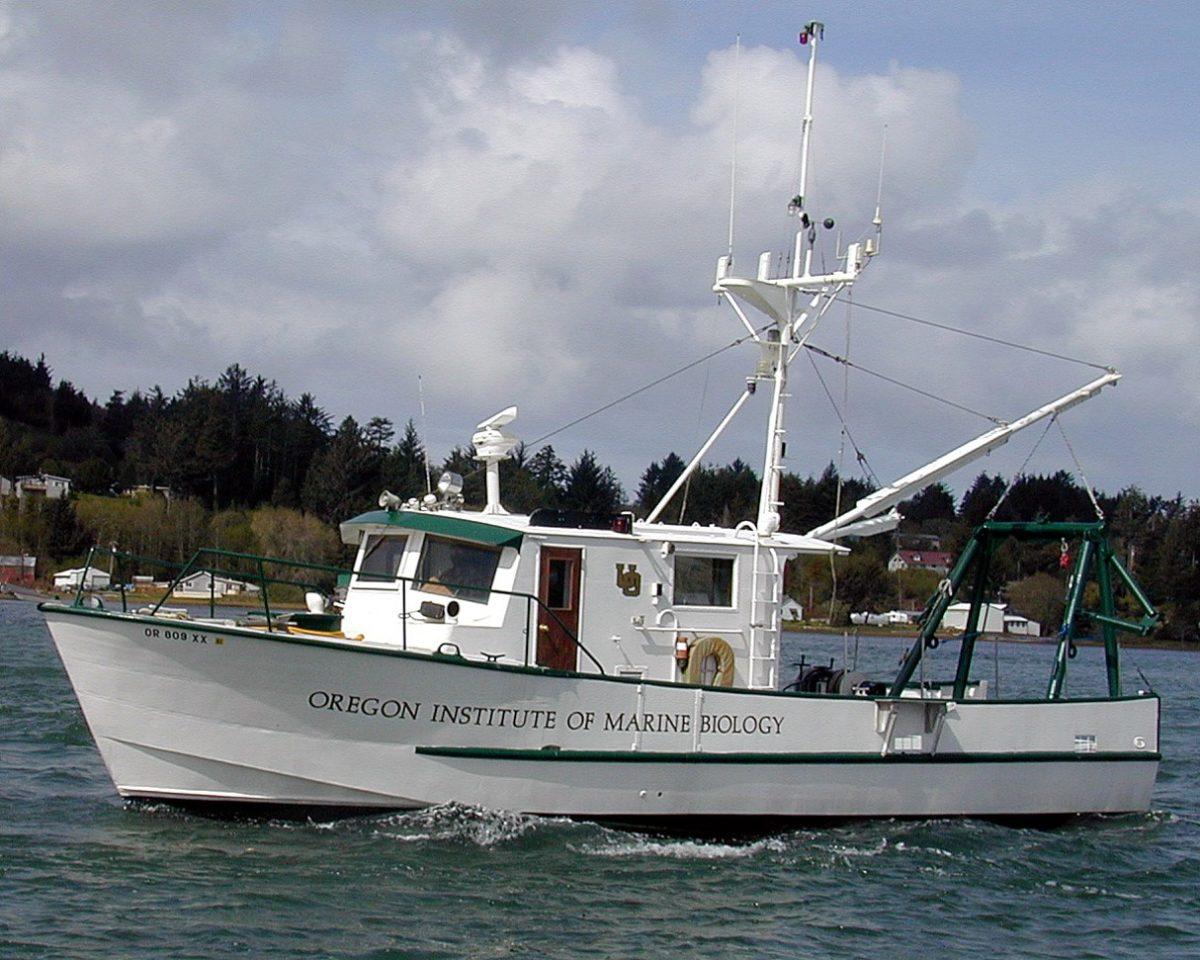
The Oregon Institute of Marine Biology, the University of Oregon’s marine station located in Charleston, Oregon, was granted a $30,000 one-time investment from the UO Strategic Investment Process for tsunami preparation on campus.
Prior to the investment, the OIMB strategic plan in case of a tsunami was to “run uphill and meet at a muster point,” or an assembly point, as soon as the warning was issued after an earthquake, regardless of the size of the earthquake present.
“A downside, that we had if one of those massive earthquakes does happen, infrastructure is gonna be down for a while and it’s gonna be important for people to be able to manage on their own, for a few days in a worst case scenario like that,” OIMB Director Amy Moran said.
With the one-time investment, the OIMB plans to prepare a two-step plan in the event of a tsunami. The most important tsunami to prepare for, according to Moran, is one caused by an offshore earthquake, one that would take place near a coastline and that students would have five to 10 minutes to react to.
“If there’s an earthquake in Japan, there’s time for people to drive away from the coast, but if it happens right off the coast, we have to be able to manage,” Moran said.
Sitting near the Cascadia Subduction Zone, OIMB is even more at risk for experiencing a large tsunami.
“Currently, scientists are predicting that there is about a 37% chance that a megathrust earthquake of 7.1+ magnitude in this fault zone will occur in the next 50 years,” the Oregon Department of Emergency Management stated on their website.
Coupled with the fear of a potential 7.0 magnitude earthquake and the tsunami alert that was issued in July 2025 due to an earthquake off the coast of Japan, the OIMB decided it was ultimately time to update their tsunami preparation plan.
“I don’t worry about it minute to minute, but that’s not a non-zero chance of it happening while folks are here,” Moran said.
Part of the two-step plan initiative is the preparation of “go bags” for each student living in the dorms at the OIMB. These bags contain supplies such as prepackaged sterilized water, a power bar, an emergency blanket, an emergency tube tent and a straw that filters water. According to Moran, the hope is that one of the go bags would contain enough to allow students to last for a few days.
“All of the students that come here are issued one that’s in their dorm room, so if there’s in the middle of the night an earthquake, grab the bag and go, that’s the plan,” Moran said.
The second part of the two-step plan is to have a temporary shelter spot up the hill from the OIMB at the muster point.
“Maybe some people can’t grab their bags, they weren’t in their rooms, and so the idea is to have as close to the muster point, a temporary shelter and more supplies for folks who run up there,” Moran said.
The OIMB ultimately began applying for a one-time investment after a tsunami alert was issued in July 2025 due to an earthquake off the coast of Japan. According to Moran, talks of creating a more in-depth tsunami preparation plan had already been in the works.
“I think (the investment) is really important for the security and the safety and the peace of mind of folks here on the coast because we are in the immediate tsunami inundation zone, so having the resources on campus for students, faculty and staff, to at least survive for a few days until help can come, it helps us all sleep a little better at night,” Moran said.