Amy Bowers Cordalis, a recipient of the UN Champion of the Earth laureate, was the keynote speaker for the 19th annual Rennard Strickland lecture hosted by the UO School of Law and the Wayne Morse Center.
Cordalis’s lecture touched on the lessons learned from the successful undamming efforts of the Klamath, which was the largest river restoration project in history. She covered the importance of protecting Indigenous sovereignty, preserving the environment and maintaining free-flowing rivers for the ecosystem.
When the four dams were constructed on the river from 1911 to 1962, there was no account for the local salmon population that had inhabited the land, leading to dangerous patterns within the ecology. Since the start of the 1980s there have been dangerous algae blooms that have poisoned the ecosystems downstream, impacting all that relied on the Klamath River.
“The people were colonized and then the river was colonized,” Cordalis said, showing pictures of decaying salmon on the river bed. In 2002, a historic fish kill marked that only 10% of the historic salmon populations remained, necessitating swift changes to save the river and the salmon.
The road to undamming the Klamath was long, contested and legally difficult to accomplish, but in 2022, the Federal Energy Regulatory Commission approved the removal, acknowledging that it would be in the public interest. This project relied on a strong coalition of environmental organizations, local businesses and Indigenous voices.
“Nature-based solutions work,” Cordalis said.
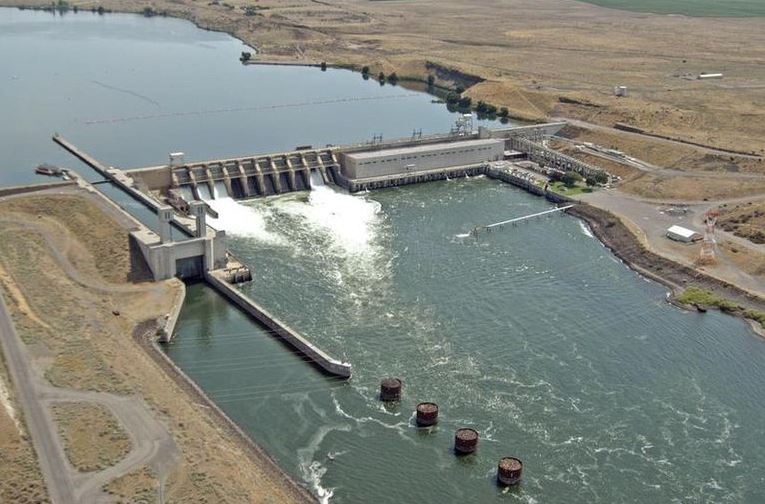
Recent efforts are directing the narrative of river restoration toward the Snake River, with advocates calling for the removal of the lower four dams that have decimated vital salmon populations.
Due to the damming of the lower Snake River, Chinook salmon populations have drastically declined from one million fish to just 7,103 fish, and sockeye populations from 84,000 to only 46 fish — a reduction of 99.9%.
The dams themselves are relatively old, with construction starting in the 1960s, and their estimated energy output is not substantial for the region, ranging from 1 to 10% of the total energy. The total ecological benefits of undamming the river and switching to a different source of renewable energy would be the most efficient solution.
The salmon population is crucial in preserving a healthy ecology and has an impact beyond the Columbia River basin.
In an interview with Ian Giancarlo, the ocean’s advocate for Environment Oregon Research and Policy Center, he estimated there are fewer than 75 southern resident orcas left, who primarily eat salmon. Southern resident orcas are a type of orca crucial to the Pacific Northwest ecosystem. Alarmingly, Giancarlo also forecasts that the infant mortality for orcas is somewhere around 50%.
“As someone who lives here, if I picture iconic Pacific Northwest animals, I think of salmon, bald eagles and I think of southern resident orcas,” Giancarlo said. “The fact that those animals could just disappear in front of our eyes is really alarming to me.”
These numbers signify the impending extinction of these animals if no significant action is taken. The salmon that run within the Snake River basin have been on a drastic decline, and scientists have identified undamming the Snake River region as an area to prioritize for protecting this population.
“Basically, scientists and researchers have pointed to this experience of southern resident orcas as what’s called a bright extinction, where we are seeing very plainly in front of us a species that is struggling, that we can clearly help and there’s not a lot of action being taken,” Giancarlo said.
Currently, Environment Oregon is hosting Run for Salmon Runs to educate the community on the importance of a free-flowing river and raise awareness of the endangered salmon and orca populations. Participants can walk or run 14 miles over the course of a week, which is just one-tenth of the length blocked by the dams on the lower Snake River.
The deteriorating levels of salmon are a direct cause of the decline of the orca populations in the Pacific Northwest — with the best ecological solution being to have a free-flowing river and allowing the salmon populations to return. Swift action needs to be taken by lawmakers and community members to protect the land and the animals that share this home with us.