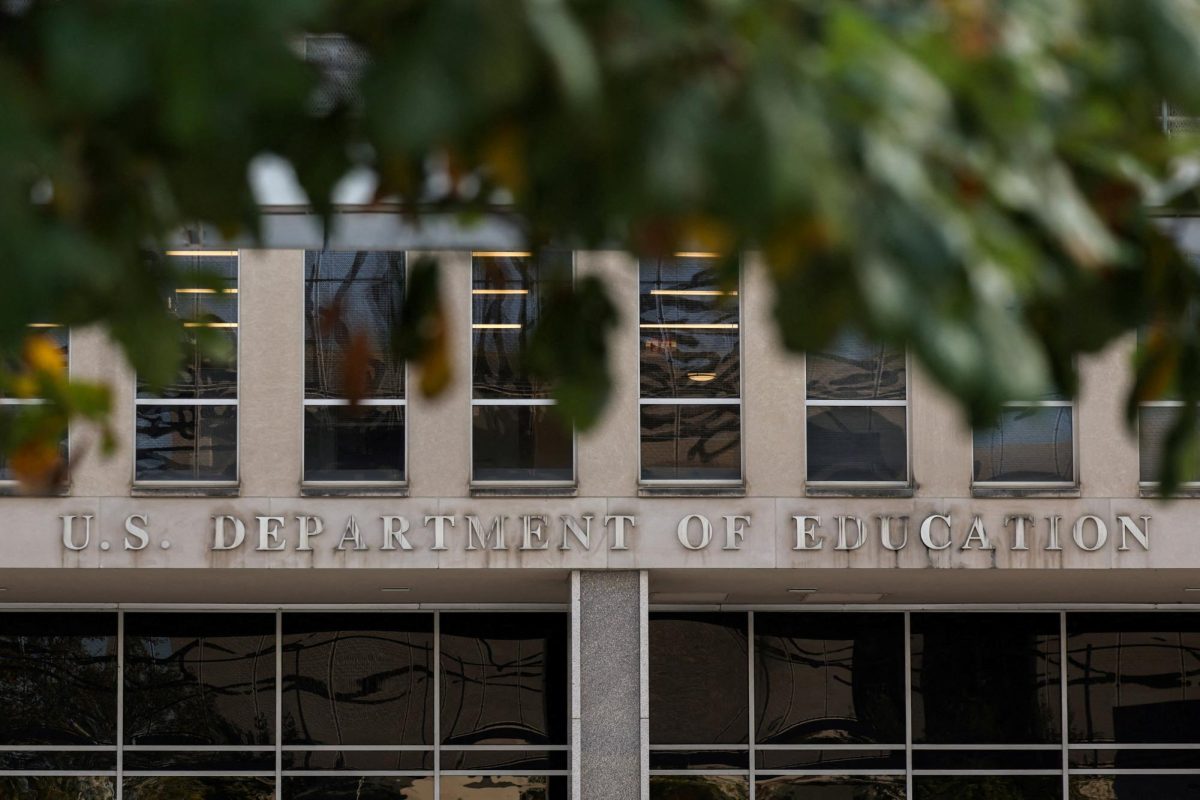
We are a year into Donald Trump’s war on the American education system, and universities across the country are learning that compliance is easier than resistance — and is just as costly. The first caught in the crossfire are exactly the ones who you’d expect: the students with the least amount of institutional protection and the fewest places to turn.
The Department of Education’s investigation into the University of Oregon began in March 2025, in an effort to target universities it claimed had violated Title VI due to their partnerships with The Ph.D. Project. The Ph.D. Project is a nonprofit organization that provides resources to underrepresented students to help them earn doctoral degrees. UO worked with The Ph.D. Project during the 2022-2023 and 2023-2024 academic years.
The university maintains that it did not end its relationship with the program because of federal pressure, but the broader picture suggests otherwise. UO is just one of 45 universities that have received directives from the DOE to cut programs or risk losing federal funding; 31 of them chose to settle with the Trump administration, although UO is not on the official list of settlements.
UO Spokesperson Angela Seydel characterized the university’s partnership with The Ph.D. Project as a “limited relationship,”amounting to little more than sending a student and a couple of staff members to the organization’s annual conference, with the student receiving no financial aid for their attendance. In a statement to The Daily Emerald, UO said, “We consider the matter resolved. We have reviewed all of our practices and believe that we are in compliance with the law.”
Despite initially expressing reluctance, correspondence between the Department of Education and the UO’s Office of Civil Rights reveals that the university relented. UO agreed to terminate its partnership with The Ph.D. Project immediately and committed to reviewing and reporting to the DOE, within 90 days, a full list of its institutional memberships and partnerships, along with the stated purpose of each.
Many students, like third-year student Aysia Rattanaphosy, found the lack of student consultation before cutting the program unacceptable. She noted that students were “ill-informed” in how administrators went about “announcing this decision to the student body.”
If this wasn’t about federal pressure, then how do we explain the timing of it all? Why sever ties with The Ph.D. Project at the precise moment that all the other schools are choosing to settle, and let the controversy fade into the background?
The reality is that compliance won’t earn UO any goodwill from the Trump administration. Capitulating to these demands will not satisfy them, nor will it change how the DOE views diversity programs. The administration is already moving to revoke UO’s Performance Partnership Pilots for Disconnected Youth waivers, a program designed to support students they have chosen to label “illegal immigrants.”
The Trump administration itself doesn’t consider the current investigation to be over yet. According to The Oregonian, the federal government has not yet finalized the matter surrounding UO’s involvement with The Ph.D. Project.
Yes, the university’s relationship with The Ph.D. project was limited, and limited enough to where it was considered reasonable to cut it without a fight. But the Trump administration’s appetite for concessions is insatiable. When they come back – and they will – are we prepared to resist it?
![Oregon outfielder Angel Laya (53) greets outfielder Jax Gimenez (7) before the first pitch. On May 30, 2026, The Oregon Ducks defeated the Washington State Cougars [4-0] in game 4 of the NCAA D1 Baseball Regionals at PK Park, at University of Oregon, based in Eugene, Ore. (Fred Hall/Emerald)](https://dailyemerald.com/wp-content/uploads/2026/05/2026.5.30.EMG_.FJH_.BSBLvsWashingtonStNCAA-1-1200x800.jpg)