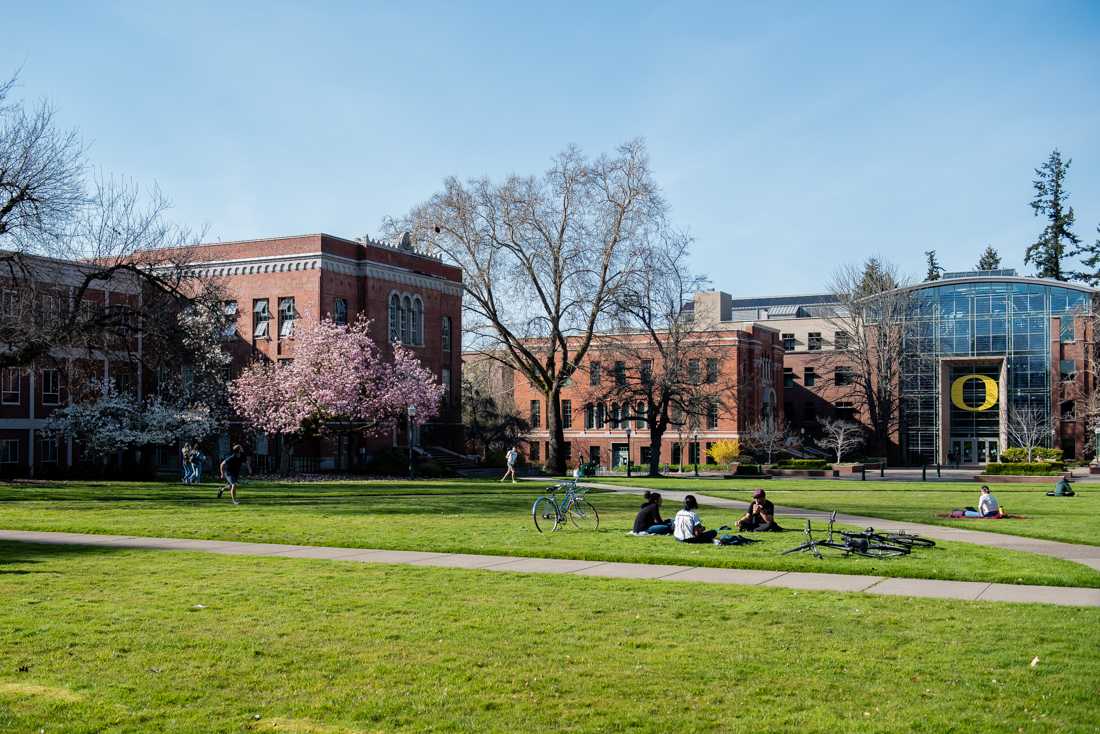
The fall and winter months in Oregon often consist of cold weather and an excess of rain. However, this past season didn’t see the expected conditions. Reaching record-high temperatures and dipping into a rain deficit, Oregon’s winter was largely mild.
Drier conditions are often a leading contributor to a more intense fire season.
The type of weather pattern can help dictate what the temperatures may look like. Episodes of irregular weather can occur every two to seven years, known as El Niño and La Niña.
These patterns affect each region of the United States differently. In the Pacific Northwest, “El Niño winters often bring warmer than normal temperatures and below normal snowfall,” according to the National Weather Service. La Niña winters bring colder temperatures and more rainfall.
KVAL Weather Reporter Briana Chavez helps Eugene and Springfield residents understand the weather conditions each morning. Chavez explained that this El Niño pattern “can be either wet or dry,” and have higher temperatures.
Since this El Niño winter has been a dry one, many worry that wildfire season will be intensified as a result. However, Chavez states that it is often difficult to predict the nature of fire season given the winter weather.
“In the past, we have seen those extremely wet winters or extremely dry winters, and we’ve had (less hazardous) wildfire seasons,” Chavez said.
Wildfires are most often caused by human activity, so Chavez advises people to be careful of their actions during the summer. For example, avoiding tossing cigarettes out windows and driving in tall grass.
While dry thunderstorms during the summer always pose a fire risk, Chavez warns that “there could be a little bit more of an impact when it is a drier year.”
Eli Donohue is a third-year at the University of Oregon studying art and technology. They work for the UO Outdoor Program, whose “mission is to make the outdoors more accessible.”
The program has a bike shop and rental barn on campus, which rents gear for a variety of outdoor activities. Donohue said that when going on trips or outdoor adventures during the summer, it is important to avoid starting campfires, bringing lighters or being reckless due to potential wildfire risk.
They advise others to “stay alert with nearby ranger stations and news,” and “try your best to always have water in hand to stay hydrated.”
In addition to being prepared yourself, Donohue mentions the importance of helping others during this season. “Donating to local shelters or organizations who help those who have been misplaced due to the fire season,” Donohue said.
Given the unpredictability of wildfires’ origins and their quick spread, Chavez recommends having a fire evacuation plan in place.
“Make sure you have a go bag, yeah, so food and water, a charger, your personal belongings, whether it’s passport, you take prescription medications, make sure you take those with you, having kind of that checklist ready to go,” Chavez said.
In rural areas, Chavez explained having a plan not only for yourself but also for livestock in case of fire is crucial.
In higher temperatures, if individuals are without air conditioning there are many resources to stay cool. Simply going to highly populated areas, like shopping malls or keeping a fan in your window can aid immensely in warm conditions.
For people who are not sure where they can go for resources, Chavez said that “The Egan Warming Center and many other local community areas are really good about opening up (cooling) centers” amid the heat.
Last year, public spaces in Eugene acted as cooling centers during extremely hot temperatures, including the libraries and several community centers.