The University of Oregon’s Sports Product Design program focuses on innovation in sportswear — and this year, UO graduate students in the program received an abundance of recognition in worldwide competition.
UO Sports Product Design is a two-year master’s degree program that focuses on research, athletic performance, sustainability and marketing. During the course of the program, students have an opportunity to collaborate with sports product companies both in and outside of Oregon, giving them hands-on experience in the field.
The Woolmark Performance Challenge, a competition that invites college students to invent new possibilities for Merino wool in sportswear, partnered with Alpinestars, a motorsports apparel company, in 2025. The challenge featured over 200 participating universities from 32 different countries. Of 12 winners, five were UO students.
One of the winning students is Jacob Kauff, a second-year master’s student in the program. Kauff attended Pitzer College in Claremont, California, where he received a Bachelor of Arts degree in philosophy as a pre-med student. After graduating, he did research at the University of Washington and Kaiser Permanente.
Kauff won Woolmark’s Research Bursary, awarded to five individuals, which consists of a $5,000 prize and a year-long mentorship program. He explained that he will begin working to create and test prototypes of his design this summer, following his graduation.
“For his mountain biking apparel concept, Kauff explored the use of bioprinting humidity-reactive bacteria onto wool,” according to Oregon News. This design earned him a spot as one of 12 finalists in the competition.
Alongside Kauff, four other Ducks were in the finals: Chloe Burchard, Lauren Kochaver, Lisa Ly and Lulu West. Burchard, who recently graduated from UO, was the overall winner of the contest, receiving a year-long internship in Italy with Alpinestars.
This year, there are only 14 first-year and 17 second-year students in the program. A small number of scholars get to work alongside industry professionals and companies such as Nike, Adidas and Under Armour, making this program a competitive and unique opportunity for students.
“My interest in running and human anatomy and aesthetics and fashion all kind of combined to make (Oregon’s) program kind of a perfect fit for me,” Kauff said.
Additionally, Kauff said “the ability to work with amazing athletes from the Pacific Northwest” served as an important factor in his decision to choose Oregon’s program.
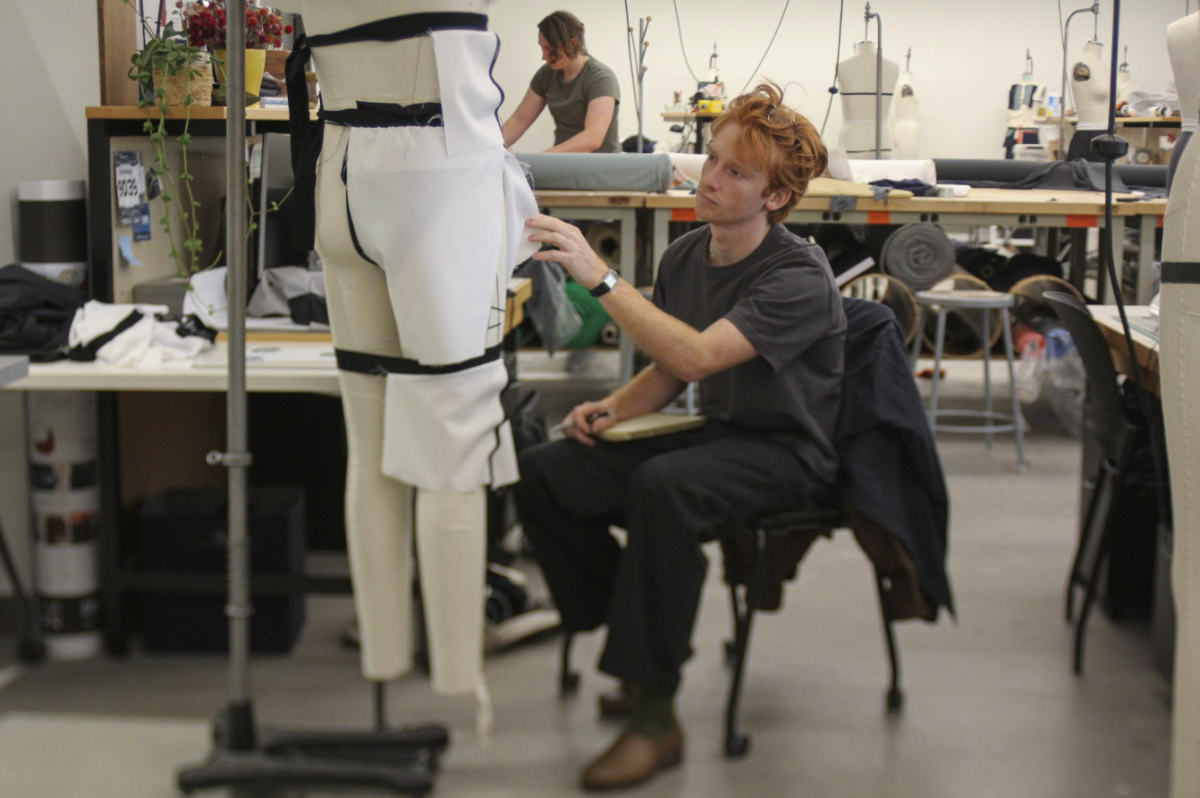
Kauff explained that this program has “a making approach to design. So everything that you design, you actually have to prototype.”
On average, Kauff and the other designers have two weeks from their idea creation to producing a final product. Which he explained is one of his favorite parts of the creative process, getting to “move (from a design) into a product that you could see on a shelf or on an athlete.”
In addition to working within the studio, designers will work with industry professionals and athletes to test and alter their designs. Kauff shared that this process ensures that the final product is something that “is actually solving a problem for athletes.”
As a runner himself, Kauff believes that feeling confident is an important factor in competition and creating that confidence is the driving force behind his designs. He explained that there is a big difference between a product that is successful on a technical level and one that truly connects with athletes.
“If your athletes aren’t feeling inspired by it, or if they’re not gaining that extra little ounce of confidence at the starting line, then it’s really not doing its job properly,” Kauff shared.
Kauff advised students to take advantage of the opportunities undergrad provides in discovering themselves and their interests. He believes it is important to be involved in things that are “employment focused” but to also take the chances to do things that “allow you to grow as a human being.”
Starting in fall 2026, the program will receive a Science, Technology, Engineering and Mathematics designation, or recognition by the Department of Homeland Security for focus on the four STEM components. This designation will allow international students on F-1 visas to be eligible for work in the United States for an additional 24 months.
Graduates of this program have patented new technology, worked alongside local businesses and received funding for new product ventures, according to the program’s website.
Kauff said for students facing uncertainty about pursuing a creative career, he would recommend this program for its opportunities for creativity and innovation.
“If someone is thinking they like design and creation and are interested in how ideas actually come about in real life, I would really push them into looking at the product design program.