The Eugene Water and Electric Board and the University of Oregon have extended their partnership for an energy generation study that aims to understand if the university’s on-site generator can boost grid reliability.
The study originally started in January and revolved around EWEB utilizing UO’s combustion turbine generator, located at its Central Power Plant.
This partnership would allow for EWEB to use this generator during periods when demand is highest, determined by regional power supply conditions.
During January and February, the generator was not turned on. Adding an additional month allows more time to evaluate the generator’s performance, greenhouse gas emissions, local air quality impacts and financial implications if the generator is used, according to a press release from EWEB.
EWEB’s power supply was approximately 94% carbon-free in 2024 — but when energy demands spike, like during the winter, gas plants are turned to as a non-weather-dependent resource.
“(UO’s) natural gas combined heat and power generator can serve as one such flexible, on-demand resource during those rare occasions,” the press release said.
EWEB also highlights the benefits of using locally-sourced power to reduce reliance on distant power plants, giving the utility more control over generation decisions and emissions.
Thus far, supply-constrained conditions have not emerged during the study period according to EWEB Public Affairs and Communications Manager Jen Connors.
However, the decision to enter into this partnership has been met with scrutiny from community members and UO students. A co-president of UO’s Climate Justice League said in January that this partnership is moving resources away from transitioning UO’s boiler system to renewable energy boilers.
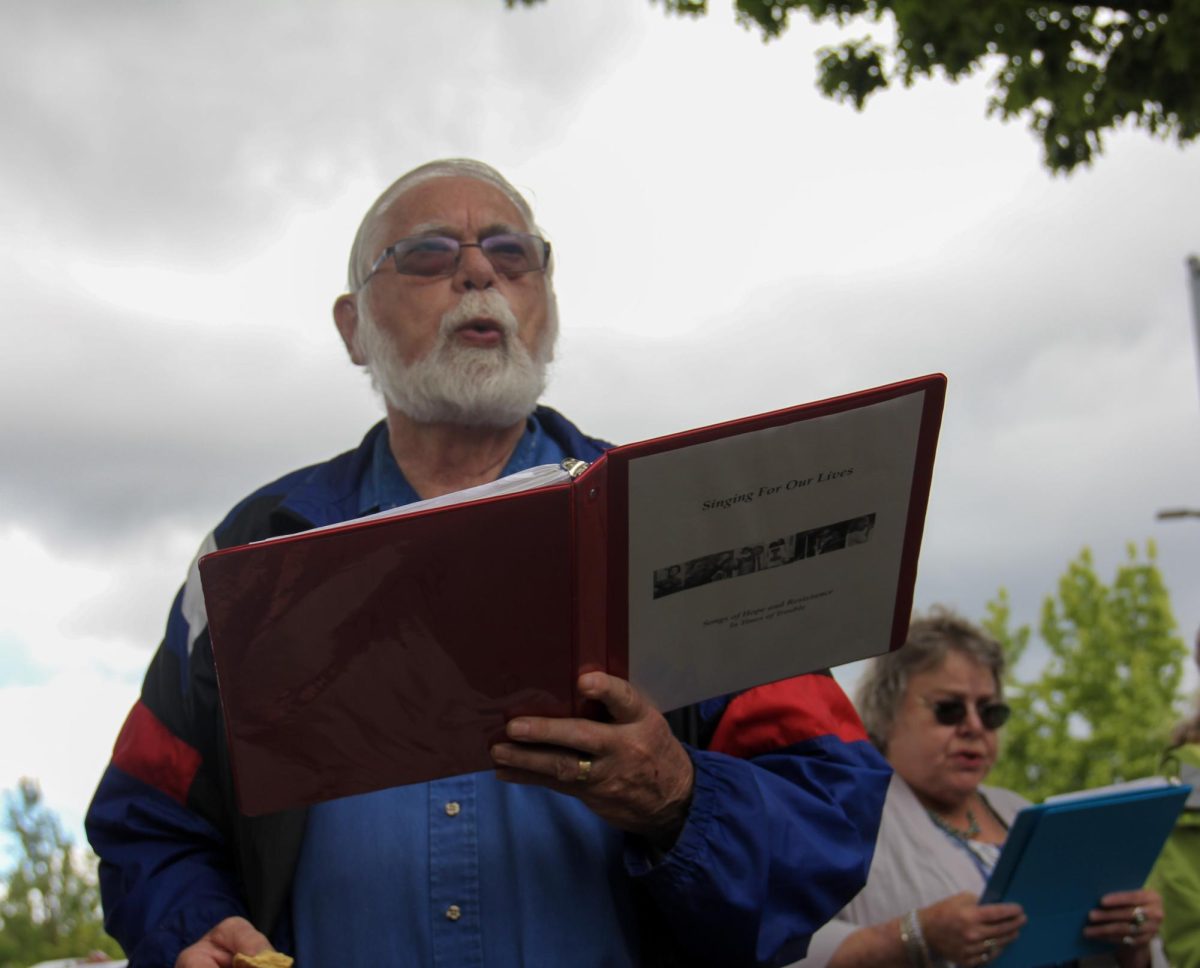
On March 13, Climate Justice League organized a rally outside of UO’s Central Power Plant to pressure the university to stop fossil fuel use. Some protesters, including Dylan Plummer, a UO alumnus and employee at the Sierra Club, who said this partnership was “breaking a 10-year-long process to pursue electrification of the boiler system.”
Students and climate activists have been advocating for the university to transition to electrode boilers since 2022, known as “thermal transition option 2b.” In 2024, a Thermal Systems Taskforce recommended the option to President John Karl Scholz.
However, the furthest progress so far is the development of low carbon heating system concepts, cost estimates and construction timelines.
According to EWEB’s press release, UO’s heat and power generator captures excess heat to produce steam for campus heating. This makes it “more efficient” than conventional power plants.
If March is a “mild month” and the generator remains unused, EWEB and UO will consider extending the partnership next winter, according to the press release.