The University of Oregon’s Museum of Natural and Cultural History has opened a new exhibit focused on Indigenous cultures.
The exhibit, “America at 250 — Before, Between, Beyond,” hosts mainly Indigenous items from the past two and a half centuries, covering the land that is now called America.
“There is a national movement to commemorate the 250th anniversary of the signing of the Declaration of Independence, so we wanted to also do that,” Lexie Briggs, the museum’s marketing and communications specialist, said. “But then also culturally, we’re talking about cultures that sort of transcend boundaries and transcend time. So we talk about Indigenous cultures that have been in this area since time immemorial.”
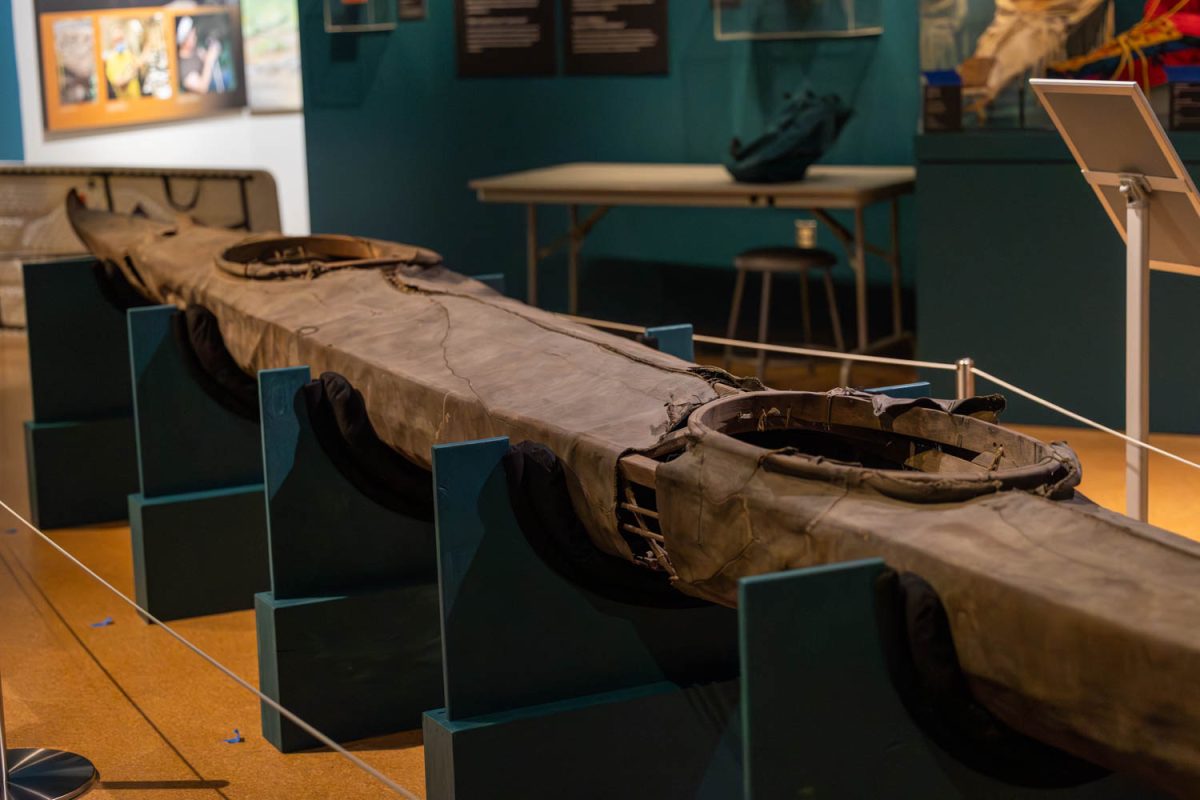
A large chunk of the exhibit displays Indigenous Alaskan people’s connection with arctic wildlife. A walrus skull is polished to perfection as ivory figurines climb upon each crevice, and ink on seal skin tells the stories of hunting in the north.
Other items include an intricately beaded breastplate for a horse, moccasins with eagles and a rain coat made from the intestines of a large animal.
These wide-ranging items are just a small part of the museum’s ethnographic collections.
An ethnographic collection is a curated assembly of cultural artifacts, tools and other materials that document the daily lives, technologies or beliefs of specific societies.
“Our director and our collection staff worked together to look into what we never highlighted before or what we wanted to make sure that we brought out. So we kind of tried to do some representative things and then also things that are just so cool and astonishing and beautiful that we really wanted people to get to see them,” Briggs said.
According to Liz White, the museum’s exhibitions designer, the exhibit has been in progress for a year, as museum directors consulted Indigenous communities and created accurate and accessible plaques that describe each exhibit.
“It does take a while, especially when you are doing anything that revolves around consultation and collaboration with outside communities; that can definitely add to the timeline, just because you want to make sure you are appropriately talking to people and talking to the right people,” White said.
The museum plaques are in three languages: English, Spanish and Chinuk Wawa — a trade language of the Pacific Northwest.
The trilingual exhibit design was a suggestion by David Lewis, one of the Indigenous members on the museum’s advisory council. According to Briggs, Felix Furby, a member of the Chinook Nation and the Confederated Tribes of Grand Ronde, worked on the translations.
Briggs said creating the labels in the Indigenous trade language was a part of a broader effort to revitalize the Chinuk Wawa language.
“We wanted it to be highlighted that the Indigenous cultures of this area are incredibly important and vital to what we think of as America, and what better way to do that than just highlighting a language,” Briggs said.
The exhibit is advertised as a reflection of what America is, has been and also “what America might yet become.” Briggs wants visitors to think about the stories behind the objects on display and the objects they value in their own lives and how they relate to place and identity.
“I hope that people think about what the future holds, and what America means to them, and what it can mean and how they can bring that out into the world,” Briggs said.