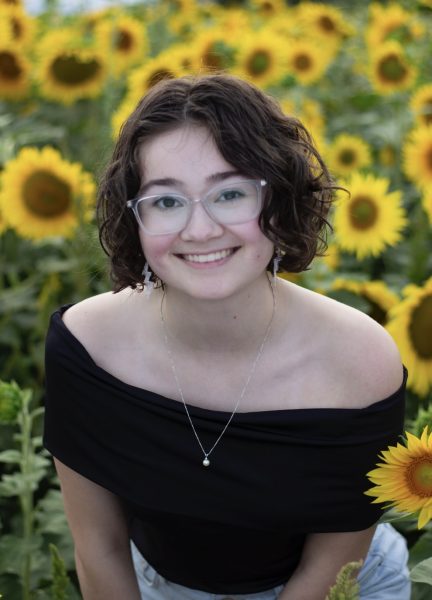
Daela Montgomery is one of the first students to graduate from the University of Oregon with a minor in Brewing Innovation. She also graduates with a major in biology, and a second minor in biochemistry.
This year, six students will graduate from the program. In total, 18 students have completed the program since its start.
The Brewing Innovation program was first introduced in fall 2024 as part of the Phil and Penny Knight Campus for Accelerating Scientific Impact. According to the Brewing Innovation website, the minor was designed as an “interdisciplinary minor to complement disciplinary majors in the sciences, humanities, communications, design and innovation.”
“Our goal is for students to leave the program with the capability to be innovators in their fields,” Brewing Innovation Instructor and Lab Manager Lindsey Rubottom said. “By engaging students in an experiential learning environment, we give them the opportunity to develop real observational skills, to act on what they notice, to adapt when challenges arise and to tell compelling stories that connect with their audiences.”
Students who go through the program must take four four-credit courses on brewing, followed up with two designated elective credits.
“I work in a lab on campus and I thought that the hands-on part of the brewing minor sounded like an awesome application of stuff I’ve learned in my classes and a completely different lab environment than the ones I’ve previously been in,” Montgomery said.
Montgomery originally decided to participate in the Brewing Innovation program out of sheer curiosity. However, Montgomery found the program to couple well with her love of hands-on lab work as well as her love for biology.
“I really wanted to expand my skill set and get this unique experience. Science is the cornerstone of brewing, it’s really important to apply my major in interesting ways,” Montgomery said.
According to Montgomery, the Brewing Innovation course was a highlight of her time at the university.
“I really liked it. It was my favorite series of classes that I’ve taken on campus. It is a small cohort of people and so I’ve made really good friends in the program and we got to work together really closely,” Montgomery said. “It was less of a lecture and talking at you and more of a collaborative space. Which isn’t something I often get in my, like, 40-people science classes, my 200 people chemistry classes.”
The Brewing Innovation Minor isn’t just reserved for science majors, as any major can apply for the program.
“To be able to work with people of different majors, different backgrounds that I wouldn’t normally be exposed to, really taught me more than I could have learned in just my science classes alone,” Montgomery said.
Editor’s note: A previous version of this article had the incorrect number of graduating students. The Emerald regrets this error.