The city of Eugene is working to find a provider for the Peer Navigation Alternative Response pilot program, which aims to fill service gaps left by the 2025 closure of the Crisis Assistance Helping Out On The Streets program.
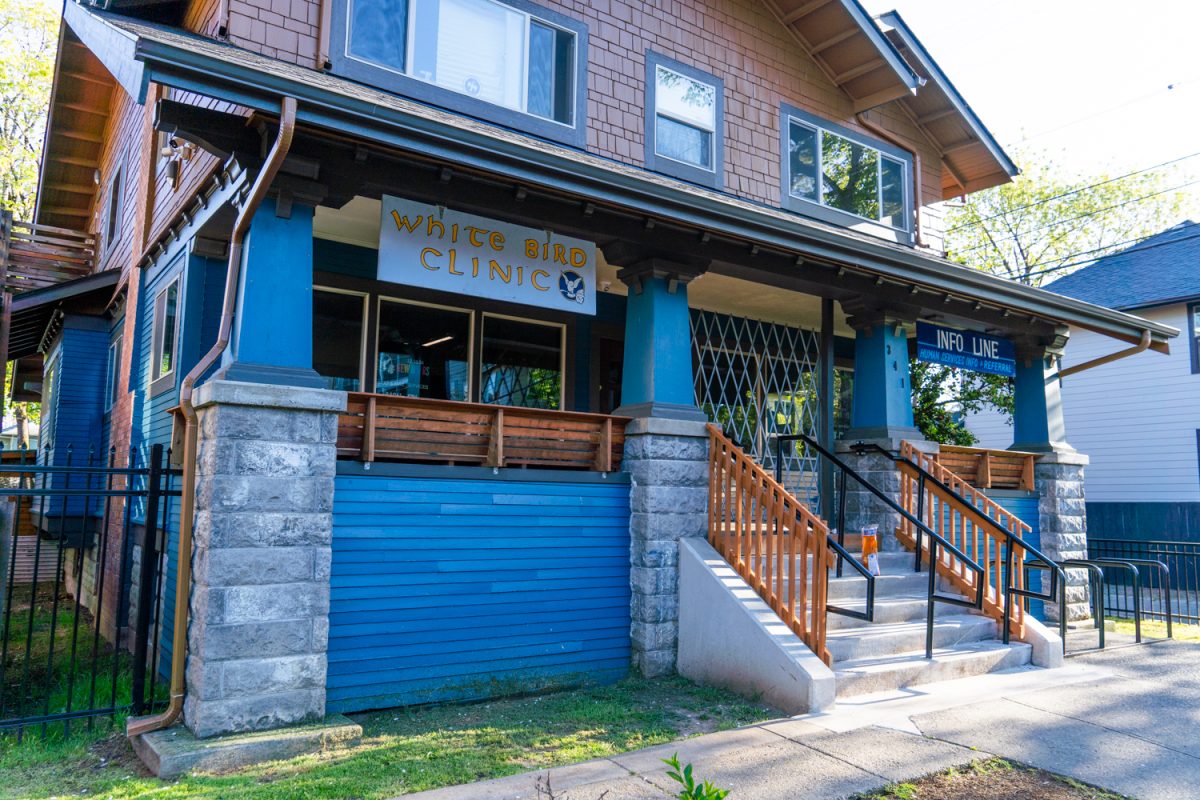
Months after the White Bird Clinic announced the closing of CAHOOTS, which operated as a mobile crisis intervention team in Eugene since 1989, the city of Eugene released a report analyzing what gaps needed to be filled since the program’s closure.
Eugene Springfield Fire Chief Mike Caven said there wasn’t as large of a gap in services as they had anticipated.
“What we didn’t really see were any increases (in calls)… There wasn’t some catastrophic hole in the net that people were falling through,” Caven said.
High-acuity care calls that CAHOOTS responded to before its closure are now the responsibility of Mobile Crisis Services of Lane County, a behavioral health crisis service. However, because the program is state-funded and Medicaid-billable, calls must fall under certain conditions to be addressed, meaning they are often unable to respond to non-crisis situations.
The report revealed that the largest gaps remaining unfulfilled from police, fire or county services like MCS were mid-acuity behavioral health incidents, non-emergency transportation, general assistance or low-acuity calls, youth crisis response and harm reduction.
“The gap is those calls where people aren’t sure and they don’t want to approach, but they think that somebody needs a welfare check or some type of service,” Caven said. “So what we wanted to do is put a program out there that picked up those calls to make sure that the folks had somebody checking on them and that the people doing the work have the capability to track it and help case manage those folks to get them off the street.”
During a press conference after the report was released, Caven and Eugene Police Chief Chris Skinner discussed filling these gaps through a request for proposal to expand the peer navigation model in Eugene.
Peer navigators have been in downtown Eugene since January, after two navigators were added to the downtown co-responder team. The navigators are contracted for one year, and work to provide outreach for unhoused individuals in the downtown area.
“The idea with this program is to get to the root causes that are creating the situation of homelessness and making it more difficult for them to correct their situation, and find a different way,” Ray Brown, EPD’s downtown incident commander, said.
As written in the RFP, the city is hoping to build on this downtown program in the larger Eugene area, such as Highway 99, River Road, the Whiteaker Neighborhood and West Eugene, and provide outreach for “vulnerable populations.”
“This program will operate in partnership with Eugene Springfield Fire, Eugene Police Department and other community stakeholders to reduce repeat calls for service, support non-enforcement engagement strategies, and connect individuals to housing, treatment and recovery services,” the RFP states.
Some functions of peer navigators outlined in the RFP are connecting individuals to housing, recovery and healthcare support programs, facilitating referrals to psychiatric care, assisting with insurance and providing transportation. The RFP emphasizes collaboration with relevant city staff, EMS, EPD, co-responders, MCS and a variety of other service providers.
During a city council public meeting on Feb. 9, multiple commentators expressed their dissatisfaction with the model outlined in the RFP.
“Peer navigators as case managers disconnected from non-emergency dispatch is no replacement for the service Eugene lost last April,” Robert Parish, one commentator, said.
In an addendum attached to the RFP, Purchasing Analyst Darren Schmidt clarified that peer navigators “will be dispatchable through the 911 center whether or not the initial call came in through emergency or non-emergency,” and will act as the responding dispatch team. However, the service will not be operating on the public safety radio dispatch.
“Why are we piloting something new when we have a 36-year nationally recognized roadmap of what works?” Nadia Raza said during public comment. “We need an RFP that includes true community crisis response.”
“When we put peer navigation out, it’s not an expectation that it’s the only level of service, or the minimum level of service that we’d accept,” Caven said. “It’s just saying we at least need to cover this work.”
Potential proposers have until Mar. 3 to submit proposals for the opportunity to be given a one-year contract from the city to provide the required services to the pilot program.